


Going back from Lüderitz, up to Aus, on that same an unique B4 road, I will this time stop often. Anyway, this time, the 120 km stretch with the gradient and wind won’t be possible in a day.
There are several abandoned train stations along the Aus-Lüderitz railway and I will peek in, and hopefully spend the night in one of them. There’s no other shelter anyway, and being in the Sperrgebiet, it’s forbidden to leave the road. I could try just to test if there is a kind of “Sperrgebiet armed response” in place, but most importantly, the mountains are so far away from the road that it’d be too annoying for me to try to hide in the desert.
Talking about the railway, which is undergoing renovation works, there are new sections right at the exit of Lüderitz already. I was told many times that the renovation project collapsed due to missing funds, but it seems alright now. Maybe thanks to the ubiquitous savior of Africa, the Chinese, with (afaik) two contractors on that railway.

It reminds me that I heard that the Chinese were already 100’000 in Namibia, and if true, they would quietly make up 5% of the whole population. The latest figures from 2006 quote 40’000. I also learnt that the reason of the railway renovation stands 300 km away from Lüderitz, at the Scorpion and Rosh Pinah mines. The mines currently transport their mineral (zinc, and some copper, tin, lead, and silver) by truck to Lüderitz, and some of these trucks are driving very disrespectfully towards bicycle(s).
Considered the remoteness and the attractiveness of Lüderitz, I understand a railway wouldn’t be profitable without the industry. It also makes sense that the port of Lüderitz undergoes anupgrade.
Enough about the railway for now, my first destination of the day is the ghost town of Kolmanskop.
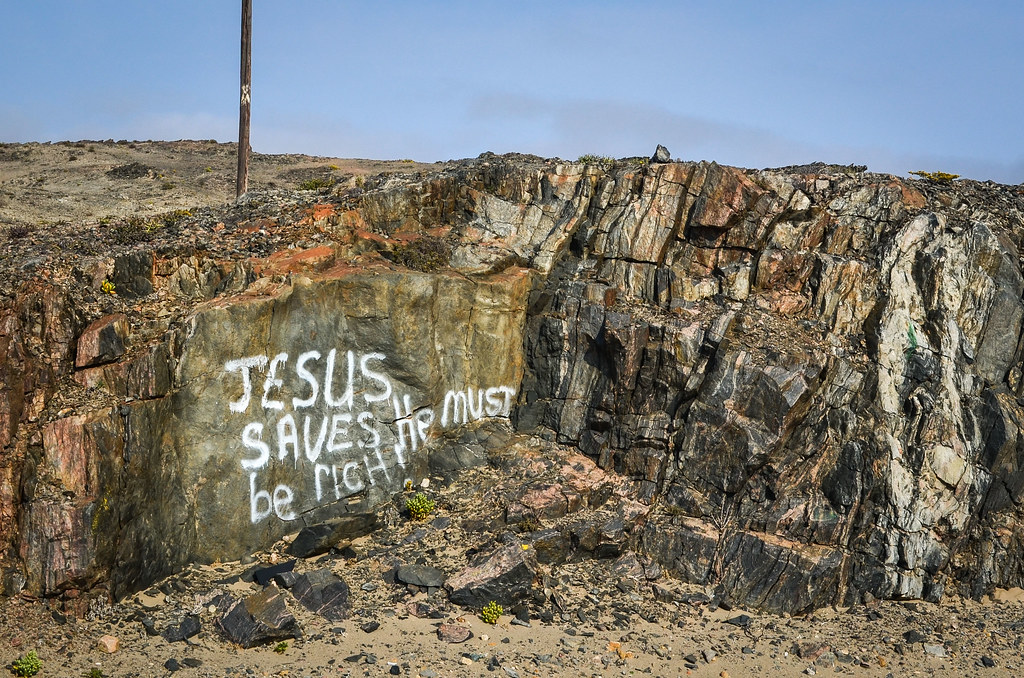
La città fantasma chiude le visite alle 13:00, quindi non posso passare una mattina pigra se voglio partecipare al tour guidato alle 11. Kolmanskop si affaccia sull'aeroporto di Lüderitz, a 10 km fuori città.
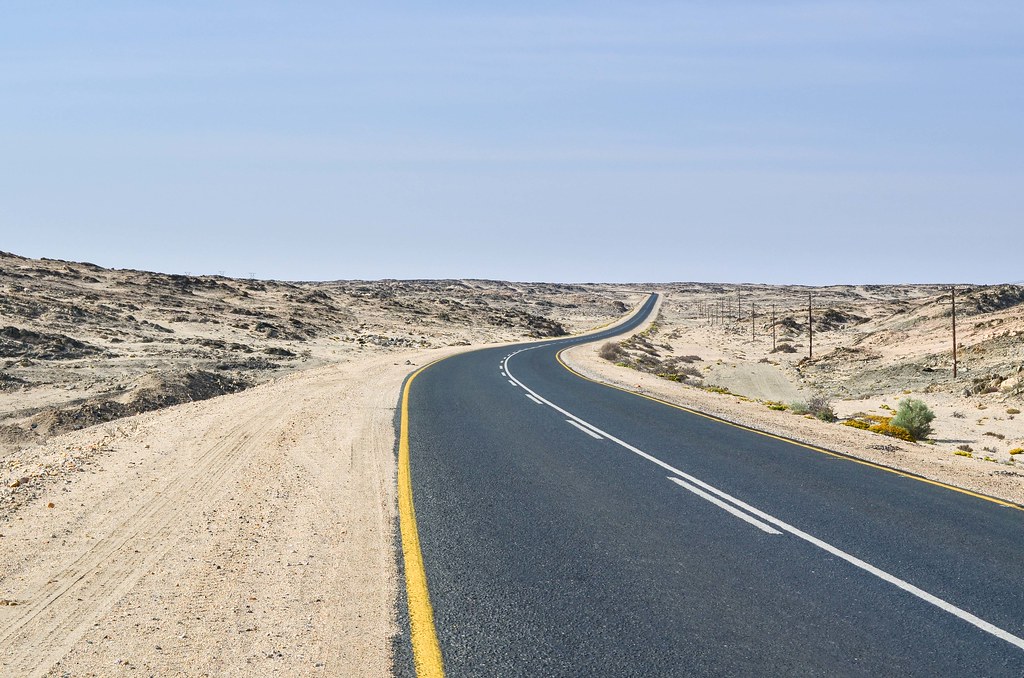
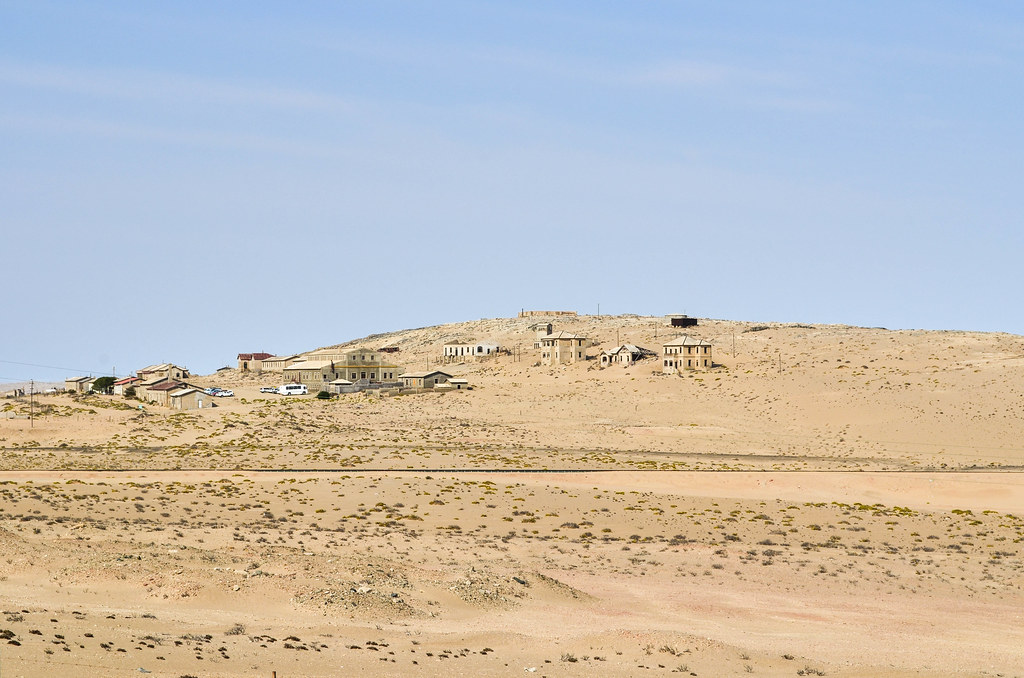
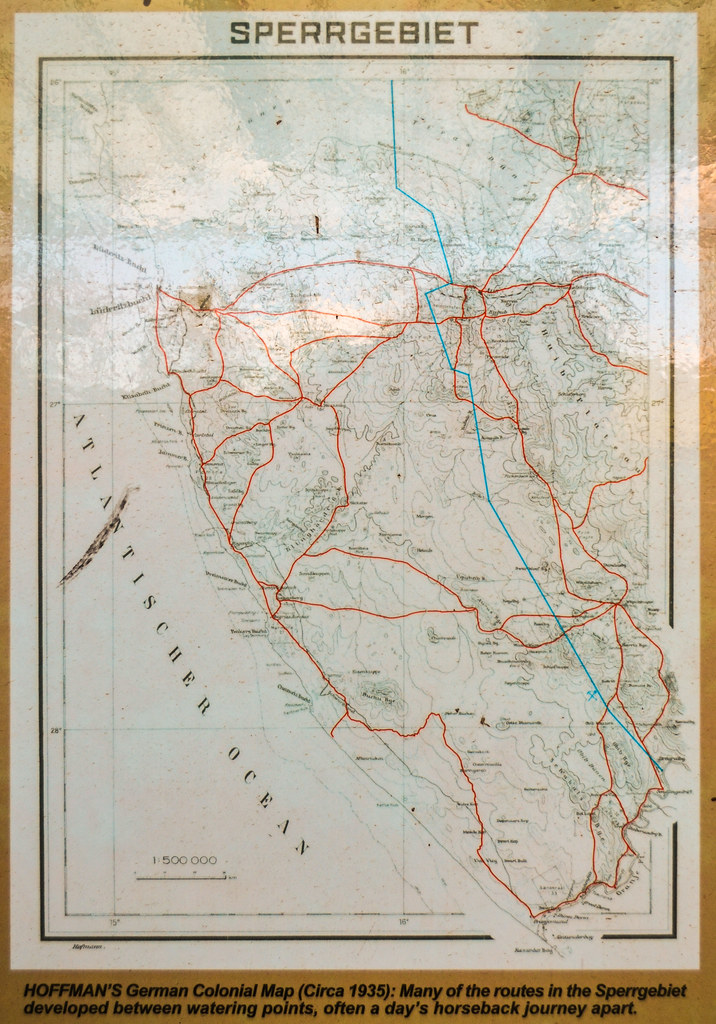
Ho già scritto sul Sperrgebiet, l'area diamantifera riservata, sula mia strada versoe intorno a Lüderitz. La nascita della città di Kolmanskop avvenne poco prima della creazione del Sperrgebiet.
Nel 1905, Johnny Coleman rimase bloccato in una tempesta di sabbia e abbandonò lì il suo carro trainato da buoi.
Nell'aprile del 1908, un lavoratore sulla linea ferroviaria Lüderitz-Aus, precedentemente impiegato in una miniera di diamanti, trovò e presentò una pietra brillante al suo supervisore, un mineralogista dilettante proveniente dalla Germania che si era recentemente trasferito in Namibia per mantenere libero dalla sabbia in continuo movimento un tratto di ferrovia lungo 20 km. Quello fu l'inizio della corsa all'oro dei diamanti (storia completa qui o ci, da cui ho copiato parte del testo seguente).
Non più tardi di settembre 1908, il governo coloniale tedesco dichiarò un Sperrgebiet, o “zona proibita”, estendendosi per 360 km a nord del fiume Orange e 100 km verso l'interno dalla costa, al fine di controllare l'estrazione dei diamanti, e nel febbraio 1909 fu istituito un mercato centrale dei diamanti.


Kolmanskop crebbe rapidamente negli anni '20, fino al 1928 quando furono scoperte riserve di diamanti molto più grandi vicino a Oranjemund, all'estremità meridionale dello Sperrgebiet. Entro il 1938, la maggior parte dei lavoratori e delle attrezzature furono spostati lì. La sede della CDM si trasferì a Oranjemund nel 1943, le operazioni minerarie cessarono nel 1950 e gli ultimi abitanti lasciarono Kolmanskop nel 1956. Fu abbandonata agli elementi (e la sabbia e il vento qui sono piuttosto duri), fino agli anni '80 quando fu ristrutturata per scopi turistici.
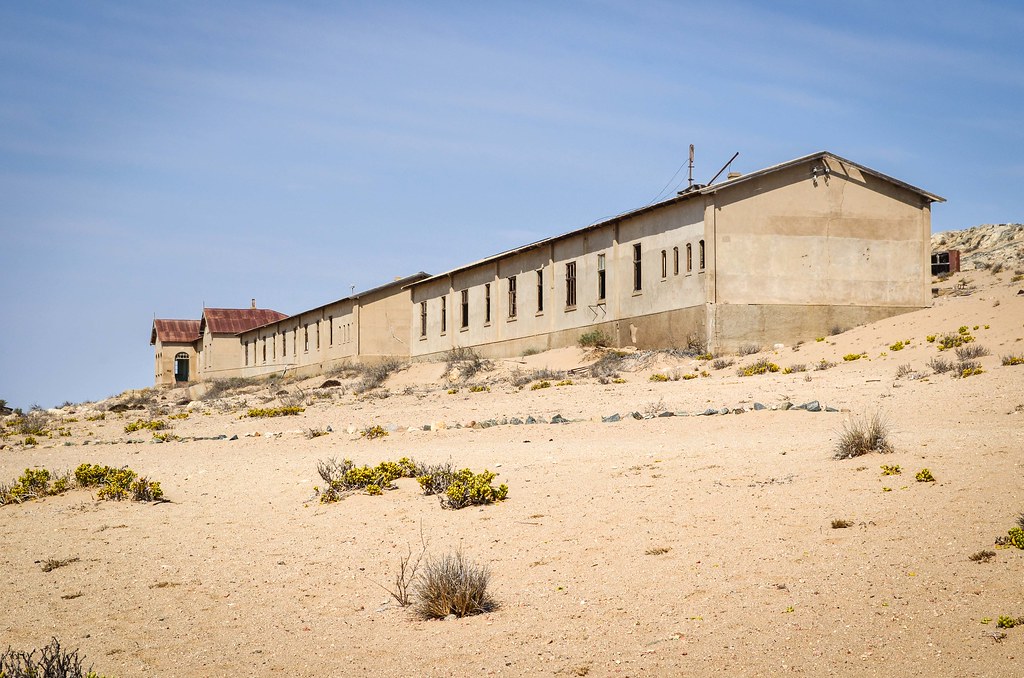
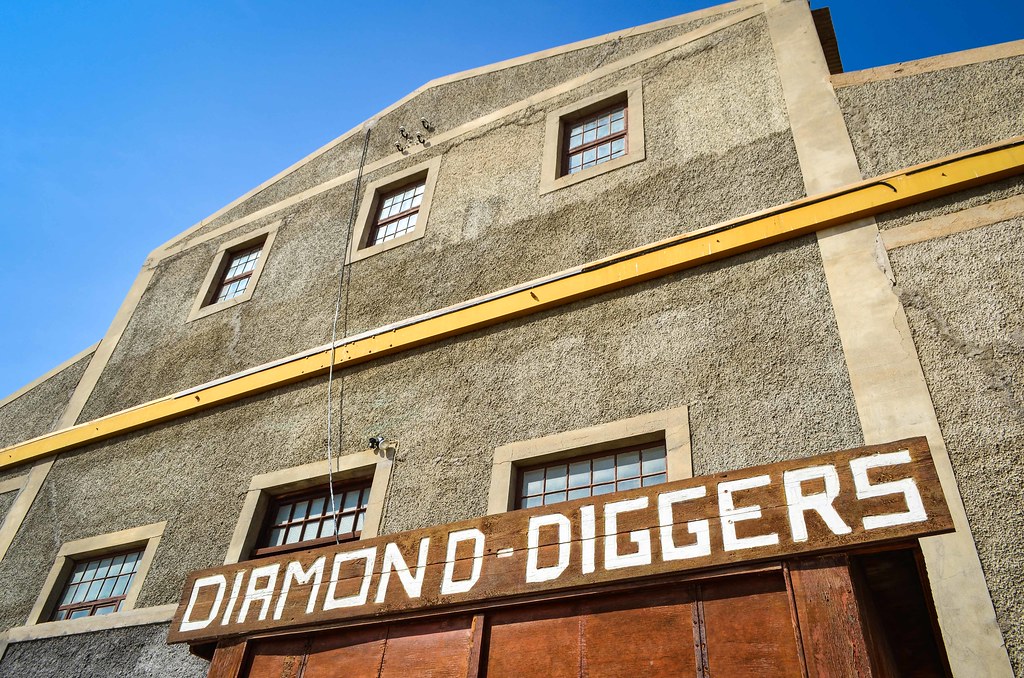
To cater for the 300 Germans adults, 40 children and 800 Owambo contract workers, the town had, among other facilities, an hospital, a bakery, an ice maker and a dining hall. It was apparently a pretty little town in the desert, and completely electrified! A hundred years later, it’s only a minority of African rural areas that can enjoy electricity. It is also worth noting that the hospital boasted the first X-ray machine of Southern Africa. To care about the workers? Not so much, it was more about scanning workers suspected of having swallowed diamonds.
La pura ricchezza generata a Kolmanskop (la produzione massima superava i 30.000 carati al giorno) è dimostrata dal modo in cui l'acqua veniva fornita alla città. Ogni mese una nave partiva da Città del Capo trasportando 1000 tonnellate d'acqua, e a ogni residente venivano forniti gratuitamente 20 litri al giorno. Chi aveva bisogno di acqua aggiuntiva lo pagava, a metà del prezzo della birra. La mancanza di acqua dolce per alimentare i motori a vapore costrinse anche la costruzione di una centrale elettrica che forniva elettricità, tecnologia molto avanzata all'epoca, per alimentare i macchinari minerari.
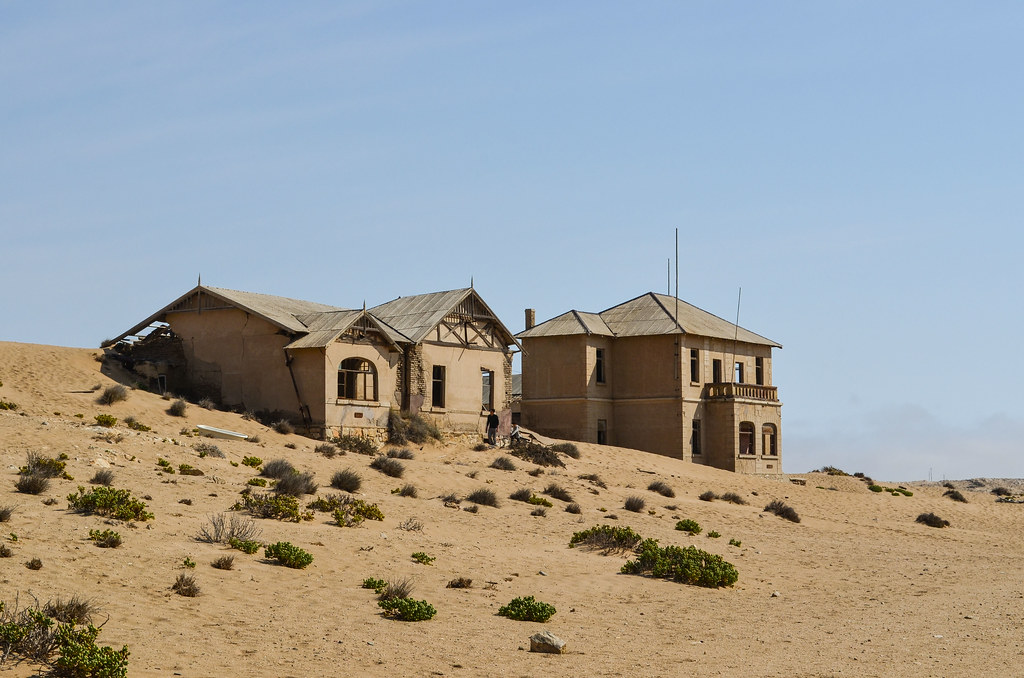
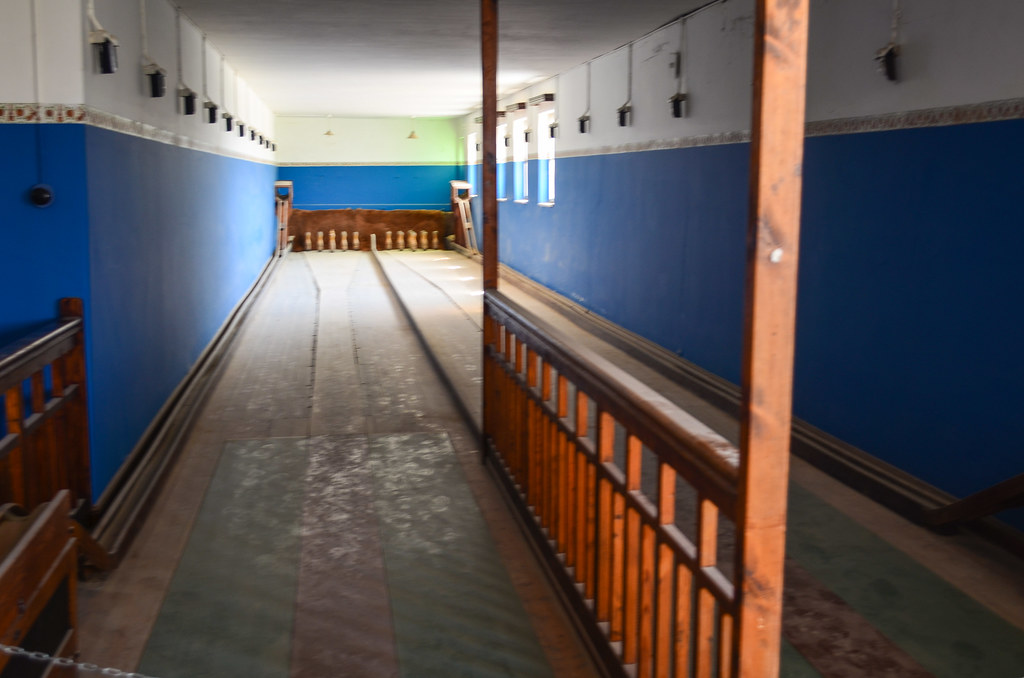
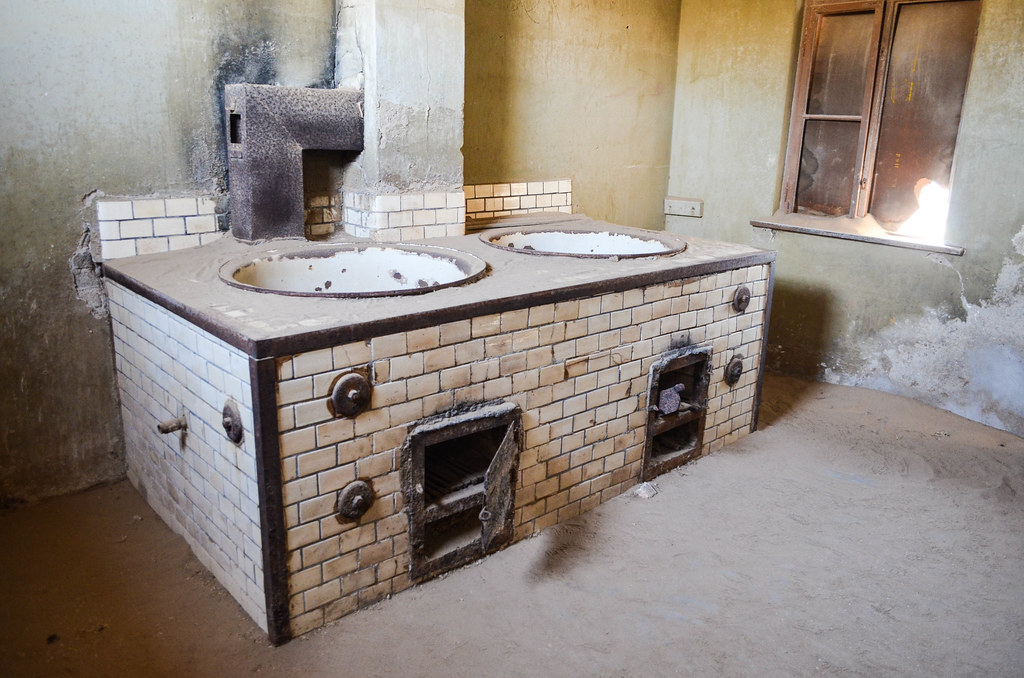
“It also possessed its own wine cellar. The wine was moreover used medicinally. One of the two resident doctors believed that patients recovered more speedily if they received some stimulation in the form of a little wine or champagne. Another doctor, an excellent surgeon, had a less exotic conception of health-giving additives. He encouraged his patients to eat a raw onion daily.
In 1927 a magnificent new recreation centre was built where many functions and forms of entertainment were held. It had perfect acoustics, designed by an expert from Germany. Provision was made for gymnastics and film shows. There was also a large skittle alley a casino and a theatre. The various rooms were painted in different colours with artistic friezes, deriving their names from the colour used. An enormous kitchen with a high ceiling had unique features. The stoves stood in the middle of the floor, leaving ample working space all around, and the chimneys were placed under the flooring.” (fonte)
Dopo tutti i villaggi attraverso i quali ho pedalato, è difficile credere che questo comfort e intrattenimento fossero disponibili in Africa, nel mezzo del deserto, 100 anni fa.

Dopo la Prima Guerra Mondiale e il ritiro dei tedeschi dalla Namibia, seguito dal dominio sudafricano, i giacimenti di diamanti intorno a Lüderitz furono considerati esauriti e le concessioni furono vendute a Ernst Oppenheimer, che qui fondò una società chiamata 'Consolidated Diamond Mines of South West Africa (CDM)', che successivamente fu fusa nel gruppo De Beers e controllò tutta l'estrazione di diamanti nella zona fino a entrare in partnership con il governo della Namibia nel 1995 con il nuovo nome di Namdeb.
Sir Ernst Oppenheimer was a German who got familiar with the South African market by selling diamonds from the Cullinan Premier Mine, where the largest rough diamond of gem quality ever found was discovered in 1905 (which was cut and integrated into the Crown Jewels of the UK). He founded the Anglo-American mining company in 1917 and became the majority shareholder of De Beers only nine years later, thus contouring a company profiting from a global monopoly over the world’s diamond industry until today. He stated in 1910 that “common sense tells us that the only way to increase the value of diamonds is to make them scarce, that is to reduce production“. We all know the “A Diamond is Forever” marketing that followed to manipulate consumer demand.
There is a 30-minutes documentary called “The Case of the Disappearing Diamonds” (starting qui on Youtube), where it is explained how Oppenheimer/De Beers/AngloAmerican exploited the Sperrgebiet and stole diamonds off Namibia, rushing in mining the high-grade blocks only before the unavoidable Namibian independence. Without it, could the tiny Namibian population be richer than Qataris today? The documentary features Bernt Carlsson, the UN Commissioner for Namibia who died with the bombing of the PanAm flight 103 in Lockerbie, e questo lo rende molto incline a varie teorie (ci sono più che abbastanza ebrei, diamanti, militari americani, uranio, governo dell'apartheid, ecc., intorno a Carlsson), come possono testimoniare le pagine collegate a questa frase. Il documentario merita di essere visto per le riprese aeree della Sperrgebiet e le immagini storiche dell'estrazione mineraria, e anche per la nostalgia della qualità delle produzioni televisive del 1987.
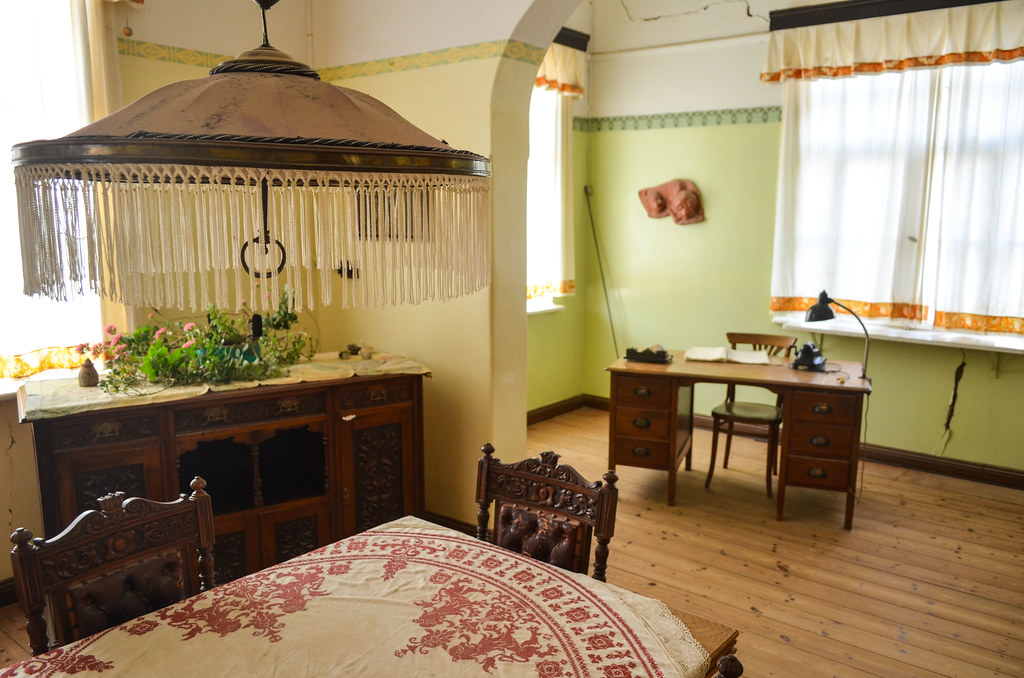
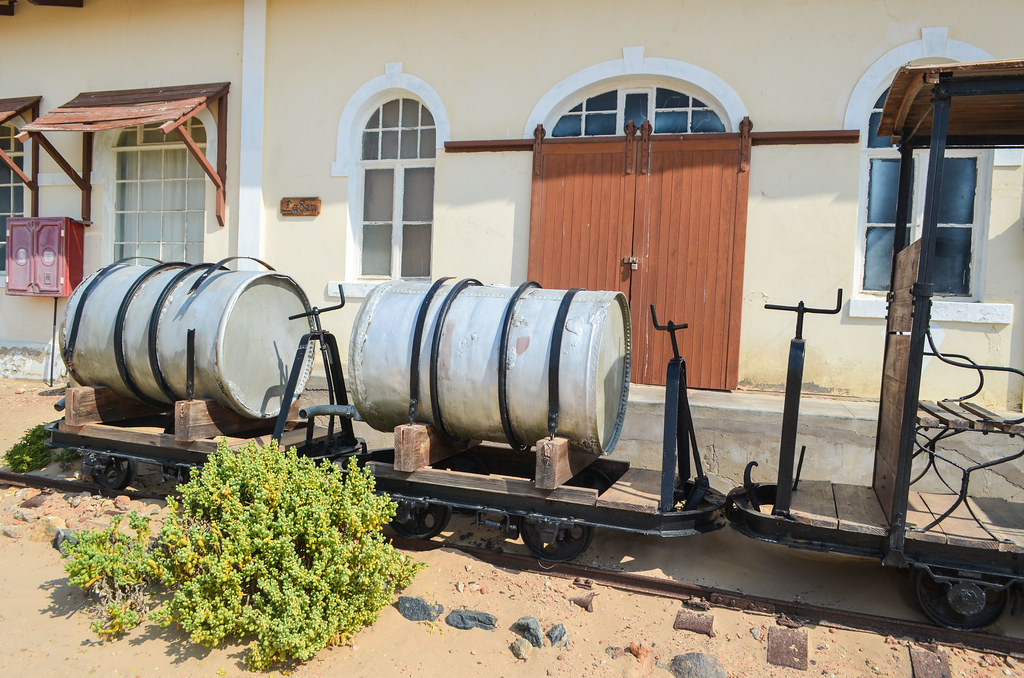
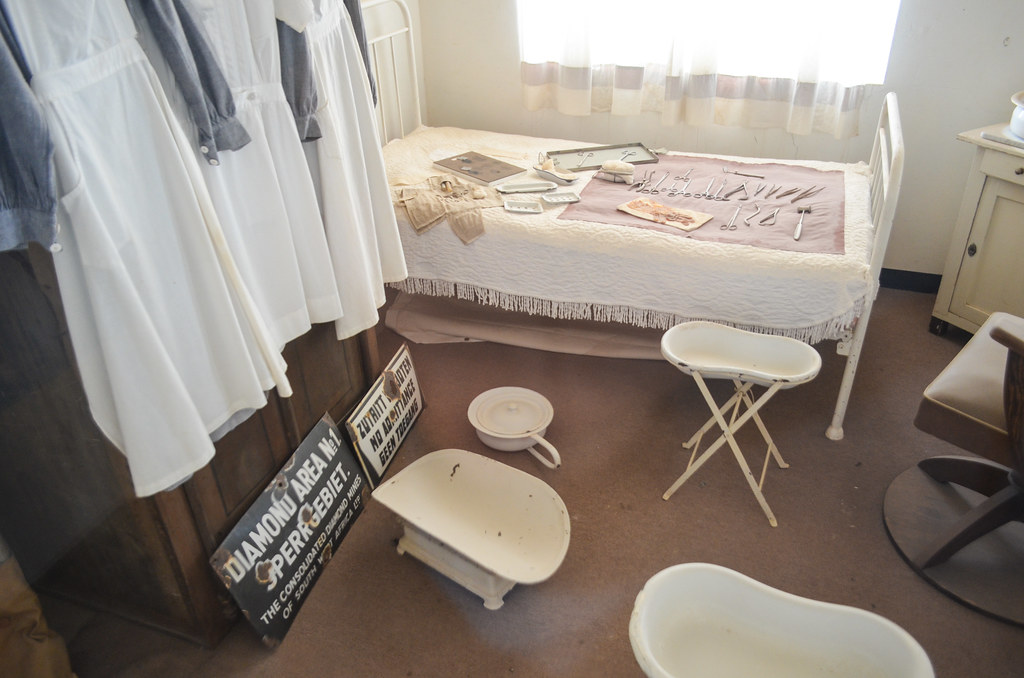
The short tour ends after the guide manages to make the hundred year old history come alive again, explaining how was the cool air of the ice shop re-used at the neighboring butchery, how the parties were held in the concert hall, how people could pay their beers with diamonds, etc. I am then left alone with my favorite, exploring ruins, and the daunting task of visiting all the buildings before the site closes.
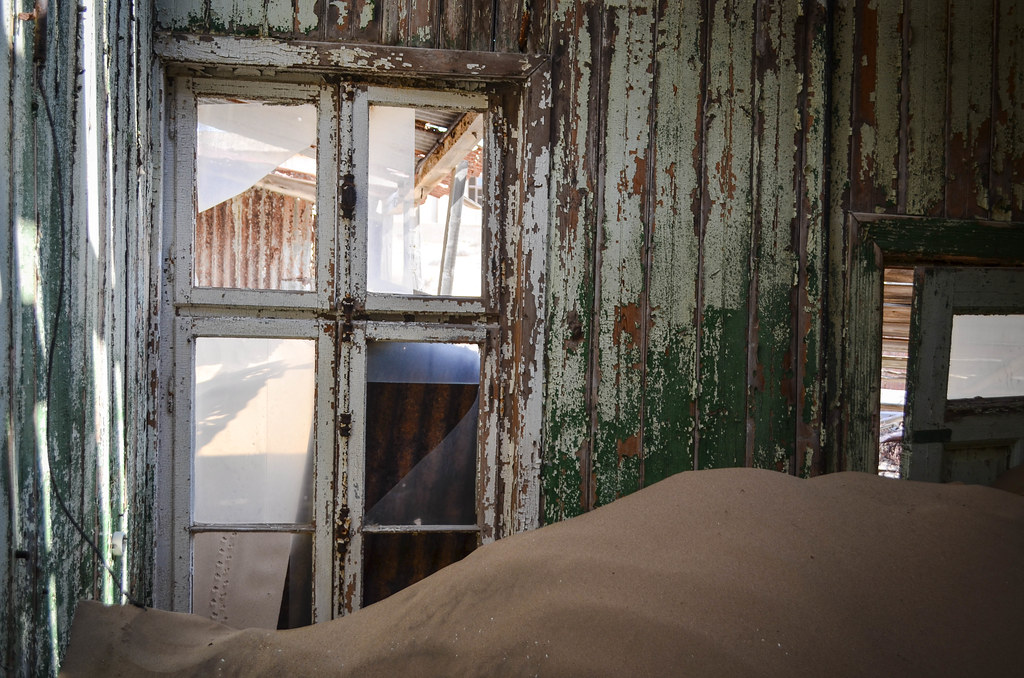

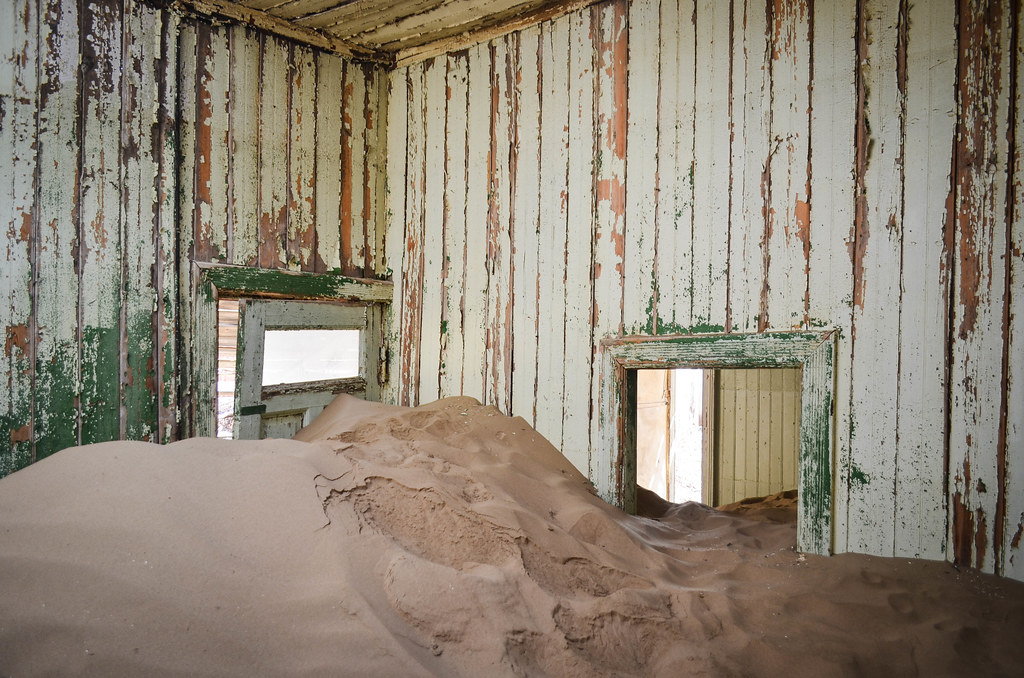
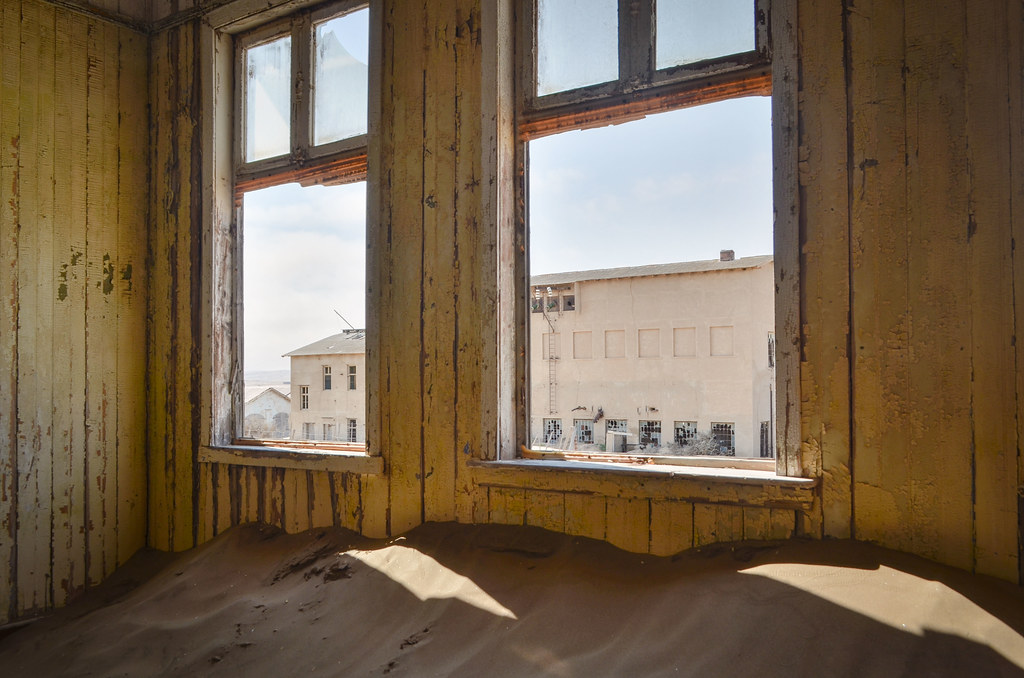

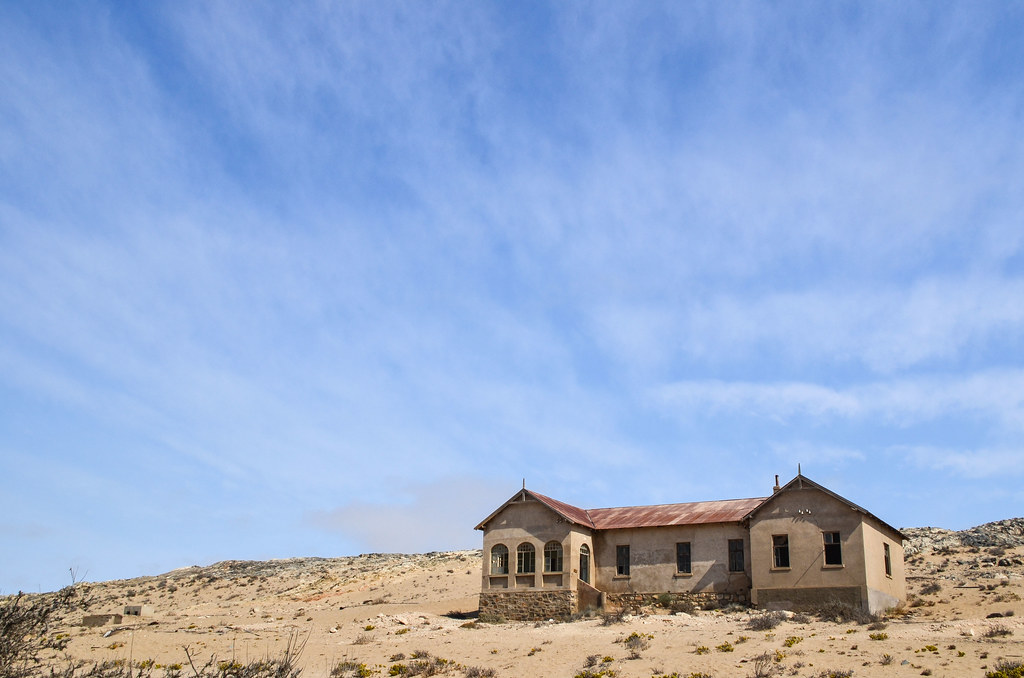
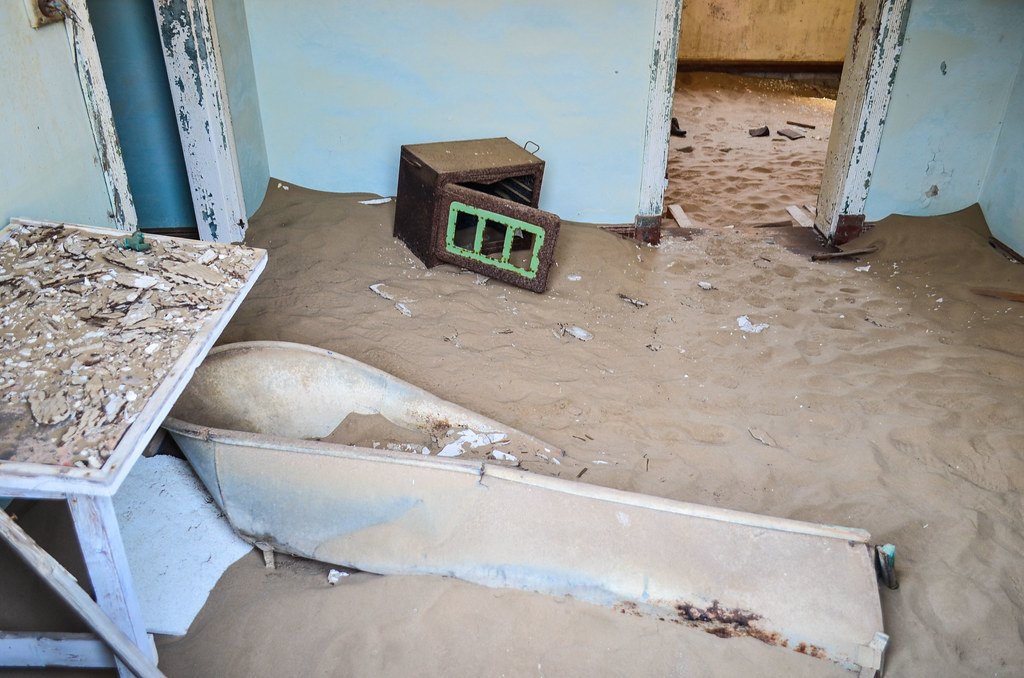
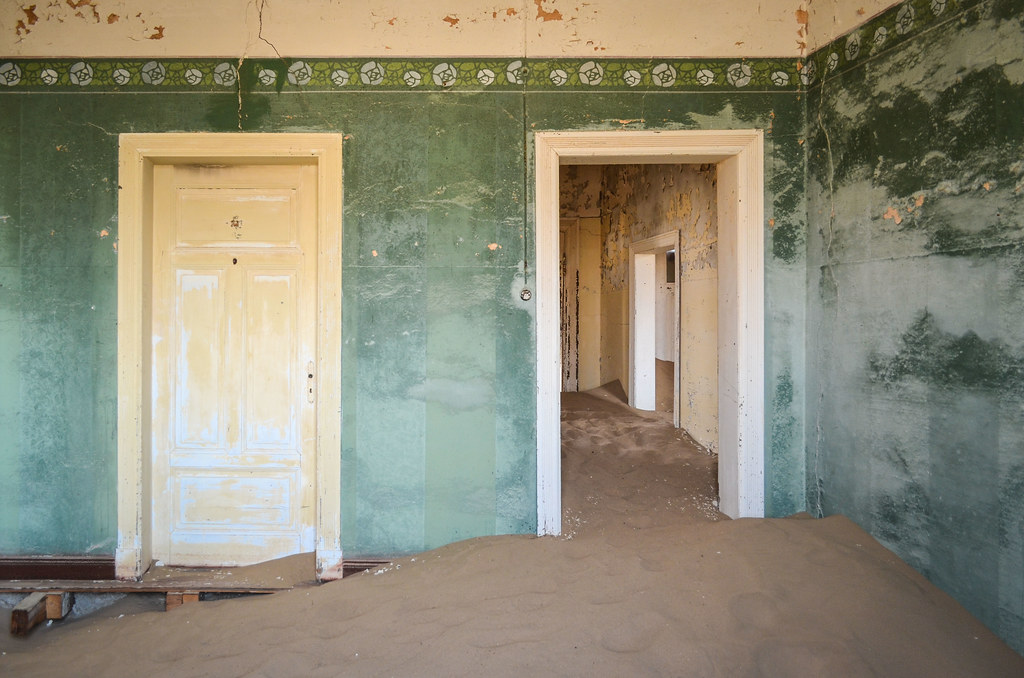
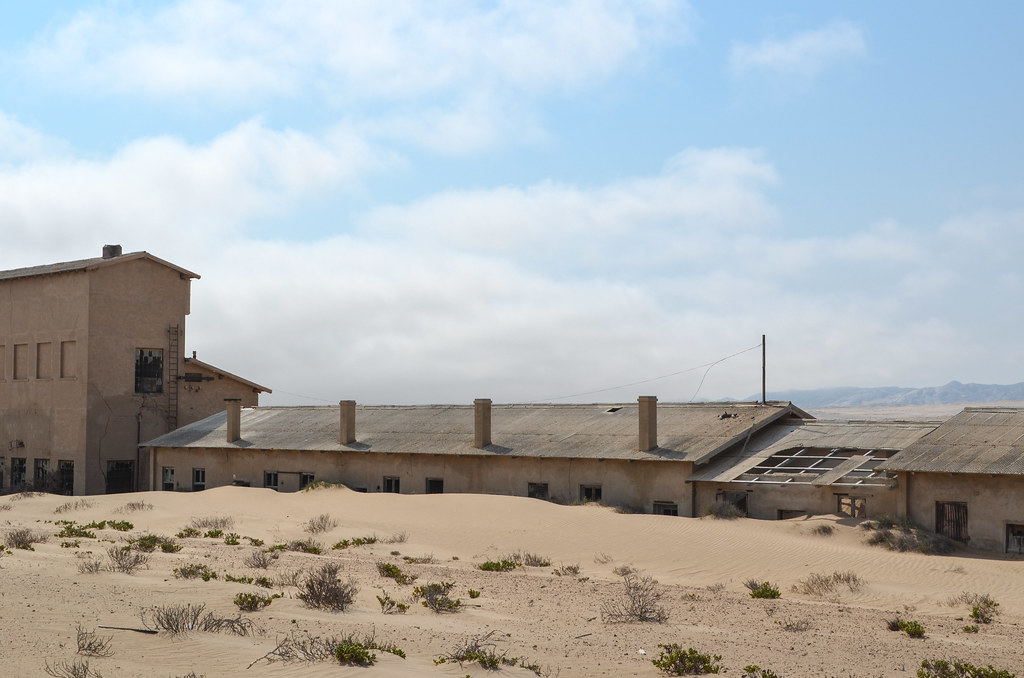
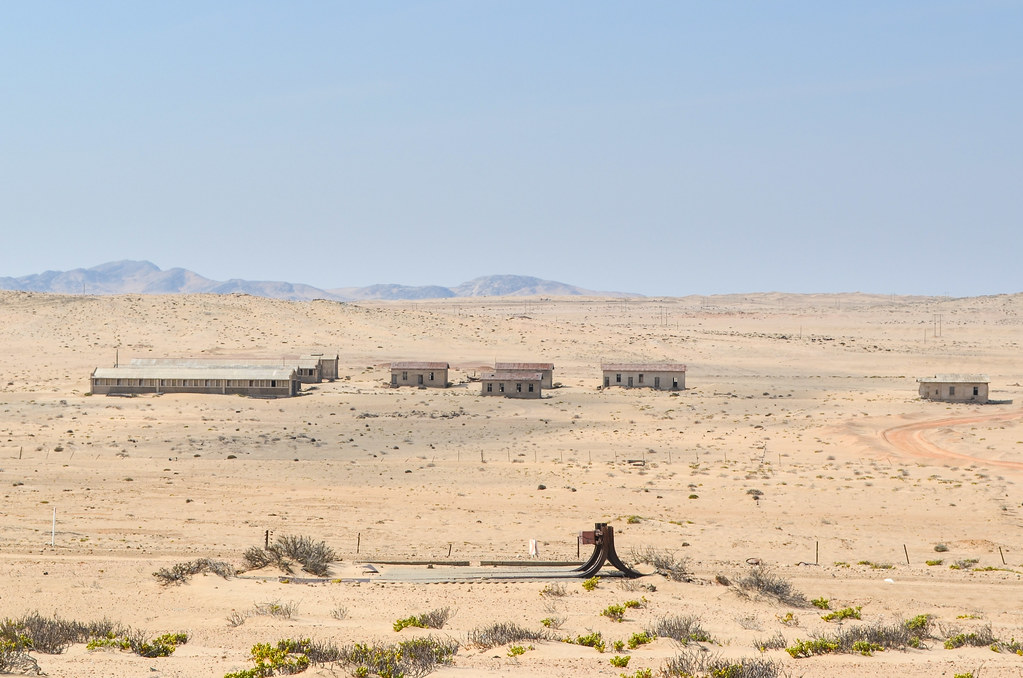
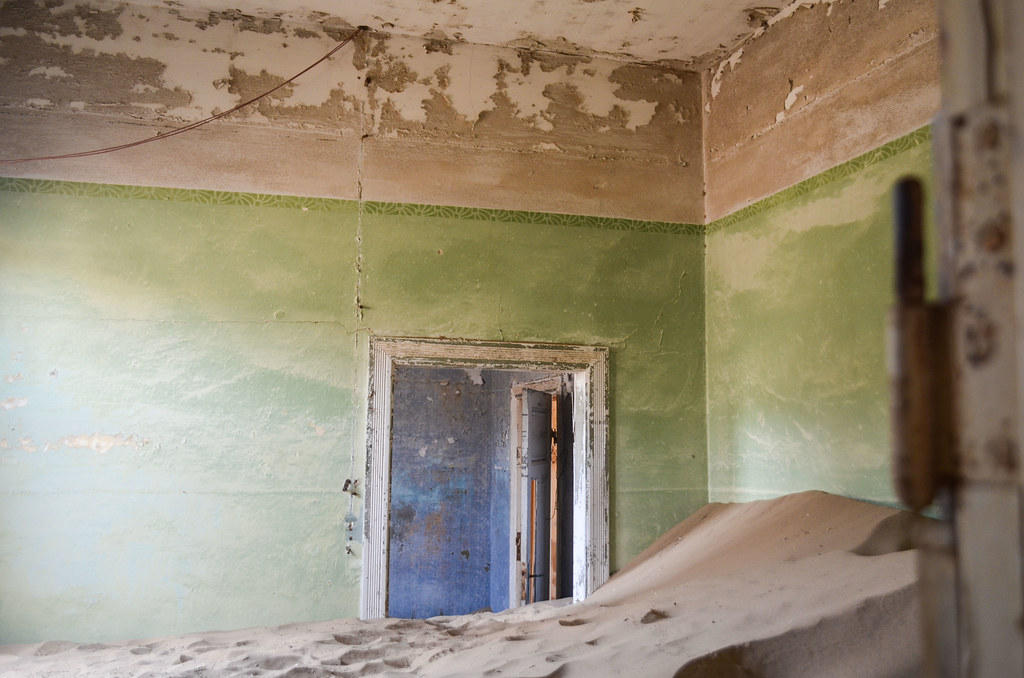
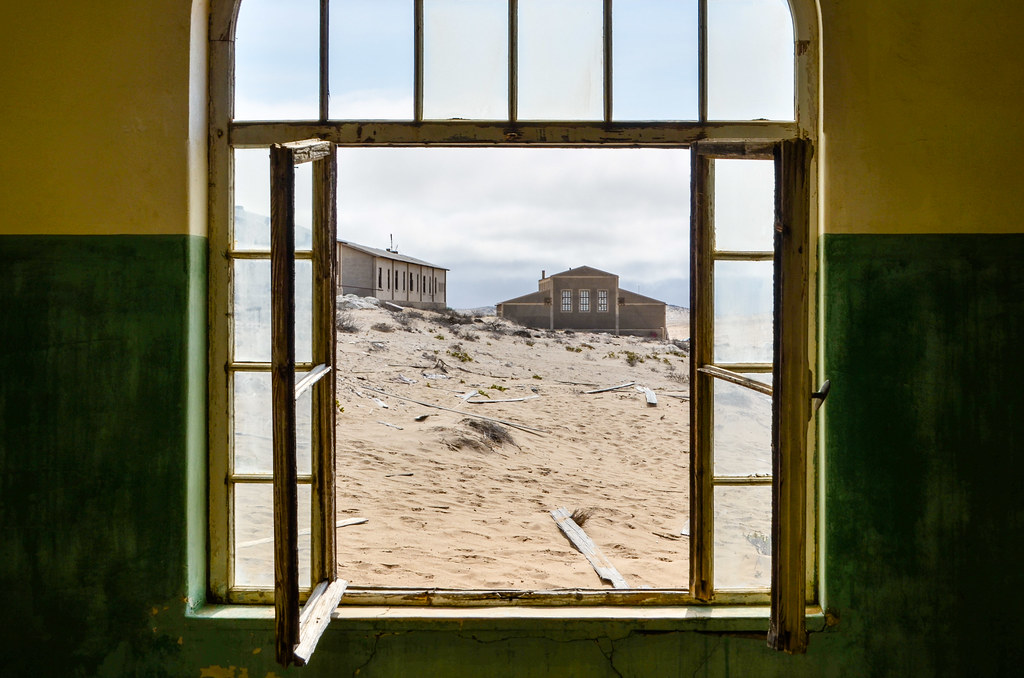
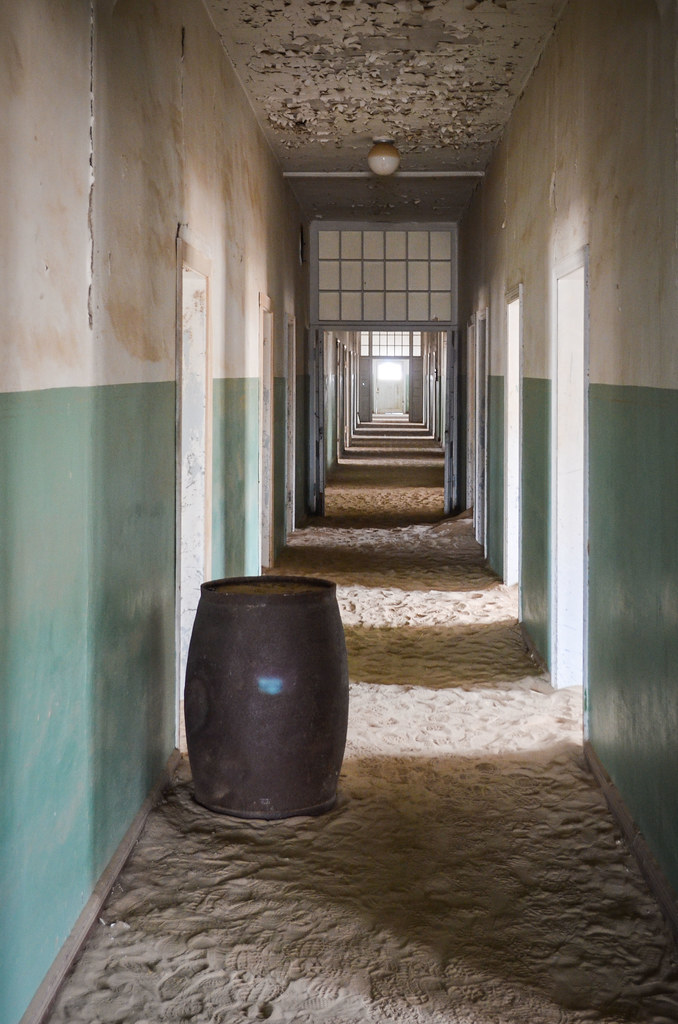
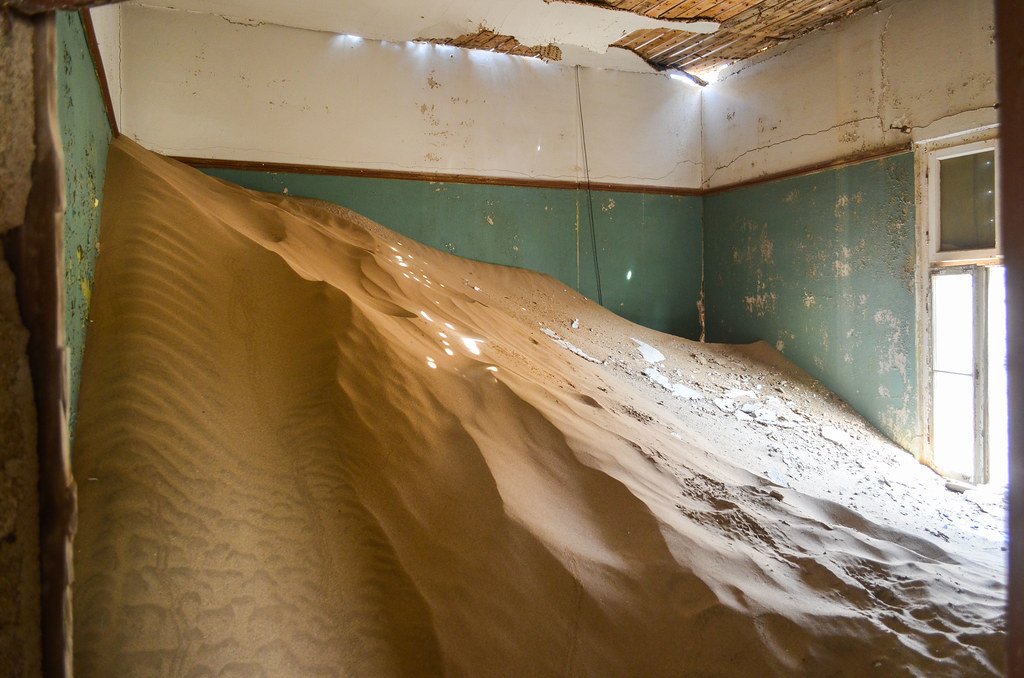
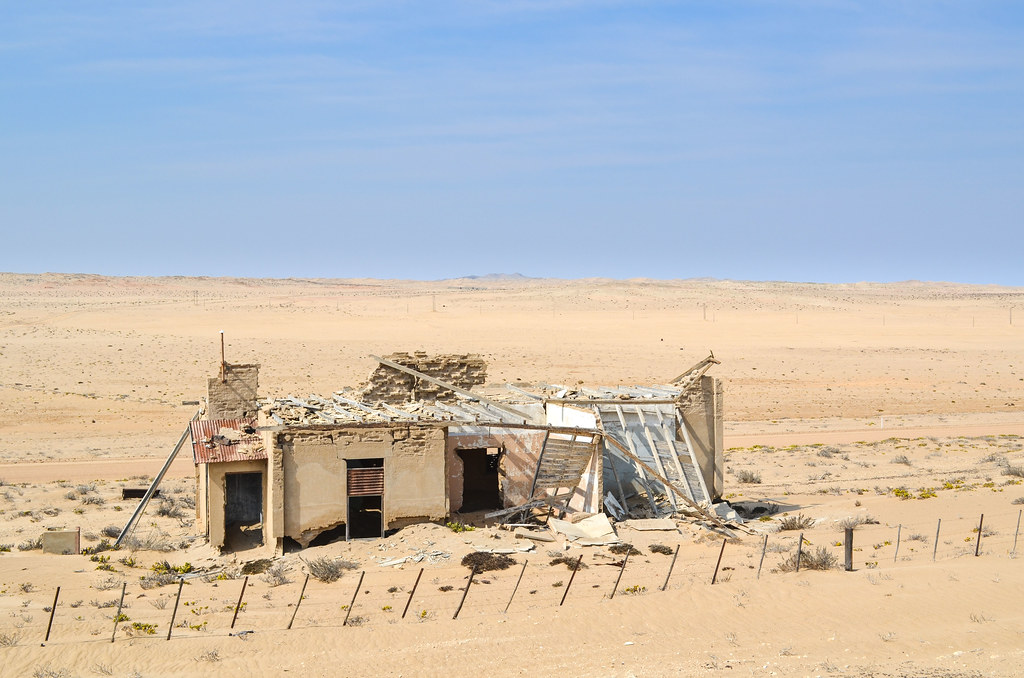
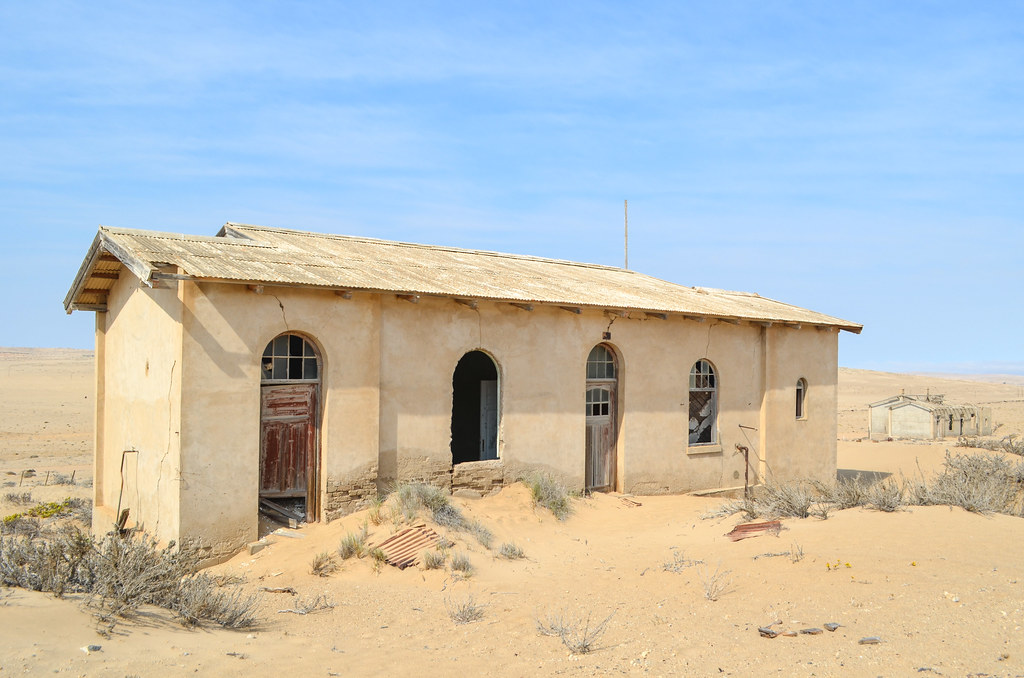
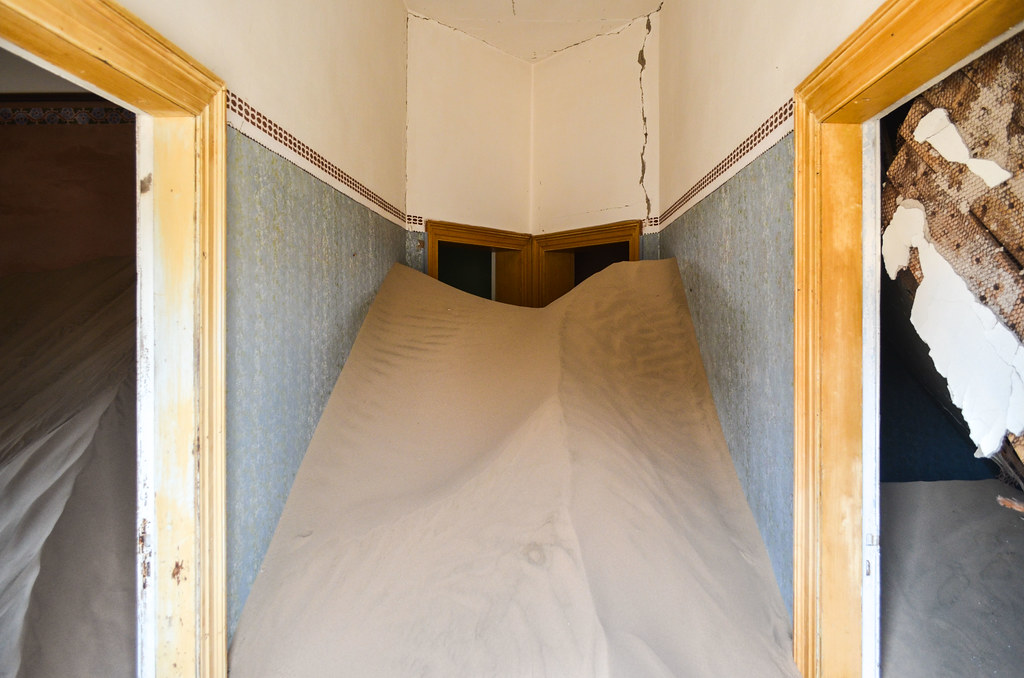

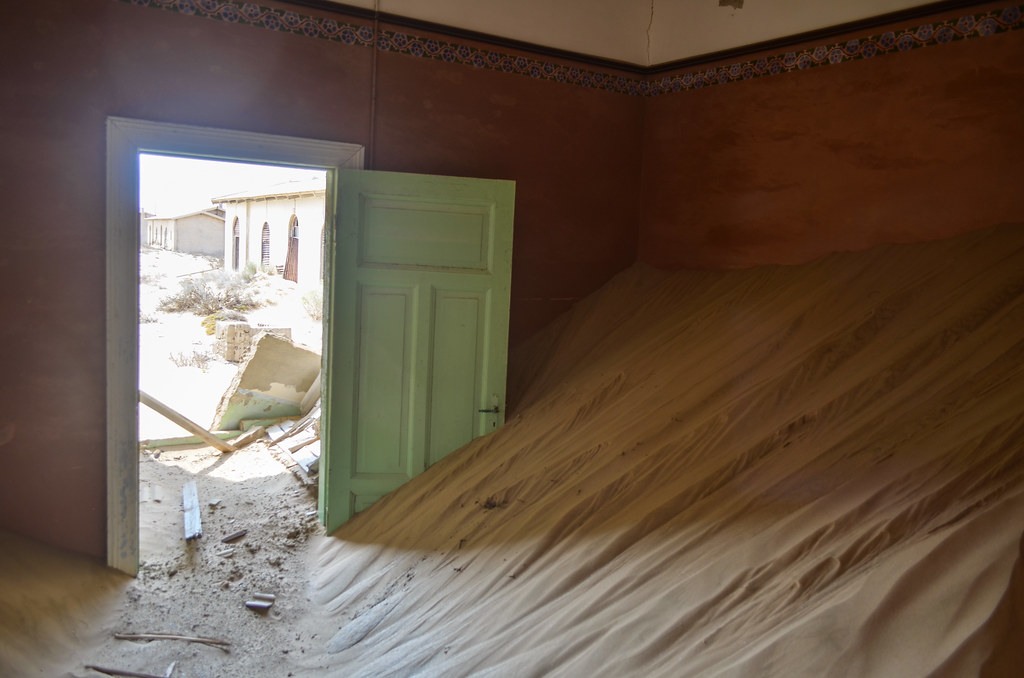
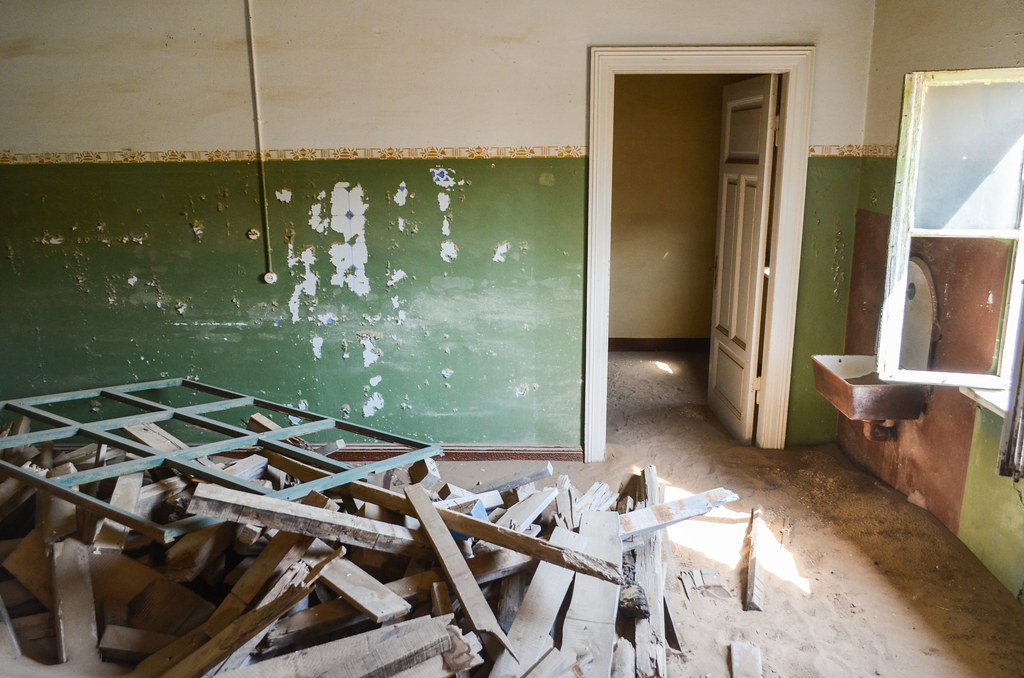
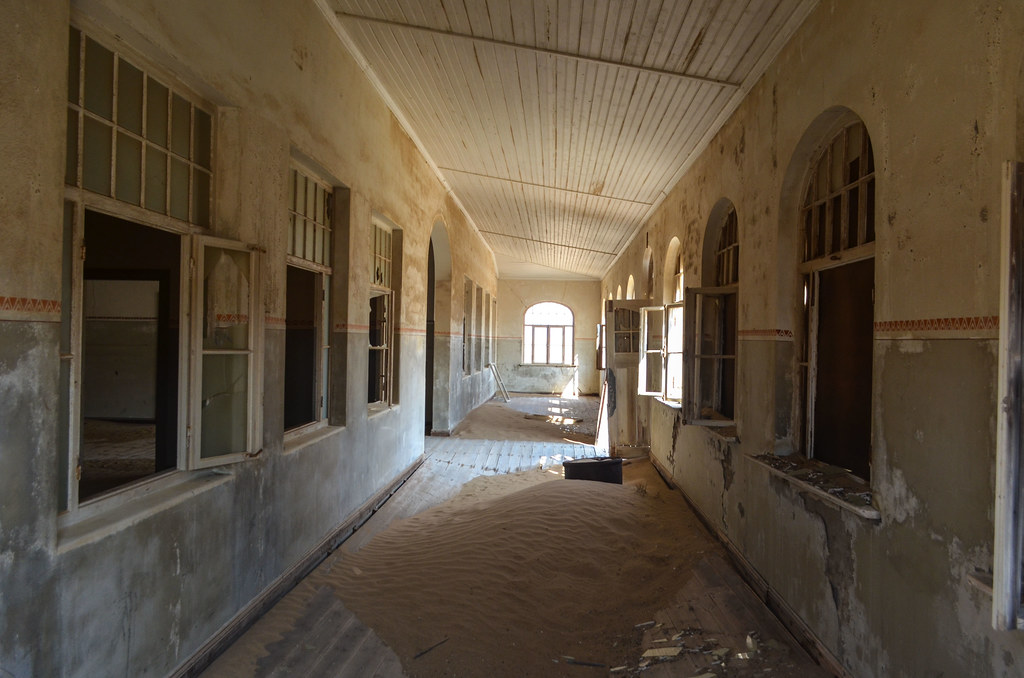
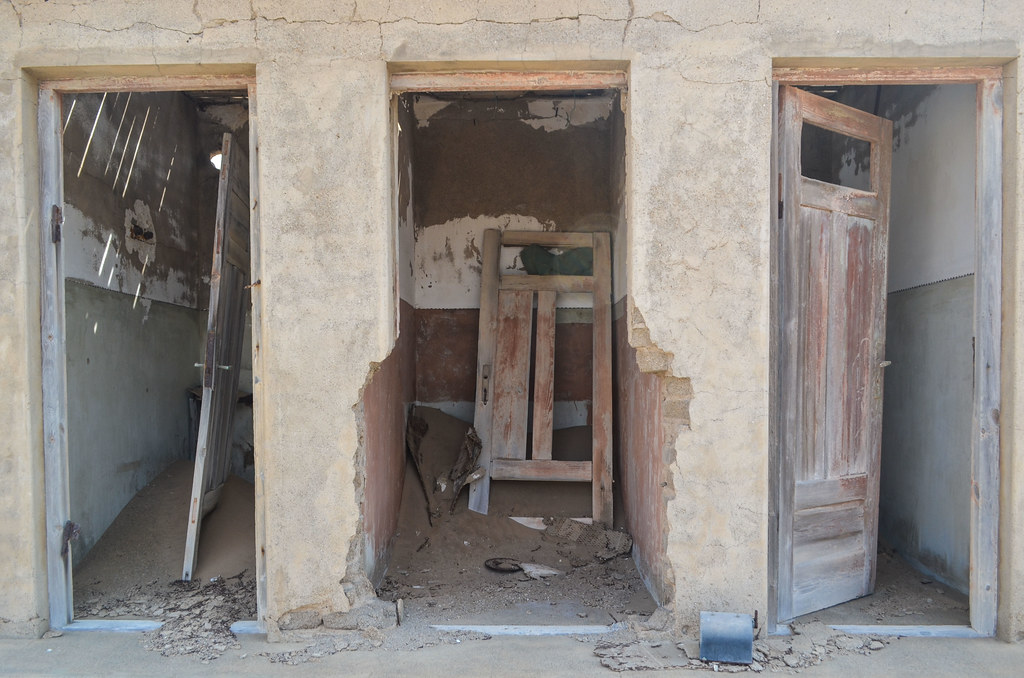
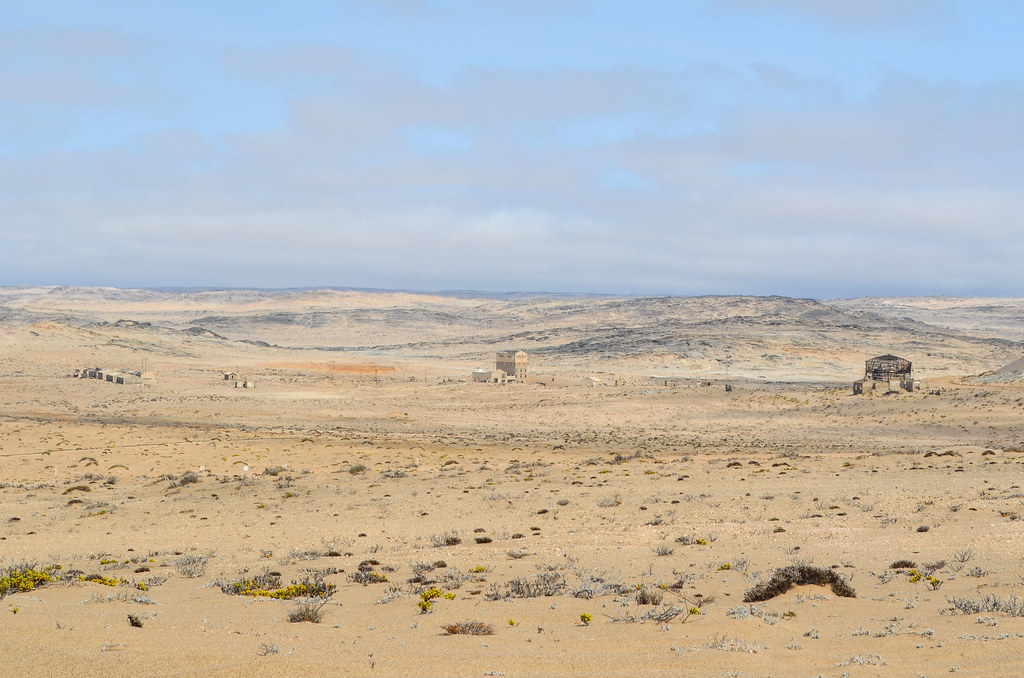
From the extreme east of the ghost town, I spot buildings further away. These were where the proper mining works happened. Is it possible to go further only with a permit. Some 15 km this way is located the Elizabeth Bay mine, an old mine that became a ghost town, and re-opened relatively recently. We can see it clearly on the foto satellitare, as well as the ruins near the beach.
Dal libro di storia dello Sperrgebiet, ho annotato le seguenti cifre, ma non ricordo a quale area mineraria della Sperrgebiet si riferiscano. Nei primi 7 anni di scoperta, dal 1908, le miniere produssero un totale di 5,4 milioni di carati (con un costo di 1000-3000 dollari per carat oggi, era un ottimo affare per raccogliere pietre lucide nella sabbia!). Un milione e mezzo di carati furono scavati tra il 1926 e il 1931, con l'aiuto di camion da 40 tonnellate. Con il progresso della tecnologia e l'area di alta qualità estratta, la densità di diamanti scese da 7,59 carati per 100 tonnellate nel 1987 a 3,67 nel 1996.
Ci sono altre città fantasma nello Sperrgebiet, come Pomona e Bogenfels. Vorrei tornare a trovarmiPomonaun giorno. SembraQuesto, e èqui.
Il premio per l'opportunità persa del secolo va ai britannici: Mining in the Pomona area started in the 1860s. After the discovery of guano deposits, the British annexed a number of islands off the coast of south-western Africa. This action led adventurers and traders into the area. Two of these, Aaron de Pass and Captain John Spence, obtained mining rights from Chief David Christian along the coast between the shore and 15°50’ longitude. Together they established the Pomona Mining Company and unsuccessfully tried to extract copper, lead and silver. It later appeared they must have shoveled the diamonds away to get access to the ore deposits. […] Official diamond mining started in 1912 under the auspices of the Pomona Diamanten Gesellschaft (Pomona Diamond Corporation). This mine soon extracted an average of 50,000 carats (10 kg) per month.“
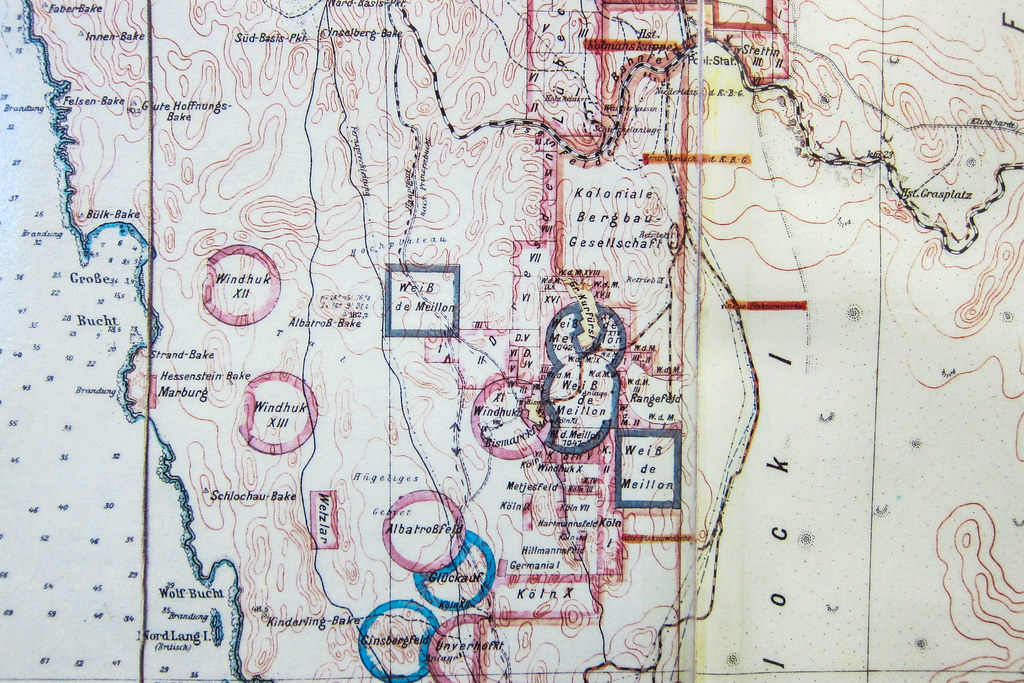
A differenza di Kolmanskop, questi luoghi remoti possono essere visitati solo con un permesso e una guida, costano denaro e necessitano di preparazione (autorizzazione della polizia).
“Nei primi tempi, nella vicina Valle di Itadial, le pietre erano così accessibili che i cercatori senza attrezzature minerarie strisciavano a quattro zampe alla luce della luna piena per raccogliere le pietre scintillanti.Non ha nulla a che fare con l'estrazione di diamanti nei tubi di kimberlite come in Sudafrica.
Per chi ama esplorare e viaggiare su Google Earth, lo Sperrgebiet è perfetto. Ci sono altre città fantasma, scavatori (come questa carina), remains of railways, … to discover in a 350 km x 100 km deserted area. There was a 119 km long industrial line (600 mm gauge) linking Kolmanskop with Bogenfels, completed 1913, the only rail link in Namibia ever electrified. The rail track does not exist anymore.
Resuming the tour of Kolmanskop:
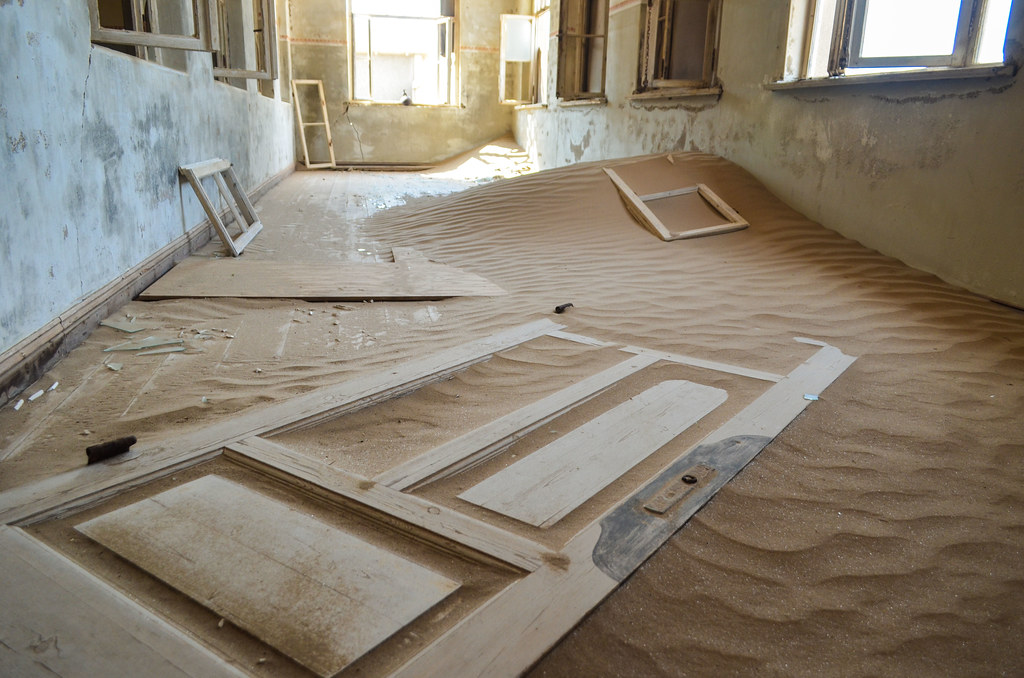
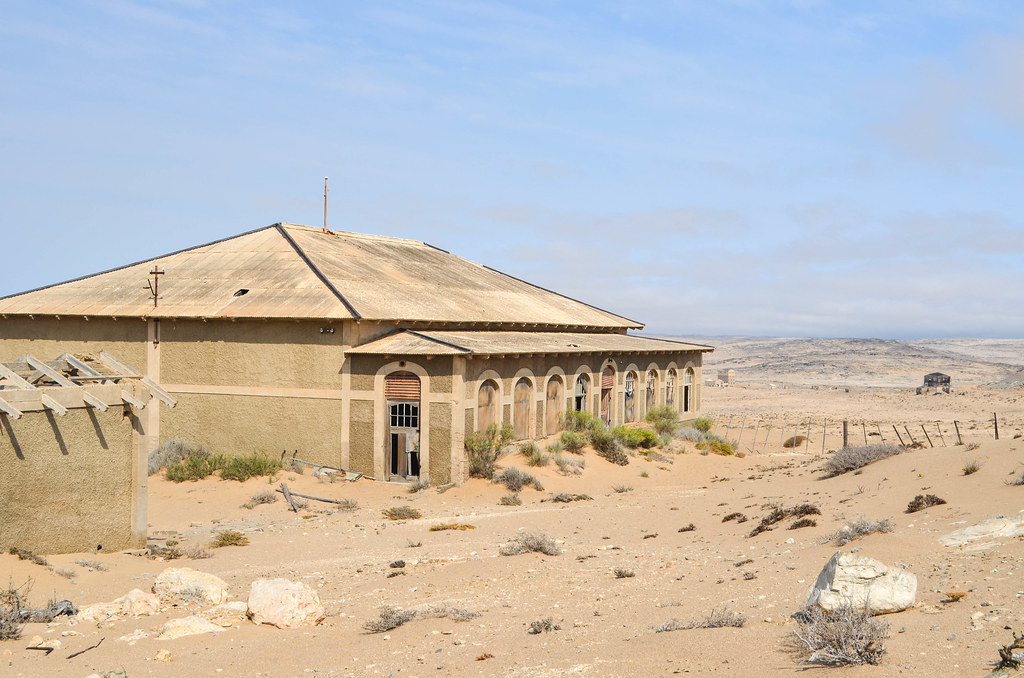
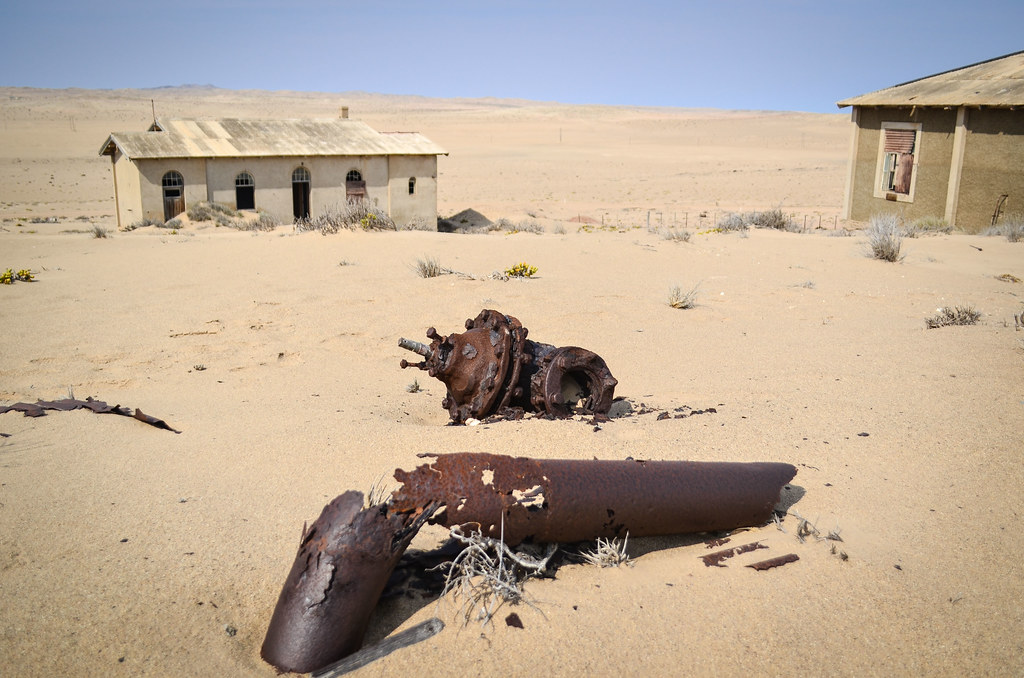
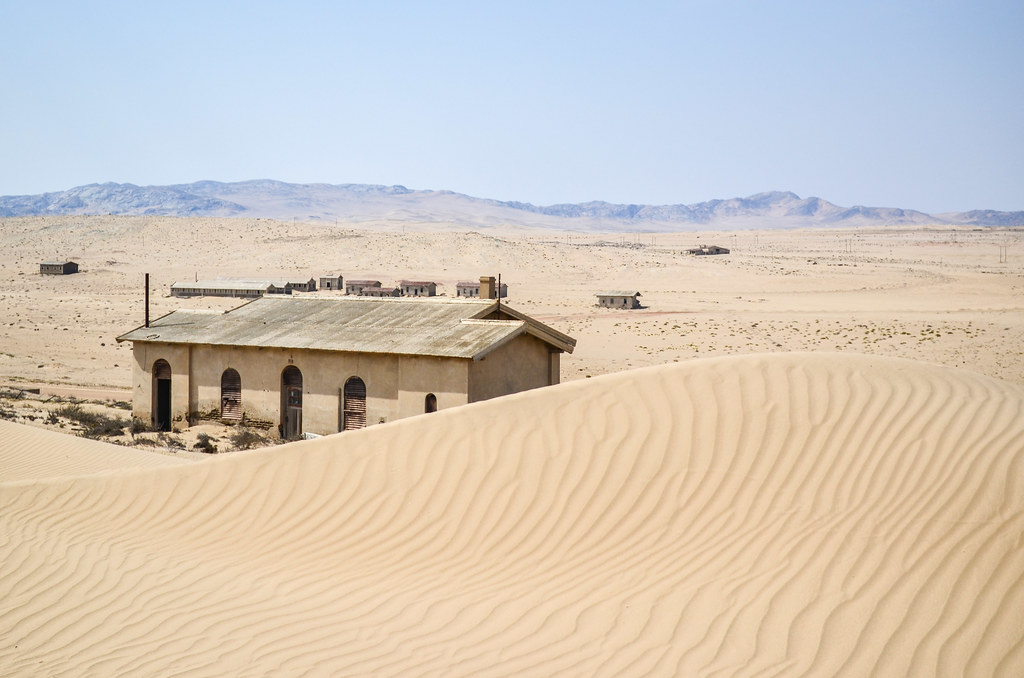
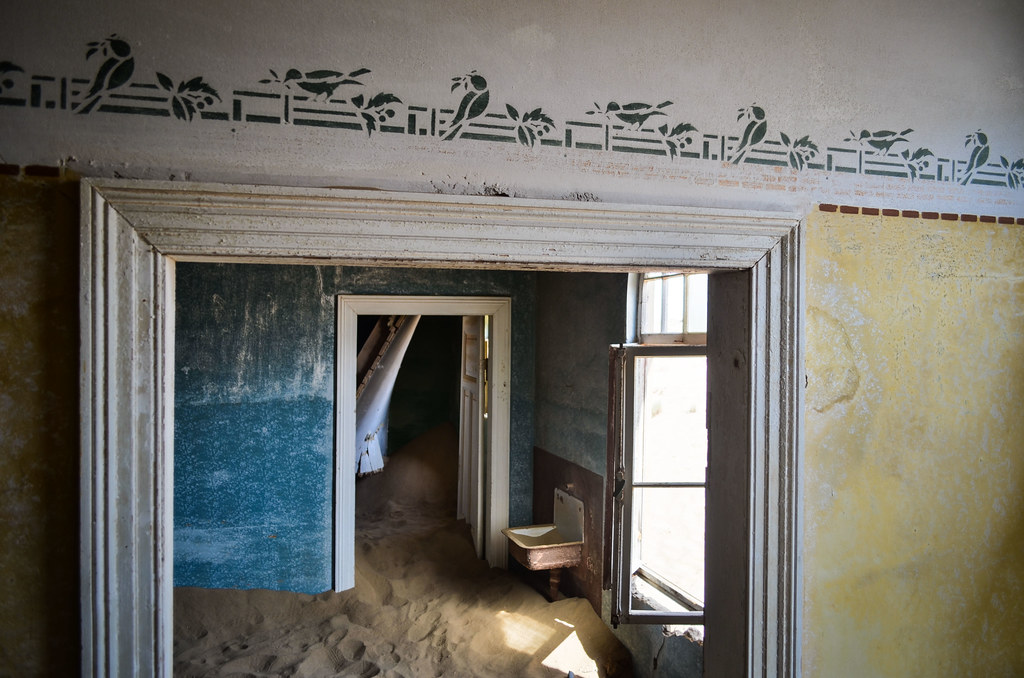
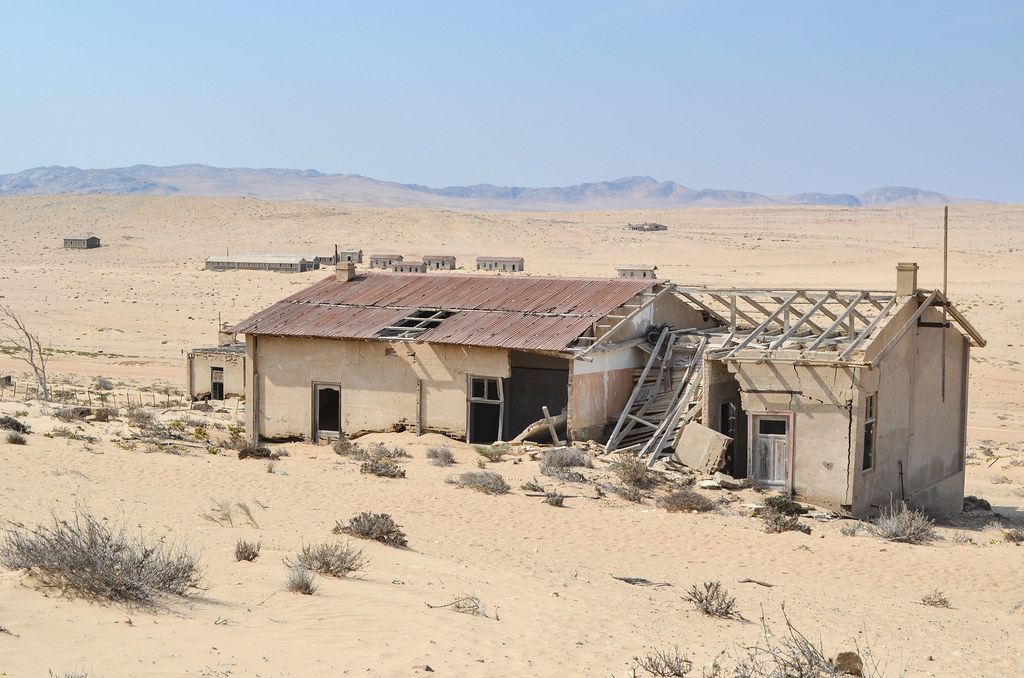


I have described my encounter with the fashion industry a week ago at the Kanaan farm, and it seems Vogue really likes Namibia. A model was photographed in 2011 for Vogue UK su quella stessa tavola da tuffo sopra. E sembra che la fotografia di moda abbia qualcosa per le modelle che camminano con noncuranza nel deserto con ghepardi e uomini tribali nudi …
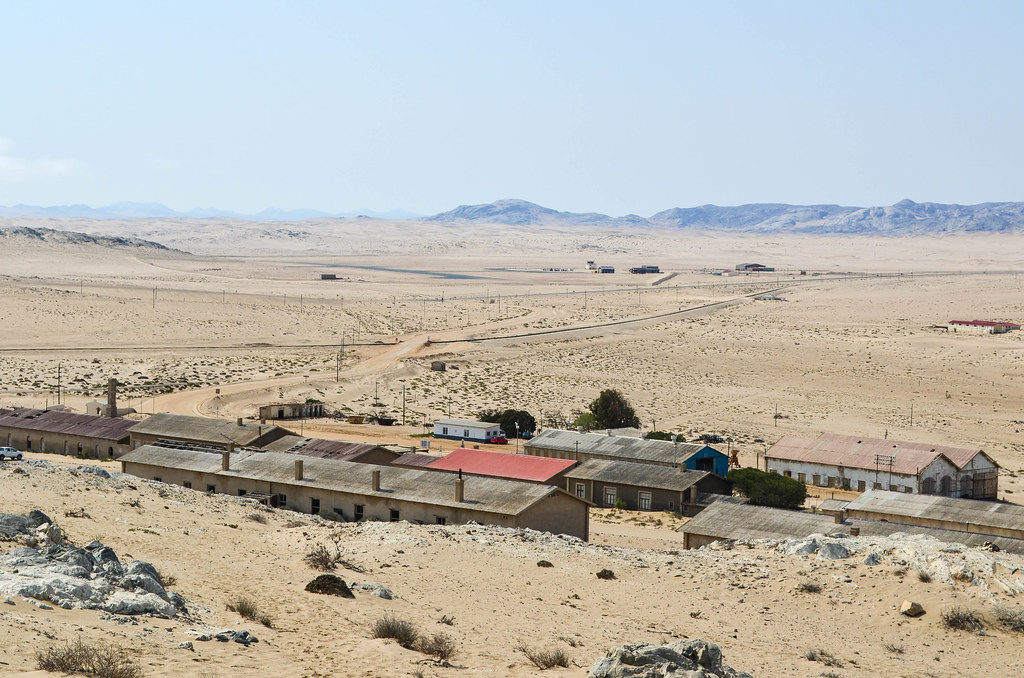
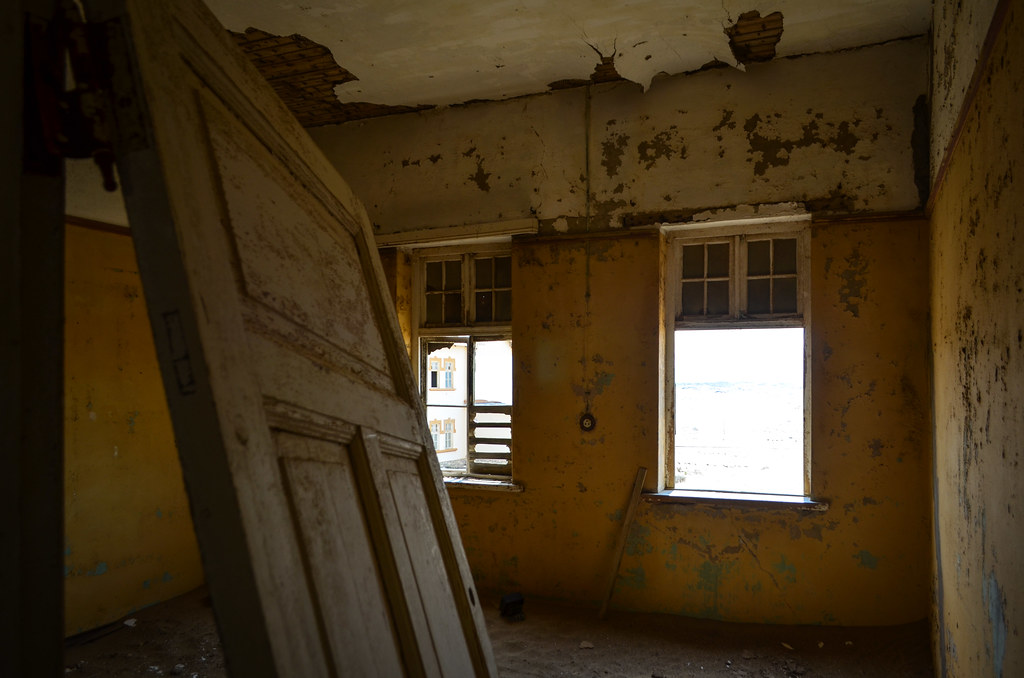
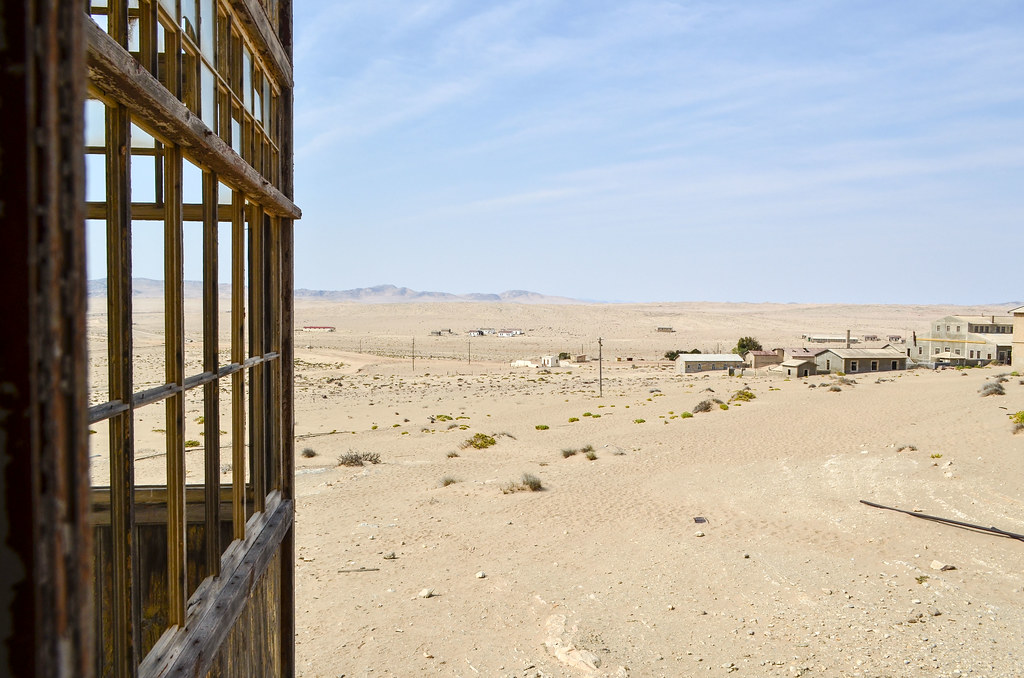

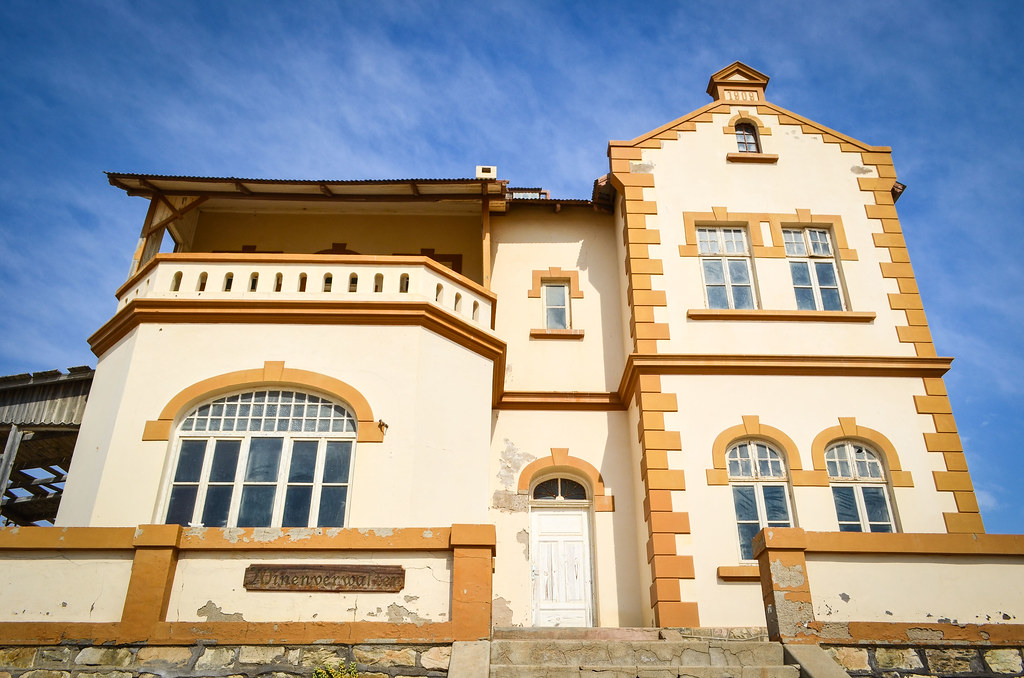
Sono andato in cima alla casa del direttore della miniera. Costruita 100 anni fa, abbandonata al vento e alla sabbia 50 anni fa, ma sembra abbastanza robusta che potrei quasi trasferirmi domani.


Poiché la città fantasma di Kolmanskop è L'attrazione turistica della zona, ogni turista che va a Lüderitz si ferma qui. E la mia bicicletta carica, in qualche modo assicurata esposta tra il caffè e il parcheggio, ha inevitabilmente attirato alcuni spettatori non invitati interessati al ciclismo (ovvero i tedeschi).
Uno di loro nota il mio speedhub Rohloff e mi parla di Pinion. Sono stato molto soddisfatto del mio mozzo Rohloff a 14 marce, e non ho mai pensato che non fosse necessario avere questo ingombrante grande mozzo speedhub all'interno della ruota posteriore: può essere posizionato al posto del movimento centrale! Questo è ciò che gli ingegneri del cambio Porsche hanno sviluppato: un cambio a 18 marce per biciclette (recensioni qui e ci Apparentemente, richiede una manutenzione ancora inferiore rispetto a un Rohloff, con una migliore posizione rispetto al centro di gravità della bici, e lascia la ruota posteriore libera da raggi non convenzionali. Sembra perfetto per il cicloturismo! Molti costruttori di telai tedeschi lo hanno già incorporato. E se il nome Porsche gli conferisce immediatamente un'immagine di qualità e affidabilità, influisce anche sul prezzo: le buone bici da touring con Pinion partono da 4000 €. Comunque, i cicloturisti lo comprerebbero solo quando ci sarà abbastanza di L'ho usato per 10 anni e ho pedalato intorno al mondo senza alcun problema su internet.

Alla mia uscita da Kolmanskop, scatto lo scatto dell'unico edificio che non è in rovina: l'hangar blu ospita uno scanner funzionante, poiché è il luogo dove tutti i lavoratori e visitatori della miniera Elizabeth Bay dovrebbero fare il check-in e il check-out. Addio alle piccole pietre lucide sopravvalutate! Ma come ricorda l'industria dei diamanti, sono un po' come il Robin Hood del commercio e dell'industria: creano posti di lavoro per i meno qualificati e aiutano alcuni paesi africani a sviluppare condizioni di vita migliori (a patto che non si contendano per questo), tutto da parte di persone abbastanza ricche da comprare queste pietre. Un Robin Hood con una posizione di intermediari redditizi, però...
Ho iniziato questo post del blog parlando della linea ferroviaria Aus-Lüderitz. Ho ancora intenzione di visitare le stazioni abbandonate lungo la mia strada di ritorno verso Aus, ma sarà nel prossimo post.


Saremo turisti con 2 ruote motrici, ma porteremo rifornimenti extra, come facciamo di solito, se vediamo altri motociclisti con 2 ruote motrici. Qualsiasi consiglio, avvertimento o pericolo associato al campeggio selvaggio. Preferiamo essere da soli piuttosto che nei campeggi la maggior parte del tempo.
Useremo tende.
Grazie,
Martin
Bonjour JB.
Super viaggio, video e foto magnifiche. Grazie per la condivisione.
Vorrei anche fare un viaggio in bici in Namibia alla ricerca di dispensari sanitari (sono infermiere), puoi aiutarmi? Ne hai incontrato uno?
Grazie in anticipo e buona continuazione
Ciao Paulo,
Direi che c'è un centro sanitario in ogni piccola città o grande villaggio, e almeno un ospedale in ciascuna delle rare città di media dimensione, visto che il paese funziona abbastanza bene non dovrebbe essere difficile da trovare.
Fantastico JB. Grazie ancora per aver condiviso. Non vedo l'ora di vedere i video 😀
Grazie! Ho appena finito i video in Namibia, 2 x 20 minuti per 4000 KM. Finalmente finito di montare!
Bonjour,
Je trouve cet endroit magnifique à la fois par sa désertification et à la place que la nature qui a ripris ses droits sur les constructions humaines. Je te souhaites un agréable voyage avec ce magnifique vélo et profites bien de la vue magnifique de ce pays.