


In Namibia più che in qualsiasi altro paese, il mio primo pensiero, appena esco dalla tenda, è quello di spremere le gomme. E questa mattina di nuovo, la mia gomma anteriore è leggermente sgonfia. Pff ... un'altra perdita lenta.
Naturalmente, devo cambiare il tubo e rattopparlo ora, mentre ho ombra e acqua. Era una piccola foratura. Non so come sono riuscito a pedalare i miei primi 10.000 chilometri senza una sola foratura, mentre ora ho qualcosa che va storto ogni tre giorni. Certo, la mia attrezzatura non è più così nuova, ma le gomme lo sono. O, probabilmente, la Schwalbe Marathon Mondial pieghevole era davvero una lega sopra tutte le altre.
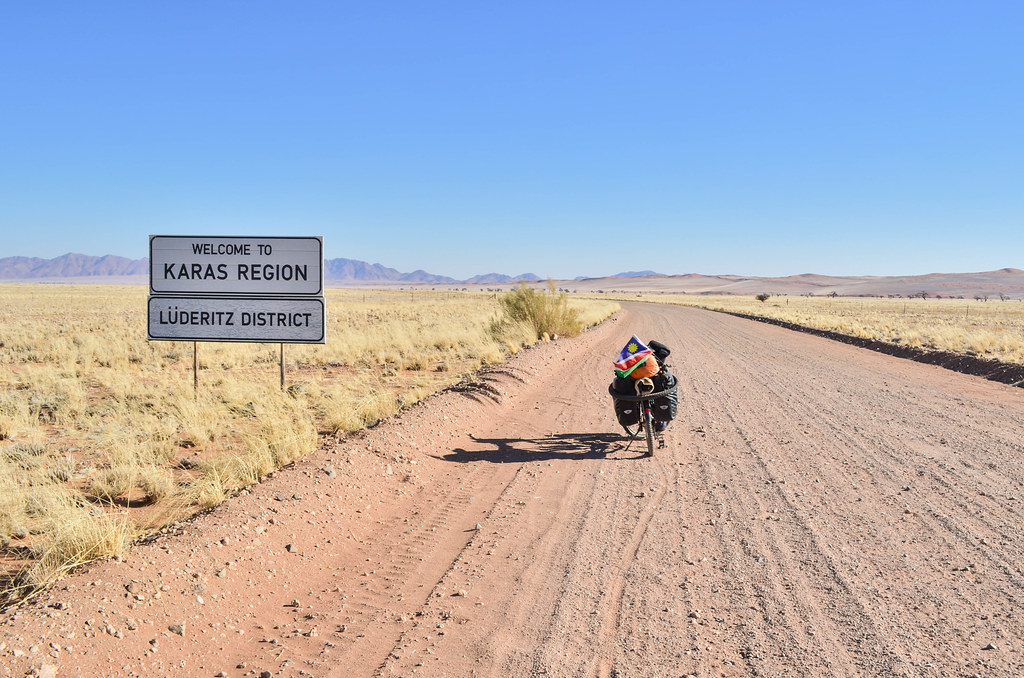
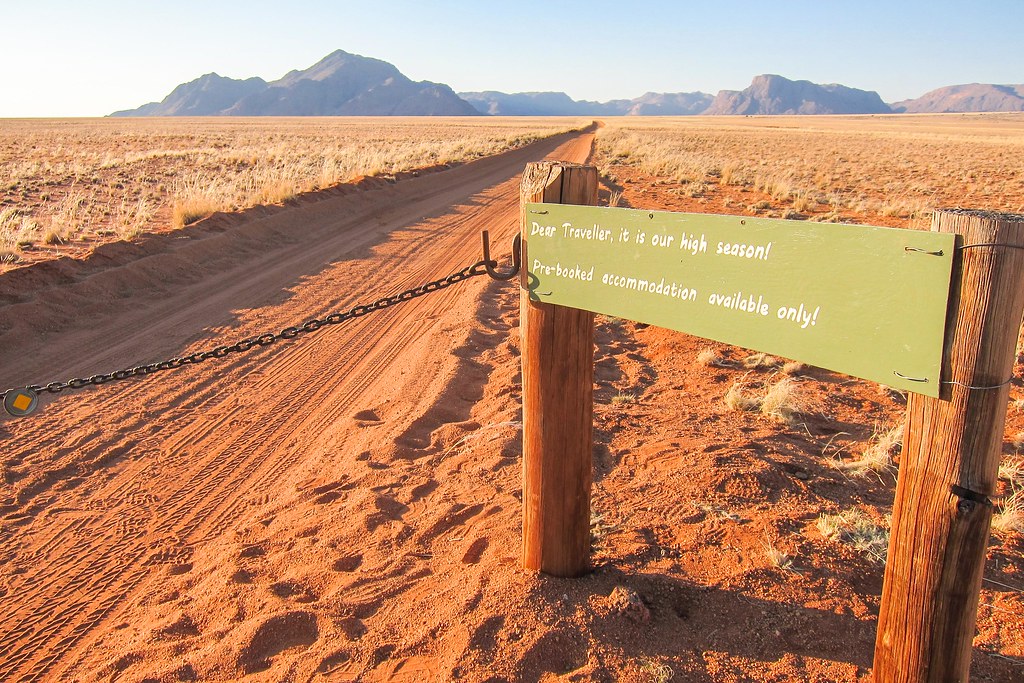
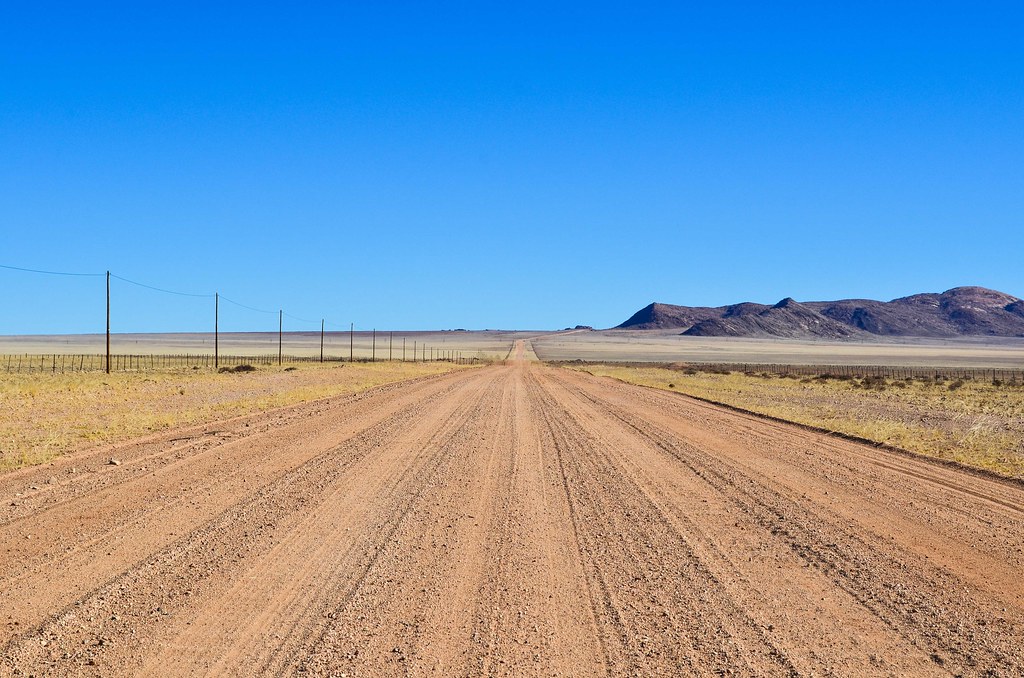
La D707 inizia proprio ora. Da quello che ho capito su questa strada, i 200 km fino al villaggio chiamato Aus rientrerebbero nella seguente categoria: superficie scadente (sabbia / ghiaia libera), poco traffico (5 / 10 auto al giorno), solitaria (+/- 1 fattoria visibile dalla strada), estremamente panoramica.
I miei 10 litri d'acqua sono pronti, riempio anche lo stomaco e via!

So far, the road is not bad. It’s not the best of Namibia, but it’s still great. It’s very remote … and at one point, my bike is standing in the middle of the road, waiting for me to take pictures, when a bakkie stops by. It’s a vehicle from a leopard conservation organization, and the driver tells me he’s also a cyclist, he has crossed South America, and he’s staying now at the Kanaan farm. It seems biblical references are common for naming farms, and I have already heard about that one. The Belgian cyclists I met in Twyfelfontein told me they had to go there to fetch water, and because it’s 10 km off the road, at the end of a sand track, they left their bikes, walked to the farm, and asked for a bakkie and water.
Sarebbe certamente piacevole passare la serata chiacchierando con un altro ciclista, ma se comporta 10 km a spingere la mia bicicletta nella sabbia… hmmm, richiede una valutazione attenta. Comunque, ho appena iniziato la mia giornata, quindi ci penserò di nuovo quando sarà il momento.
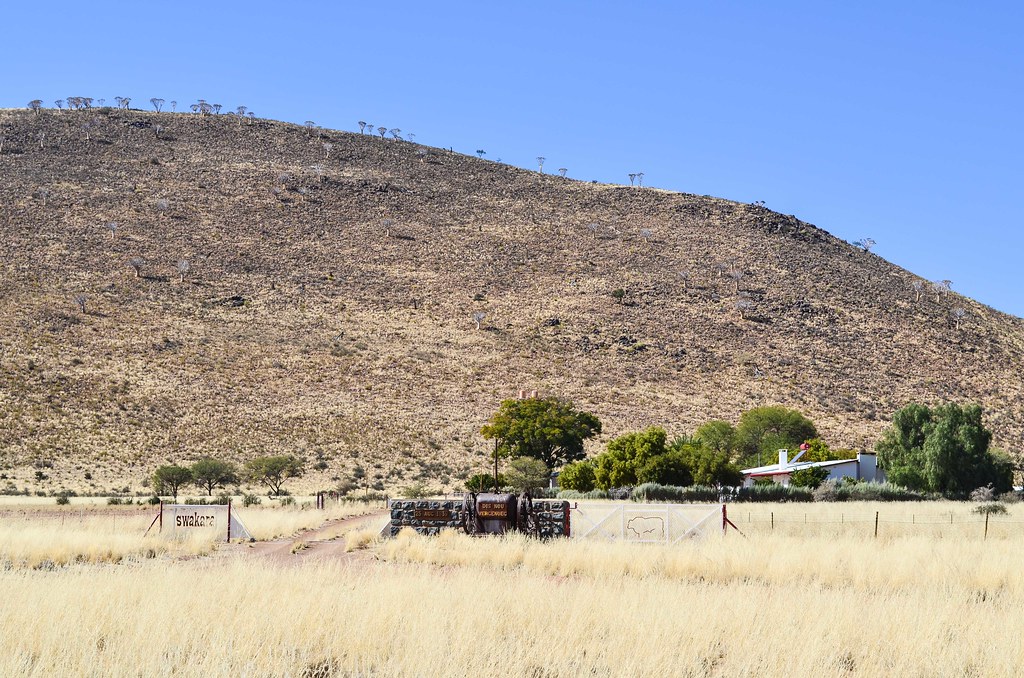
I actually see one non-motorized human during my day. It’s a man sitting under a tree with black sheep. With sheep? Why would he do that here? I got the answer later: there’s actually little option to value the bare land of Namibia and make it work: if there is no uranium or precious minerals underground, the owner is only left with 1- cattle farming (it’s hard work and produces meat, tasty but not really comparable with gold), 2- tourism (easy foreign currencies, but it’s a pain to deal with tourists who expect value for their money),or 3- swakara.
Swakara is the Namibian name for the Karakul, also called Persian lamb, a breed of sheep originally from the desert regions of Central Asia. They can survive under extremely harsh living conditions and their pelt is highly prized in the fashion/luxury industry. They sell for an average of 50 € per pelt, and the sick part is that the pelt needs to be from a newborn lamb under 3 days of age to be valuable. And even more valuable, are pelts from unborn lambs (yes, they take the baby from the womb days before birth because it’s shinier that way)(and it is done by opening the mother up).
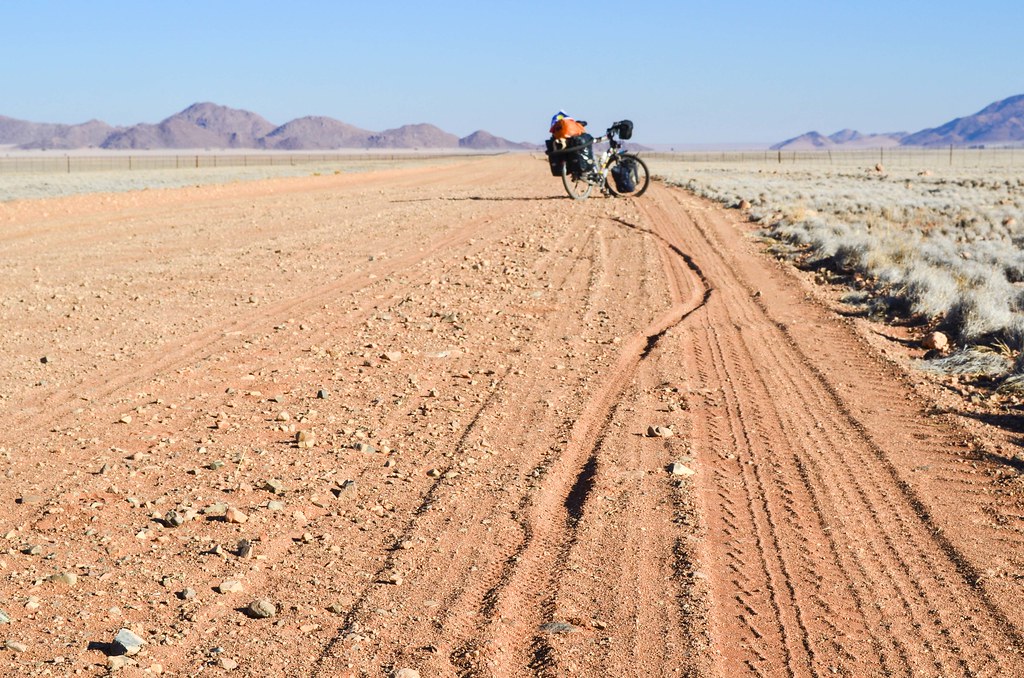
Ho pedalato a malapena per 50 km quando ho raggiunto il bivio per la fattoria Kanaan. Ma visto che sono partito più tardi del previsto a causa della gomma bucata, e ho fatto una lunga pausa per cucinare il pranzo sotto uno degli unici alberi di quel tratto, sono già le 4 del pomeriggio. Cosa devo fare? Faticare a 10 km di distanza, nella sabbia, per bere una birra con un altro ciclista, o no?
Dopotutto, i momenti sociali nel Namib meridionale non accadono spesso, quindi facciamolo. E in questo modo, mi riempirò d'acqua per domani. Al momento mi rimangono ancora 5 litri, e dureranno solo fino a domani mattina.
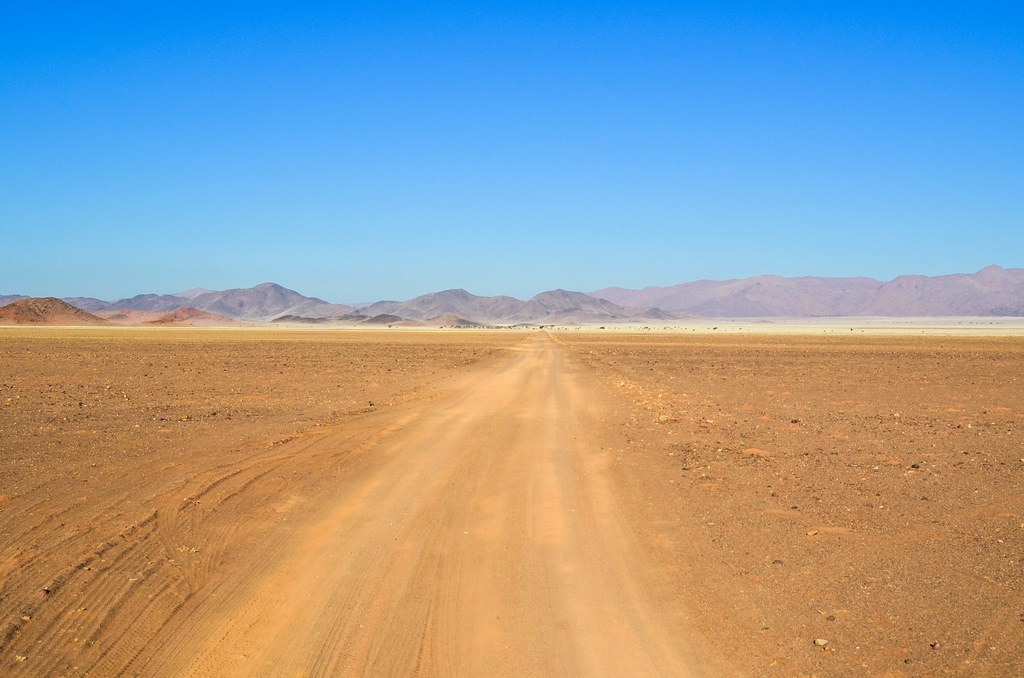
La strada verso la fattoria di Kanaan in realtà non è così terribile come pensavo. Posso pedalare per la maggior parte del percorso e spingere la bici nella sabbia per il resto. E mi piace davvero trovarmi in mezzo al nulla. L'isolamento mi ricorda la Mongolia. Vorrei che qualcuno scattasse una foto dall'alto, o da un satellite, così che possa zoomare indietro su Google Earth e non vedere ancora alcun segno di urbanizzazione dopo dieci click. A proposito, prima durante la giornata, ho visto un aereo volare sopra di me. Forse turisti che ammirano le viste infinite del deserto?
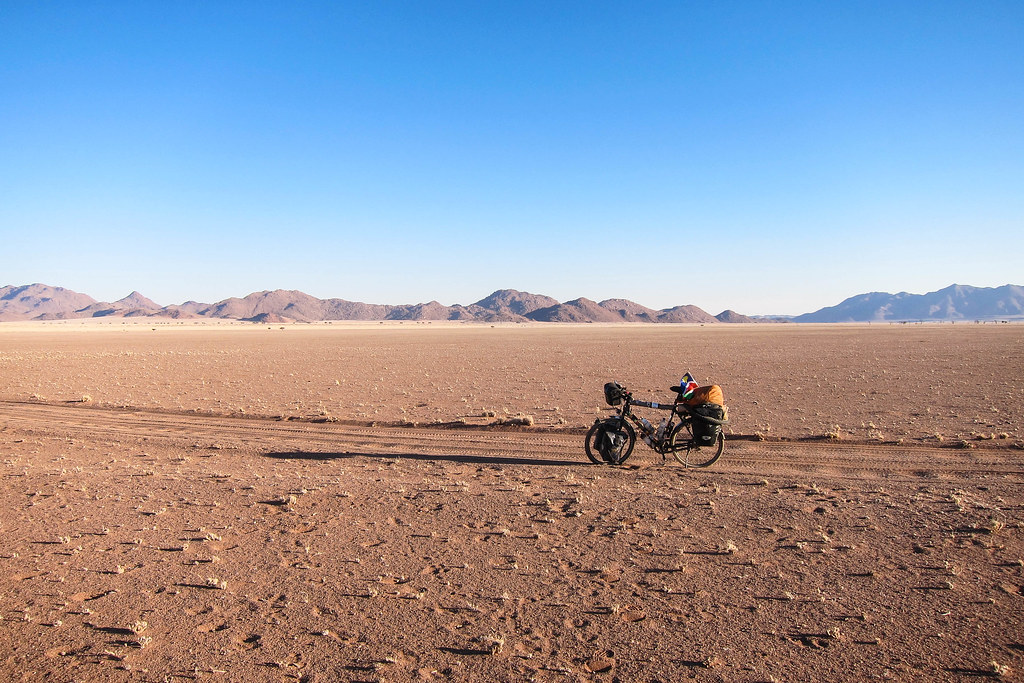
La sensazione è esaltante. Senza recinzioni o strutture artificiali, è così piatto e così vasto! Mi sento minuscolo. Posso vedere un branco di struzzi correre da sinistra a destra, a chilometri di distanza. Poi si fermano, fanno un'inversione a U e ritornano indietro. Se dovessimo valutare questo comportamento, non esiterei a dire che gli struzzi sono tra gli animali più stupidi del nostro pianeta. Se non corressero così veloce, l'evoluzione se ne sarebbe sicuramente occupata. Con una velocità di crociera di 50 km/h e punte fino a 70 km/h, sono gli animali bipedi più veloci del mondo.
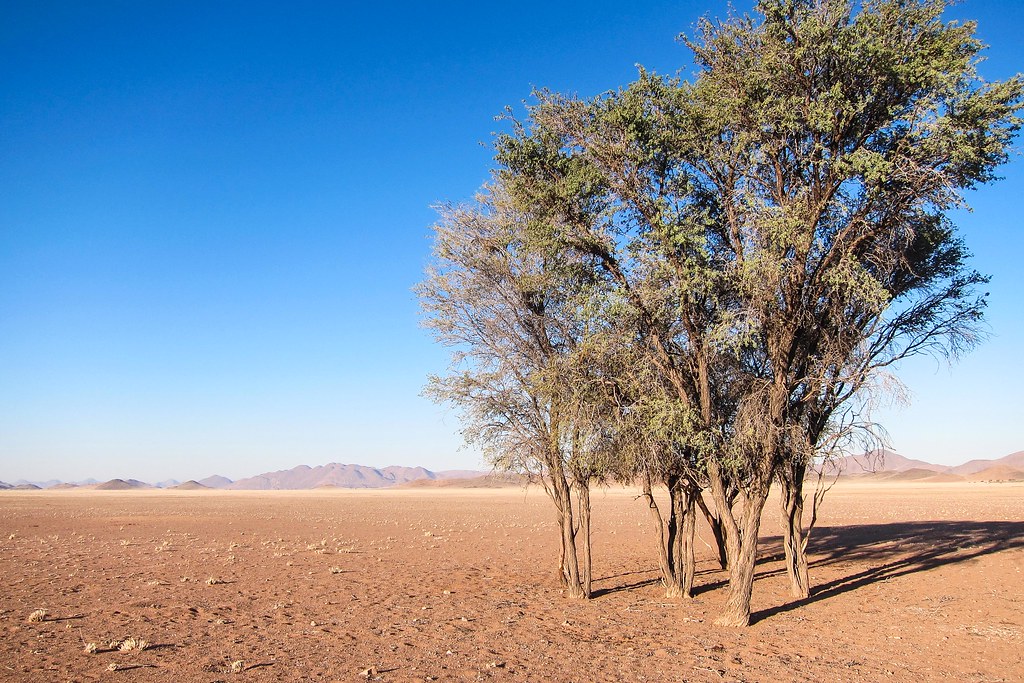
Una volta alla fattoria Kanaan, vengo accolto da Augusta e Theo, i ciclisti del mondo. Quello che accade dopo è un po' surreale...
Si sono appena trasferiti qui per conto diN/a’an ku sê, una fondazione di conservazione della fauna selvatica molto rispettata. È la stessa fondazione dove lavorava Hildegaard, che ho incontrato a Tsumeb, all'estremità opposta del paese. Quindi, ovviamente, si conoscono. Avevo già scritto scherzosamente su come conoscere cinque namibiani sia come essere collegati a metà del paese, e questa battuta sta diventando sempre più realistica.
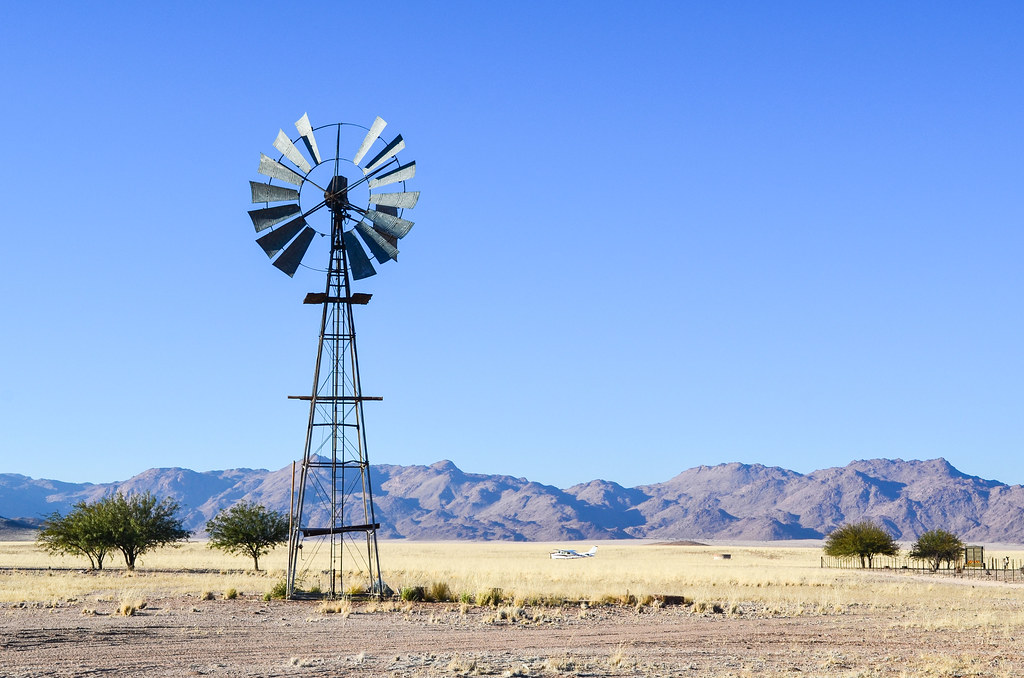
Il Fattoria Kanaan is simply huge: 33’000 hectares of desert. It is as big as two Liechtensteins or one Malta, all this land being just a playground for the foundation’s animals. Before building my tent next to the caracal’s cage, I kill time sharing a beer with a former national Namibian rugby player who visited France for the 1999 world cup. My hosts are very busy taking care of their business visitors, a photography crew. And not any photography crew: it’s Vogue. Well, the stylist is at Vogue and she was the personal stylist of Michael Jackson. One of the assistants is the daughter ofJ … of a famous Hollywood actor (it’s a secret). I don’t know how famous the photographer and the model are, but for sure, me coming from the dust and suddenly having dinner (still in the middle of nowhere) among fashion people, something sounds wrong. The hairdresser is from New York and proudly states he takes a cab for travelling four blocks. Yes, something definitely sounds wrong here. My beard feels out of fashion but I’m very excited at watching this meeting between two extremes of our planet.
La fattoria non è ancora completamente “pronta” ad accogliere persone con grandi aspettative (come un letto e una doccia calda), quindi la parte più importante della squadra è ospitata nella casa molto confortevole, al posto dei volontari della fauna selvatica, mentre il resto deve restare in tende montate frettolosamente a cento metri di distanza. È comunque un campeggio elegante, dotato di docce portatili e acqua calda riscaldata da un asino a legna.

I am told that if I get up early enough, I can see the cheetahs being “loaded” into the bakkie and taken to the photoshoot location. I struggle to get up in the cold at 5 am, to put my hat with my eyes still closed, but I know that what’s happening today won’t happen every day.
La gente della moda non è solo ridicola di per sé, ma crea anche assurdità. Volevano girare a Kanaan con due ghepardi, un'aquila e un gatto selvatico. Poiché N/a’an ku sê non è ancora stabilita qui, hanno dovuto far volare questi animali dalla sede della fondazione vicino a Windhoek... il che spiega i piccoli aerei che ho visto sopra la mia testa ieri: erano ghepardi volanti per gli obiettivi di un fotografo. Il loro progetto riguarda viaggiare scattando foto in luoghi molto remoti e farli sembrare un altro pianeta.
Ma non è tutto: nei giorni precedenti, hanno anche fatto spedire un leone... e degli Himbas!Himbasonly live in the bush more than 1000 KM away in the north of the country. There are a few in Windhoek on Independence street selling their art work to visitors. I can imagine them sitting half naked on the ground of the craft market, freezing because Windhoek is much colder than Kaokoland and nobody walks half-naked there, and trying to sell wooden stuff, when they were suddenly approached: “Hey, here’s some money if you come with me right now, and we fly two hours into the desert, take a picture, and I fly you backNon davvero, dal punto di vista pratico, la moda può riguardare solo sciocchezze. E immagino che quando offrono i soldi per questo, pochi rifiuteranno. In un solo giorno, hanno fatto volare un aereo tre volte tra Windhoek e Kanaan.
| Dov'è già quella fattoria e la pista di atterraggio? Basta fare zoom indietro, è bellissimo |
Quindi, questa mattina mi presento all'area recintata per i ghepardi. È uno spazio piccolo, costruito in fretta, per ospitare i due ghepardi trasportati da Windhoek. È ancora buio. Theo e Marlice sono lì, cercando di far saltare i ghepardi nel furgone. Non è un compito facile. Marlice dice che i ghepardi sono stressati e hanno bisogno di tempo per prepararsi. Dopotutto, sono animali selvatici, giusto? La troupe fotografica voleva ghepardi namibiani veri, non ghepardi da zoo. Ma non è un ossimoro far posare un vero ghepardo per un servizio fotografico?
I soldi guadagnati dalla fondazione da altre industrie probabilmente valgono il dolore e le sciocchezze, visto che gli animali non possono pagarsi da soli per essere curati e conservati. Marlice era apparsa in un carino spot della Volkswagen, and that scene where Lucky the cheetah climbs into the car was apparently a pain to capture.
“Just get into the enclosure“, they tell me. Eh? Half-awake me and wild cheetahs together? It’s not like being in a tourist park where animals are specifically trained from birth to be pet by tourists. These ones are rescued orphans and injured, and meant to be released in the optimal conditions.
So I walk in. The two animals are really beautiful. I have no photo of that time since it was still dark, but here they are later on in the day:
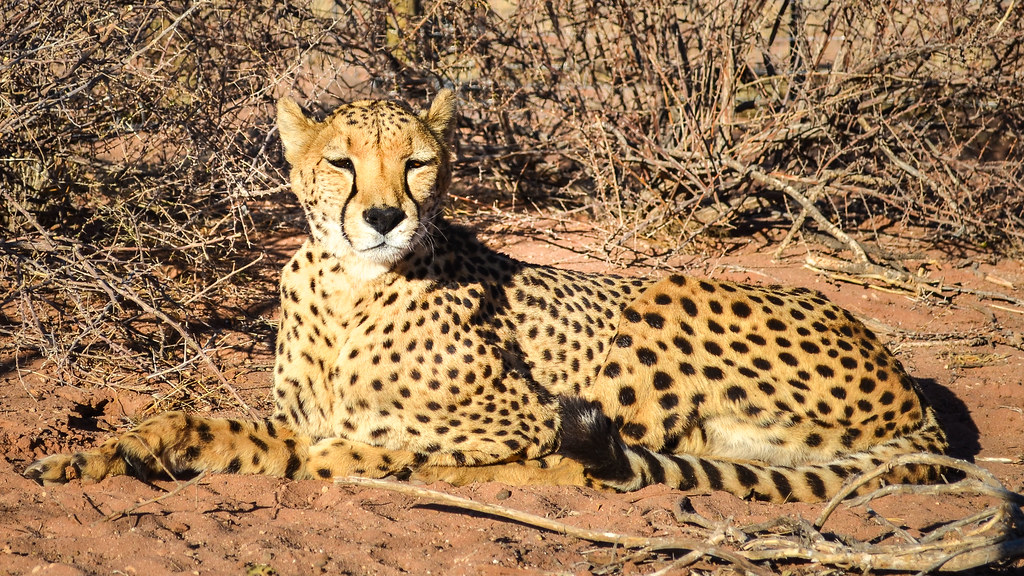
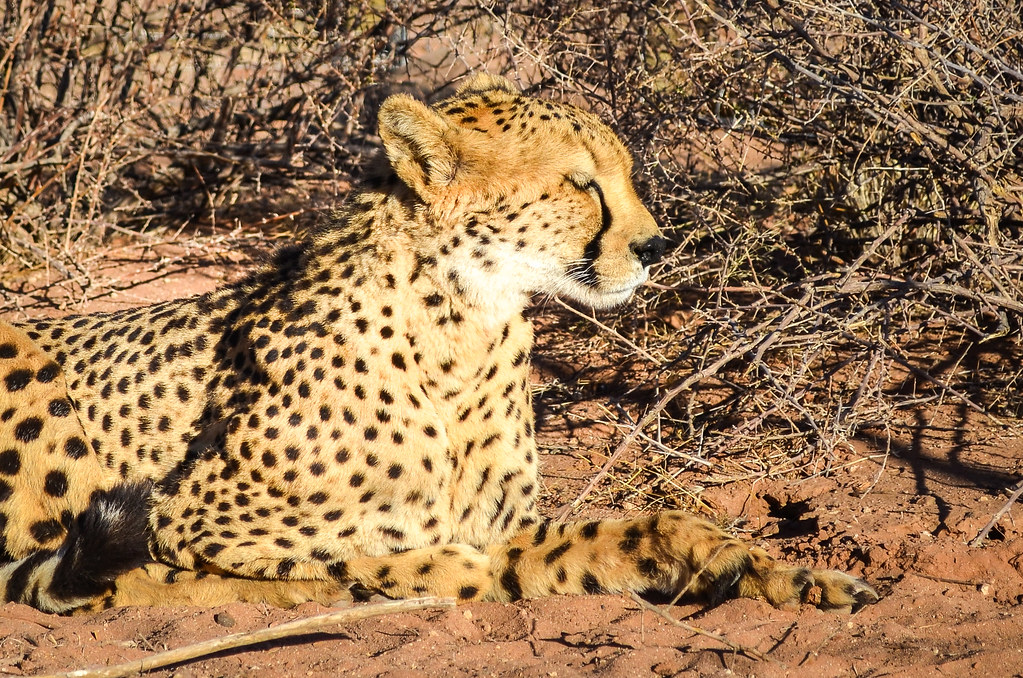
Cheetahs and leopards look alike, but they have differences, including the black “tear lines” that run from the corner of their eyes down the sides of their nose to their mouth. They are both walking around me, looking at the open trunk of the bakkie and maybe thinking “Damn, here again they want us to go to what they call work. But we’re cats, so we’re staying here. They can’t stop feeding up anyway!“. I let my hands run on their backs, and it’s impressive. It feels like they are only made of muscles. Muscles that purr like a little engine. After all, they are the fastest land mammals, and can accelerate from 0 to 100 km/h in three seconds. Maybe I’m just enjoying what car lovers feel when petting a Bugatti.
I ghepardi non sembrano motivati a lavorare con un parrucchiere di New York appena sceso dall'aereo, e posso capirlo. Rimarranno pigri per la giornata. La troupe fotografica dovrà passare al loro prossimo concept: fotografare un asino in una barca in una padella asciutta del Namib. Sembra ridicolo, ma succederà. Se mai vedrò una rivista Vogue in una biblioteca con una foto bellissima ma improbabile, non smetterò di pensare ai creativi che atterrano nel deserto e dicono 'Voglio che ci sia una donna Himba in piedi lì“, and especially about the dozens of people asked to listen to a crazy stylist and to make it happen. And about the money that this one photo is worth: a crew of 20, 3 private flights a day from Windhoek to nowhere, a model, wild animals and their caretakers, tents and portable showers bought in emergency …
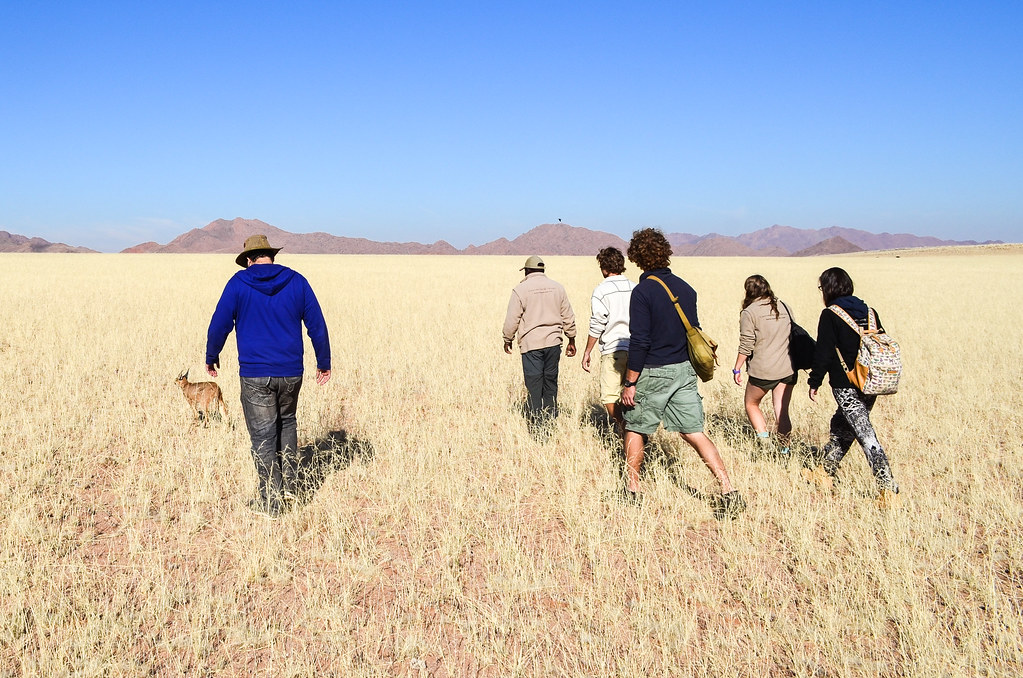
In the meantime, Augusta suggests that I stay at the farm for the day, and while they deal with the photo crew, I can join the volunteers. Why not?
There is a lot to talk about volunteers from the western countries who pay a lot of money and come to “Africa” to build schools or to help children in hospitals – with no skills at all in construction or health. It may not be the smartest thing to do, but in the end, everybody is happy: some made money, while others travel back home with pictures of Black children smiling and possibly lions.
Il volontariato presso la fattoria riguarda la fauna selvatica. Il nostro primo compito della giornata è portare a passeggio il caracal. Ovviamente, c'è poca possibilità che una neolaureata del Regno Unito riesca a gestire da sola un gatto selvatico, e ancora meno possibilità che impari in 10 giorni sul posto, quindi siamo sempre accompagnati dalla persona (o dalle persone) che conoscono il lavoro. È così che ho scoperto questa posizione, “coordinatore dei volontari” (un ruolo retribuito), che consiste nel far sentire i volontari (quelli che pagano) come se stessero lavorando. E, come lui lo riassume bene, è più “volonturismo” che “volontariato”.
I personally wouldn’t pay for experiences that I can create myself, in a much more raw, vulnerable, and authentic way (and cheaper too!), but I’m enjoying this day out. The caracal is an animal I had never heard of. Also called desert lynx, it’s like a beautiful athletic cat with batman’s ears. Cute enough to make me wanting to hold it, especially when it rubs itself against my legs, but wild enough to make me refraining from putting my fingers near his head.
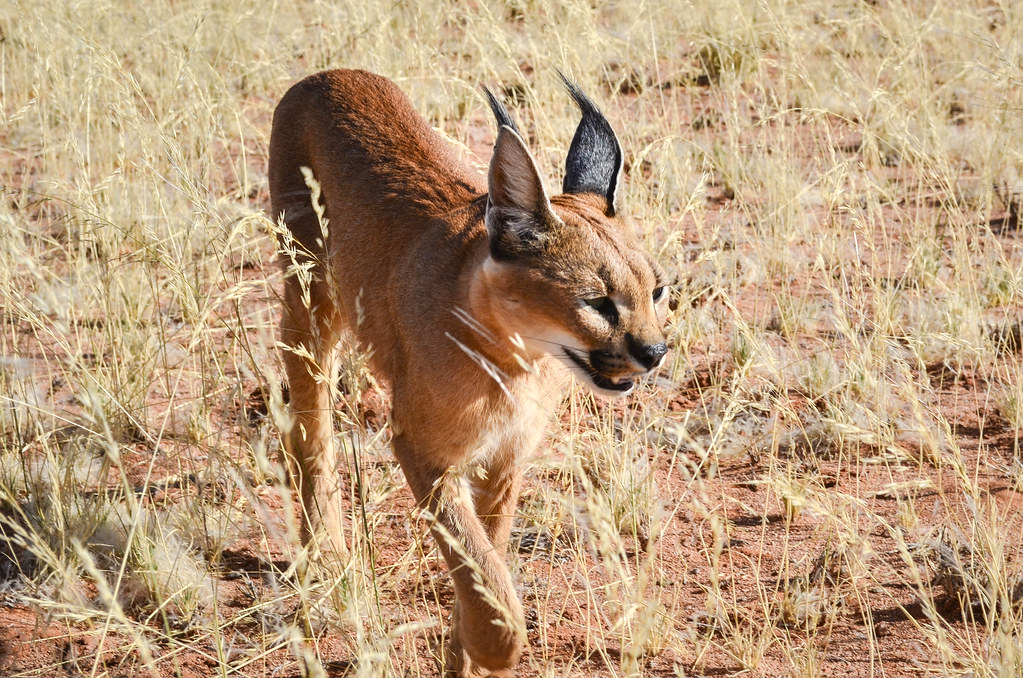
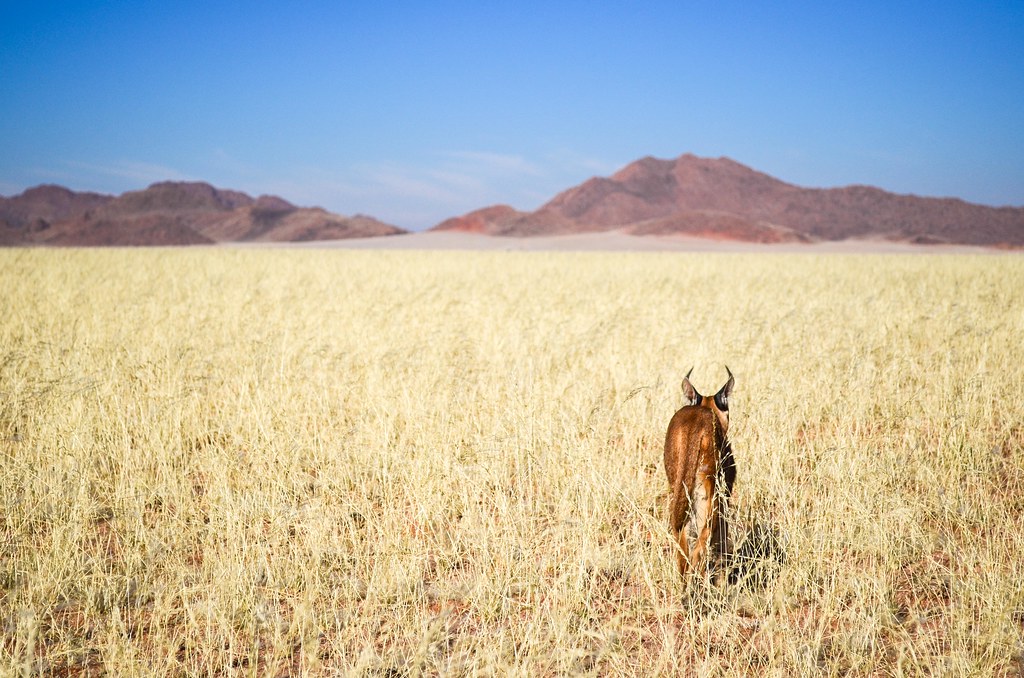
It’s quite a unique experience to see the caracal walking in the dry herbs of the Namib and playing around our legs. We hope to see it finding something, and it eventually catches and eats a lizard. Thinking about a wild cat being followed by a foundation worker, a volunteer coordinator, four volunteers, and a cyclist taking a day off, can sound slightly strange if I compare it to, let’s say Gabon, where each piece of wildlife is a meal not cooked yet. Or, it can also sound completely natural, if I think that the daughter of a famous Hollywood actor is helping the stylist of Michael Jackson setting up a scene with a donkey in a boat in the desert a few kilometers away. Ha ha, this day is totally worth a week cycling of cycling on dirt roads!
Oh, e a proposito, c'è un'altra cosa divertente a cui pensare: se leggi questo, credi nei sei gradi di separazione, e mi conosci, allora Angelina e Brad, che hanno un figlio namibiano, sono a soli 3 o 4 gradi di distanza da te, dal momento che sono sostenitori e amici della fondazione.
The photo crew is leaving the farm during lunch time, alongside with 9 suitcases of clothes for the model. Does the fact that the stylist of Michael Jackson, who is now working with Jay-Z and Nicki Minaj, rudely asked me to stop enjoying my breakfast in order to carry some suitcases for her, allows me to say that Nikki Minaj is of rank 2 in the six degrees of separation? How come I consider now such irrelevant possibilities, when my only interrogations have always been similar to “do I have enough water with me?“.
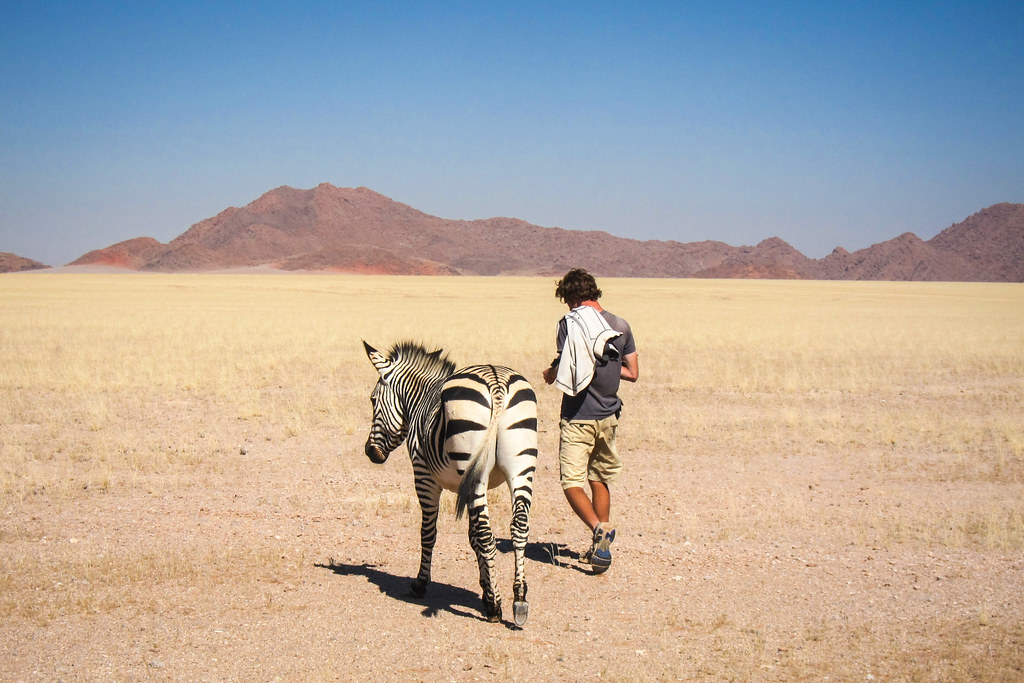
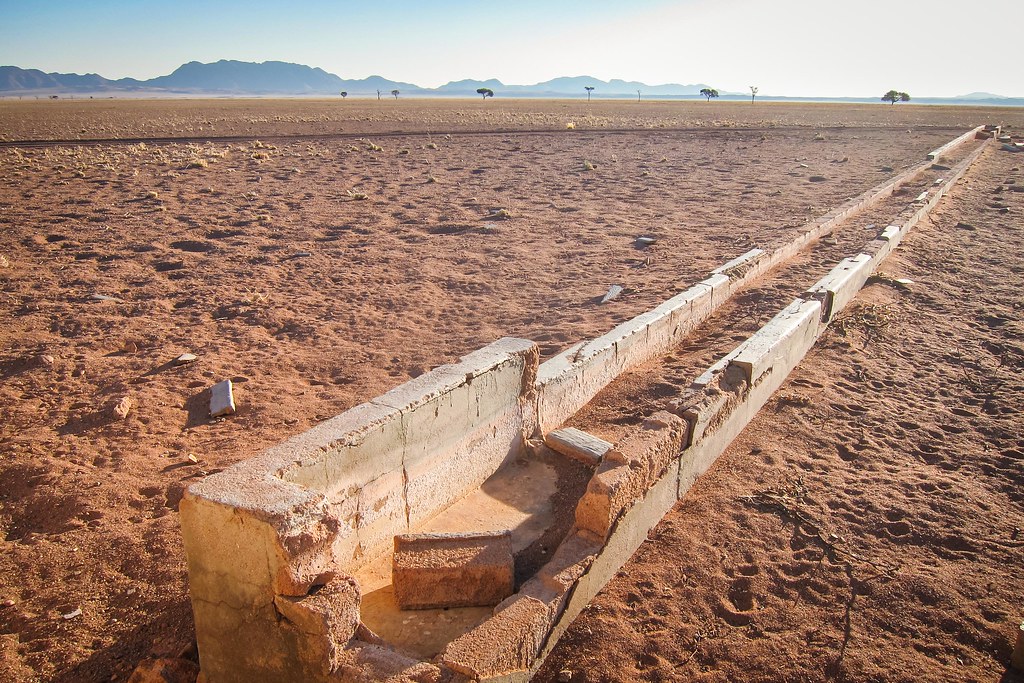
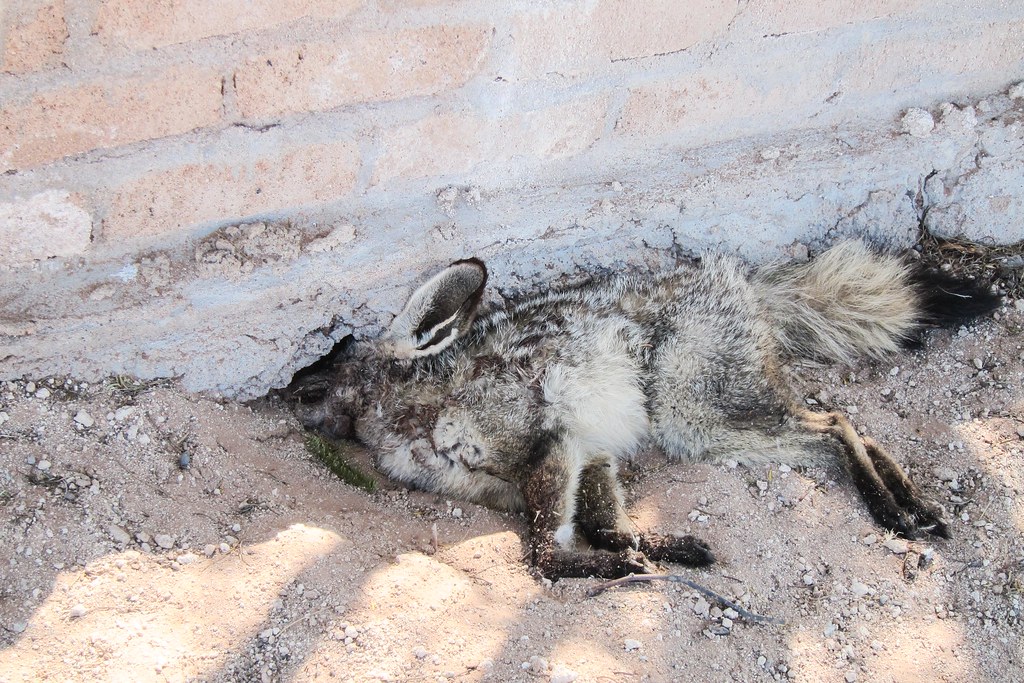
We walk the zebra in the afternoon, and being not as cute and much more stubborn than a wild cat, the task is much less interesting. After wondering how would we call the animal resulting from the mating of the zebra with the donkey sharing the same fenced park, I discover a dead animal behind the ruins of a watering trough. It looks like a small wild fox, and carries a risk of diseases that could be transmitted to the farm dogs.
We end the day with a game mapping exercise: in a bakkie, we tour farm and count the animals we spot, with details like numbers, gender and location. We see less wildlife than what I see on a usual cycling day on remote roads, but it’s interesting to listen to the volunteer coordinator explaining how he can identify the gender of an ostrich that I can barely see, or how he can read the soil and tell which animal did what.
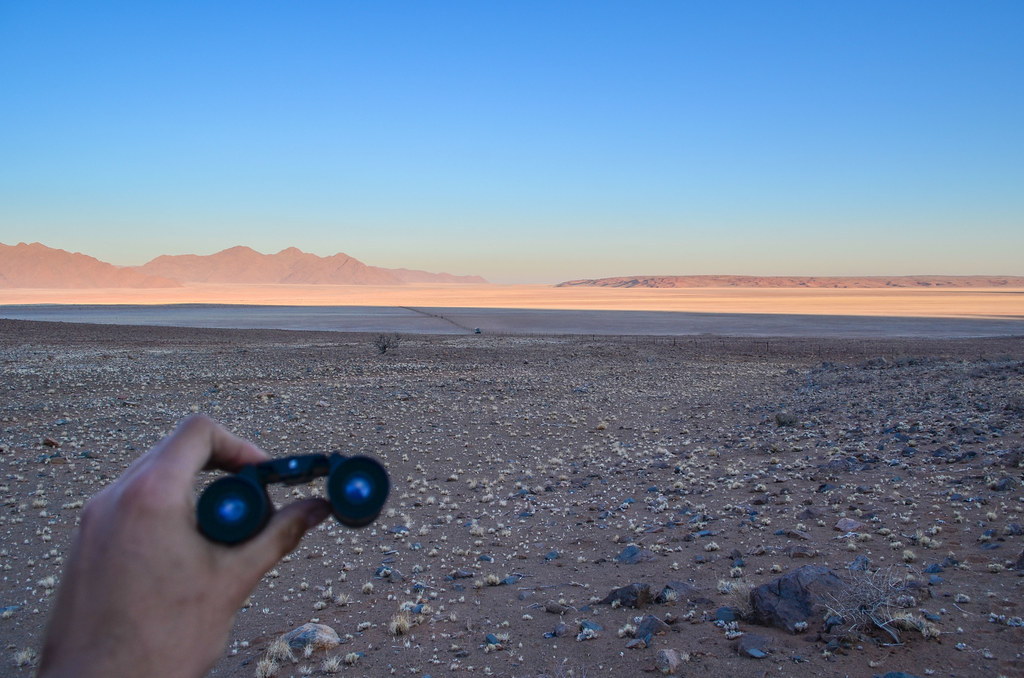
Pensavo che avrei dormito perfettamente dopo questa giornata estenuante e speciale, ma sono riuscita a creare incubi. Se ho sogni o incubi, si tratta quasi sempre di avere la bici rubata o rotta, le ruote che si piegano, i raggi che scompaiono, ecc. Poiché la mia moto è l'oggetto più prezioso del mio viaggio, i miei sogni sono intensi.
Rafforzato dal mio incontro inaspettato con i gatti selvatici, il ritorno sulla D707 è veloce. Ma non significa che oggi andrò lontano: poi passo un'ora a spingere la mia moto sulla strada sterrata sabbiosa.
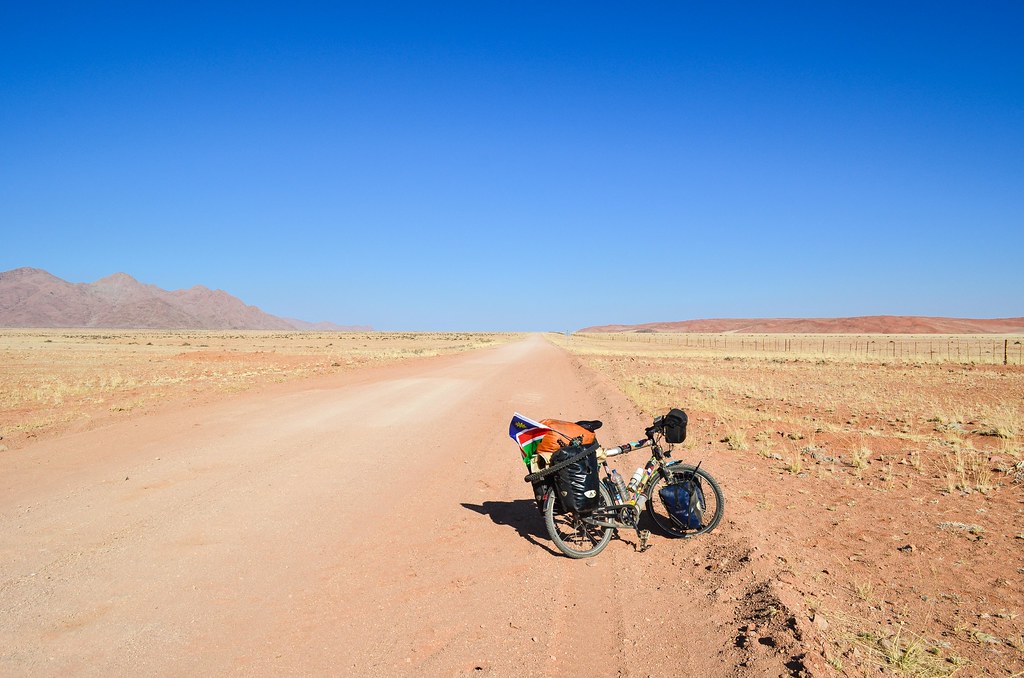
Poi posso pedalare un po'. Poi devo spingere di nuovo. Non è facile, ma almeno mi trovo in un paesaggio davvero speciale. La D707 corre tra le montagne Tiras, alla mia sinistra, e le dune rosse del deserto del Namib, alla mia destra. Non la chiamerei 'la strada più bella della Namibia', ma vale sicuramente la pena della fatica.
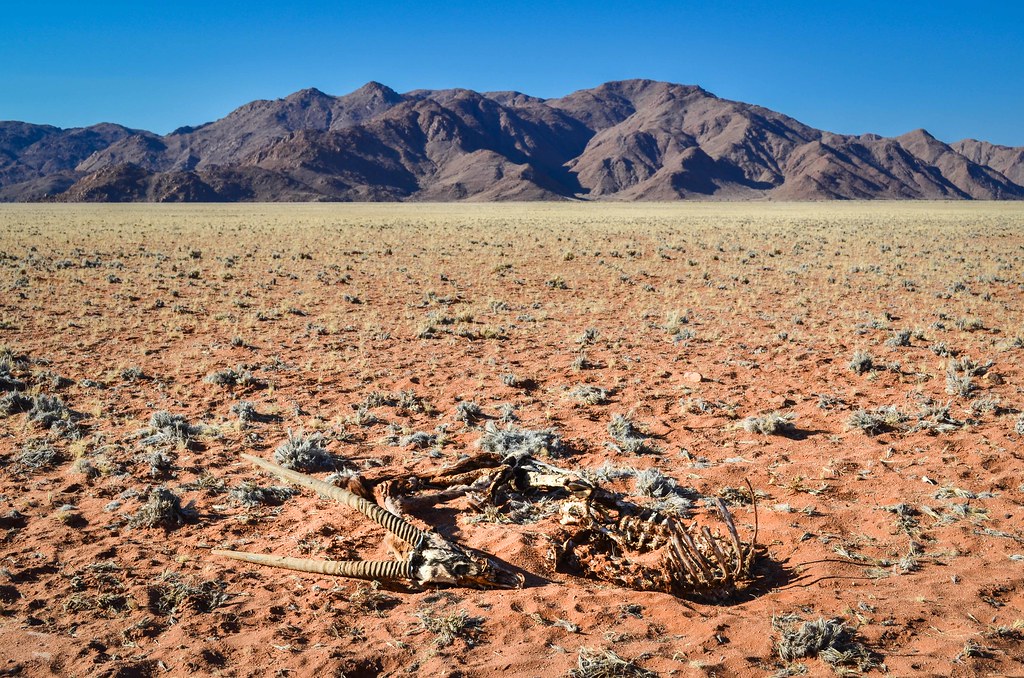
Ci sono molti orici e non sono troppo lontani. Molti più dei turisti.

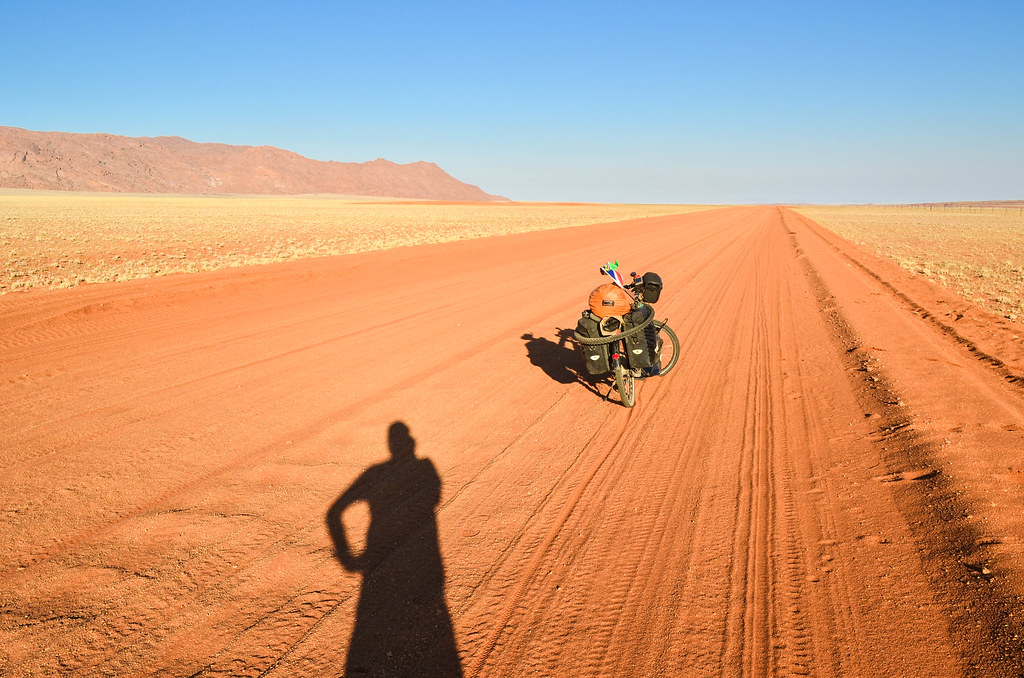
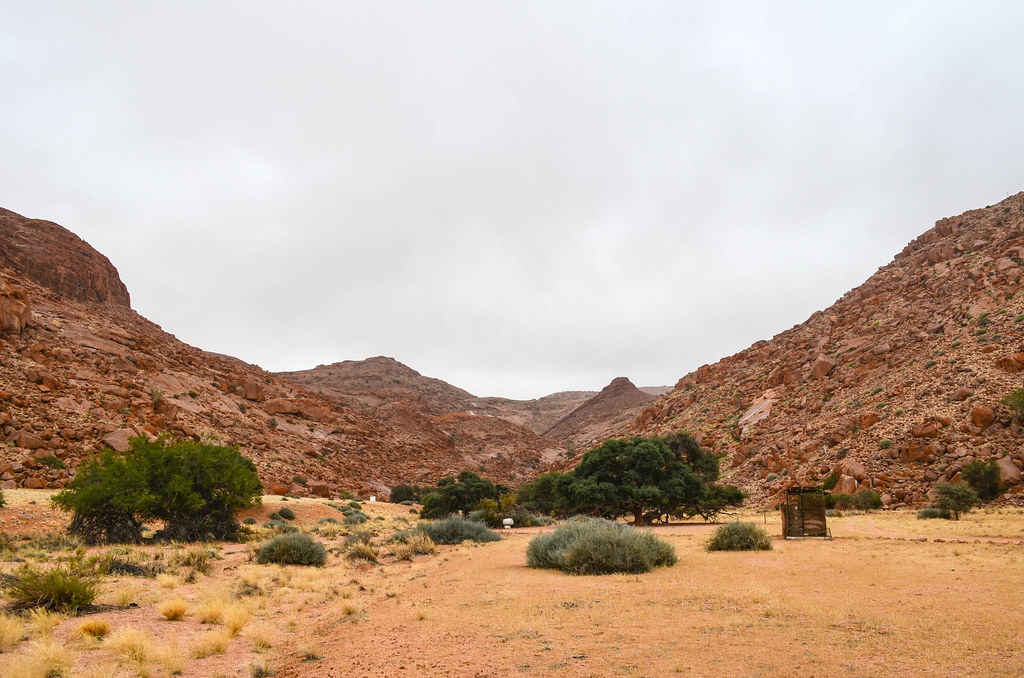
Non riesco a raggiungere la prossima fattoria prima della notte. Vedo alcune strutture lontane, ma mi ci vorrebbero almeno 1h30min per raggiungerle. Così salto un recinto (lo faccio raramente, ma adesso non ho scelta) e mi dirigo verso le montagne dopo 2 km di strada sterrata privata, segnata come linea tratteggiata su OpenStreetMap. Mi conduce a un campeggio abbandonato.

Ben riparato in una valle stretta, ho avuto vento forte tutta la notte, e con grande sorpresa ho trovato un cielo grigio al mattino. Cosa c'è che non va in Namibia? Il vento forte non smetterà e c'è anche un po' d'acqua nella mia tenda. Sta piovigginando! È così strano... è la prima volta da secoli che il cielo non è perfettamente blu. Non riesco nemmeno a vedere una macchia azzurra sopra la mia testa. E fa molto freddo.
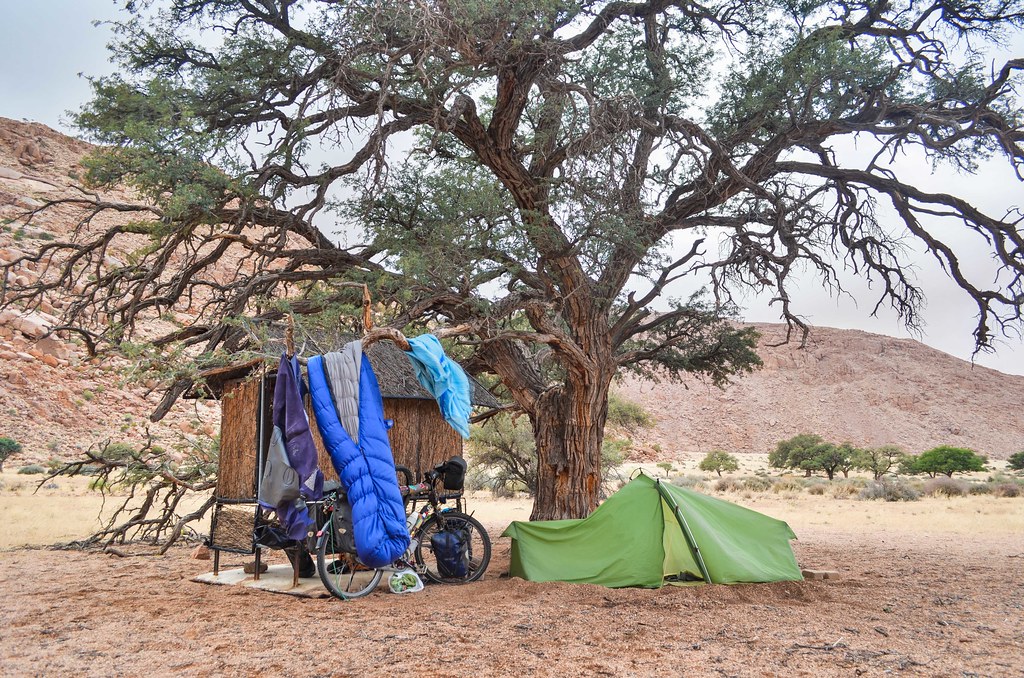
È davvero piuttosto insolito per me non sentirmi a casa mentre faccio campeggio selvaggio in Namibia. Di solito mi integro perfettamente con il paesaggio. Cerco di correre su per le colline del Tirasberg, per vedere fino a dove si estendono queste nuvole, ma mi fermo a metà percorso verso la cima perché temo che la pioggerellina minacci la mia tenda ancora non montata. In un certo senso, mi sento cacciato fuori.
E mentre scarico la bici per trasportarla oltre la recinzione, dopo soli 2 km, la pioggerellina diventa una vera e propria pioggerellina leggera. Il vento la soffia orizzontalmente e non ci vuole molto prima che io mi bagni completamente. Riesco a vedere al massimo per 1 km. No, davvero, cosa sta succedendo in Namibia? Non ho visto la pioggia da marzo, quattro mesi fa.

Sto gelando e sono bagnato, ma andiamo avanti. Guardando il lato positivo, sto andando più veloce che sotto un cielo azzurro: fa troppo freddo per fare una pausa e, soprattutto, la superficie di terra e sabbia è indurita dalla pioggia. Posso quasi pedalare normalmente senza dover spingere.

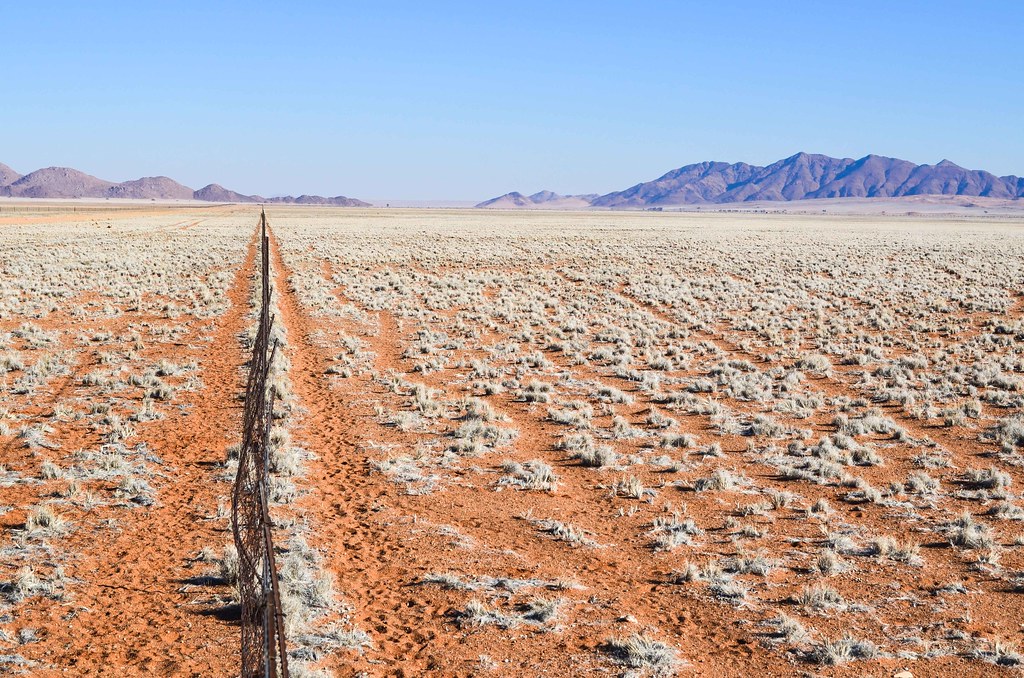
Ed ecco un chiaro esempio della minaccia che le recinzioni rappresentano per la fauna selvatica: come al solito, le recinzioni corre lungo la strada, dato che questo lungo tratto di nulla appartiene a qualcuno che ne ha segnato il territorio. Posso intuire una griglia per bovini davanti a me, e un orice bloccato tra la griglia e me: non può saltare sopra la griglia e ha troppa paura di passare vicino a me. Quindi prova a sbattere contro la recinzione da entrambi i lati, perdendo un corno nella battaglia vana, prima di correre lungo la recinzione e mettersi dietro di me. Ora questo orice dovrà sopravvivere con un solo corno.
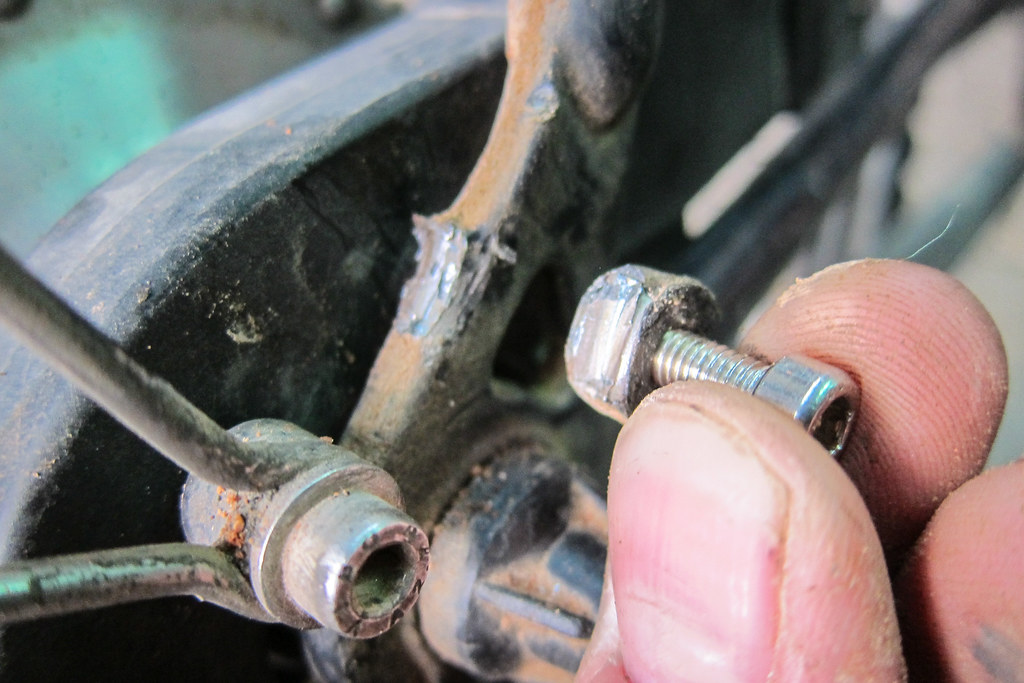
Alla fine mi fermo per una pausa con il dröewors una volta terminata la pioggia. E noto che il portapacchi posteriore è leggermente allentato. Sto perdendo di nuovo la vite? Hmmm no... Panico! Il telaio si è rotto.
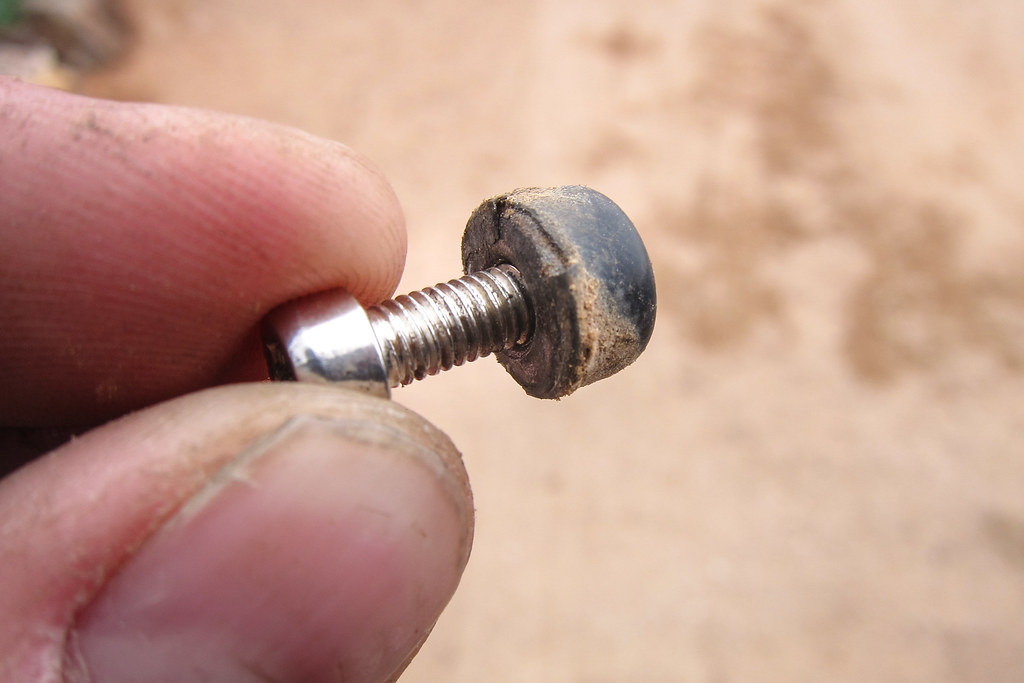
Il supporto a brugola si è staccato dal telaio. Questa piccola rondella sostiene metà del carico del portapacchi posteriore, sul lato destro, vicino al pignone della ruota. È terribile, ed è sicuramente il problema più grande che abbia mai avuto con la bici. La bici in sé va bene, ma se non posso trasportare il mio bagaglio, non potrò proseguire. Il carico del portapacchi posteriore ora è interamente sostenuto dalla vite sull'altro lato, e non passerà molto tempo prima che si rompa anche quella.
I surely can’t make it to Cape Town. I can’t repair the frame. Without panicking too much, I wonder what happens if my trip ends here, will I feel OK if my journey sounds like Zürich – Windhoek? If I ditch my rear luggage (clothes, tent, sleeping bag, mattress, bike spares), I could possibly speed to Cape Town on the tar road and sleep at hotels?
Damn … it’s terrible and I feel so low. I know I’ve been very lucky that this kind of problem didn’t happen in less practical locations, say Gabon or Angola, but with wet clothes, grey sky, on a sand road, I can hardly find the bright side of life.
Riacquisto lentamente la mia sanità mentale e i miei sensi: questa cosa deve essere saldabile. Dopotutto, tutta la mia attrezzatura è fatta di acciaio per questo motivo: è più pesante, ma può essere riparata in qualsiasi officina in tutto il mondo e guidata più lontano. Ho fatto l'esperienza in Islanda, dove avevo un'officina per camion saldare il portapacchi anteriore Tubus la compagnia aerea si è rotta e il saldatore ha fatto un ottimo lavoro.
Questa volta, non è il rack, ma il telaio stesso. Se fosse stato lo scaffale, avrei potuto comprarne un altro cinese a buon mercato. Poiché è il telaio, l'unica parte che non può essere sostituita, devo farlo riparare. È acciaio CrMo, quindi deve essere possibile.
Per ora, posso solo fissare il portapacchi al telaio con una fascetta in modo che non si muova troppo, e pedalare molto lentamente e con molta calma fino ad Aus, la prossima stazione di servizio, a 80 km di distanza. Arriverò in questo borgo domani e spero di trovare un saldatore lì. Che brutta giornata…
Più tardi nel pomeriggio, incontro una fattoria alla mia sinistra. Si chiama Excelsior. Non è comune che le fattorie siano proprio vicino alla strada, e dato che ho bisogno di acqua e parole positive, mi fermo.
Il proprietario Wilhem è a casa. Gli chiedo della possibilità di trovare un saldatore ad Aus, e lui risponde 'Hmm.. ad Aus, potrebbero non essere in grado di fare questo, ma vediamo cosa possiamo fare quiLa fattoria Excelsior ha un laboratorio interno: macchina per saldatura, una enorme trapano a colonna di seconda mano comprato dalle ferrovie sudafricane, molti strumenti, ecc.
In realtà ho una fortuna incredibile che la prima fattoria lungo il mio percorso, dopo soli 20 km di ciclismo depressivo, sia così ben attrezzata. Una fortuna moderatamente incredibile, se ci penso più a fondo e mi rendo conto che la maggior parte degli agricoltori bianchi dell'Africa australe sono in generale tipi tosti che coltivano il proprio cibo, lavorano la propria carne e riparano i propri camion.
Well, it’s time for surgery: I unload the luggage, remove the rear rack and wheel, and place my naked bike onto the table. Wilhem has a welding machine, and I hope he can weld the tiny braze-on nut to the frame. Contemplating the task, he announces it’s hard. “Can you weld?“, he asks me. Not really, and I expected him to be skilled at it. Is he not?
“I can weld, but my eyes are bad. We can try, otherwise we must wait for my son who comes back tonight“. At that point, I really wish I knew welding, since even the VLOOKUP function, which usually solves all problems known on Earth, can’t help me here.
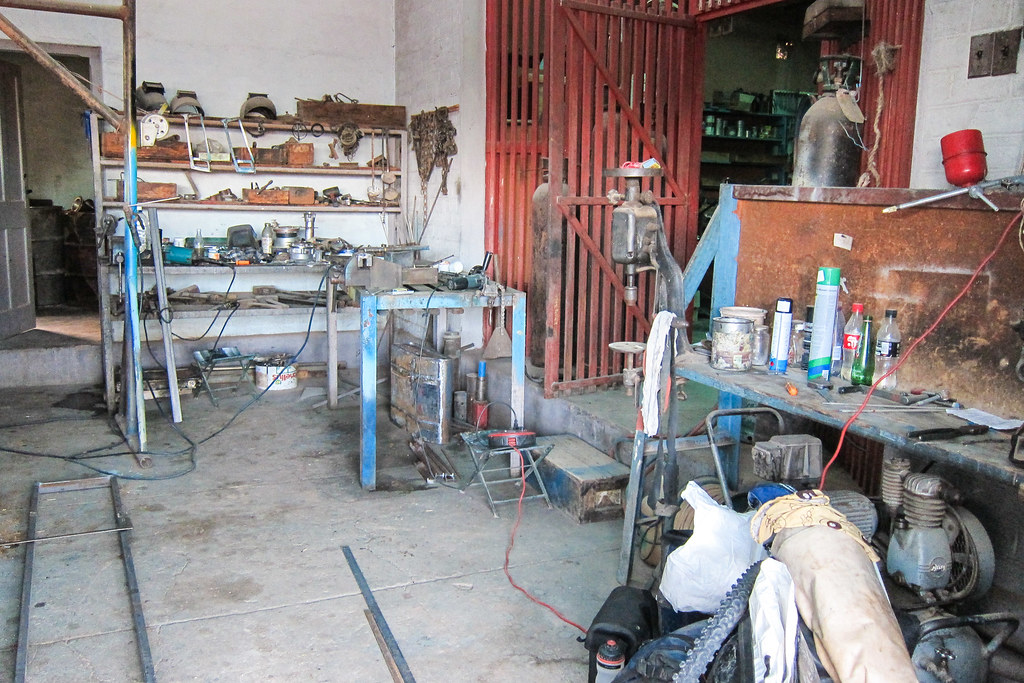
Riusciamo a tenere il dado spezzato del supporto in posizione con delle pinze regolabili, e fortunatamente Wilhem trova nel suo magazzino un elettrodo cromato per iniziare il lavoro.
Mi faccio un passo indietro quando le scintille della saldatura mi respingono, ma sono così preoccupato che non riesco a trovare l'energia per scattare una foto. Guardando la mia bici sotto fuoco sul tavolo operatorio, mi sento male come quando vado dal dentista e lui opera con strumenti da trapano nella mia bocca, sperando che non rovini i miei denti. È ancora peggio, in realtà, sarebbe come se il dentista avesse detto 'I miei occhi non sono buoni, ma posso provare qualcosa', e io avessi aperto la bocca dicendo 'Hmmm va bene, vai avanti“.

Spero che non pieghi le forcelle posteriori. Se non riesco a rimontare la ruota posteriore, sarà ancora peggio che cercare di arrivare a Città del Capo usando fascette al posto di dadi e bulloni. Dopo pochi secondi, le scintille si fermano e possiamo osservare la qualità della saldatura. Hmmm … sembra così così. Il bullone si stacca: buon segno, non è stato saldato al dado.
But the nut falls off. The metal has been deposited onto the frame dropouts, without holding the nut. It’s a fail, and Wilhem immediately takes the grinder to clean the mess. I feel super bad again, as I see him grinding a part of the dropouts too. At best, it will change the geometry and the rear wheel won’t be centered anymore. At worst, if this super critical part of the frame is weakened, it’s really the end of my journey (with or without a bad fall).
The grinding ends, and my stress level comes down. The problem is not solved, but at least the frame dropouts are still alive. So, it seems it’s not possible to weld this tiny nut back onto the frame. It has already been a good thing that it worked until now, considering the too many kilometers of bad roads I have been riding. On the other side of the frame, the mount is more reliable, since the nut is inside the dropout plate, instead of a braze-on.
Wilhem suggerisce poi un'opzione meccanica: utilizzando il foro al centro del forcellino posteriore a forma di triangolo, possiamo costruire un perno metallico che racchiuda la cremagliera attorno al telaio. Taglia due strisce di metallo piuttosto spesso, le fora e le ridisegna leggermente in modo che si adattino all'asse della ruota posteriore. Sembra fantastico! Abbiamo solo bisogno di trovare due bulloni il più piatti possibile (in modo da non sfregare contro l'aliante a catena), ridurre la lunghezza, e dovrebbe funzionare ...
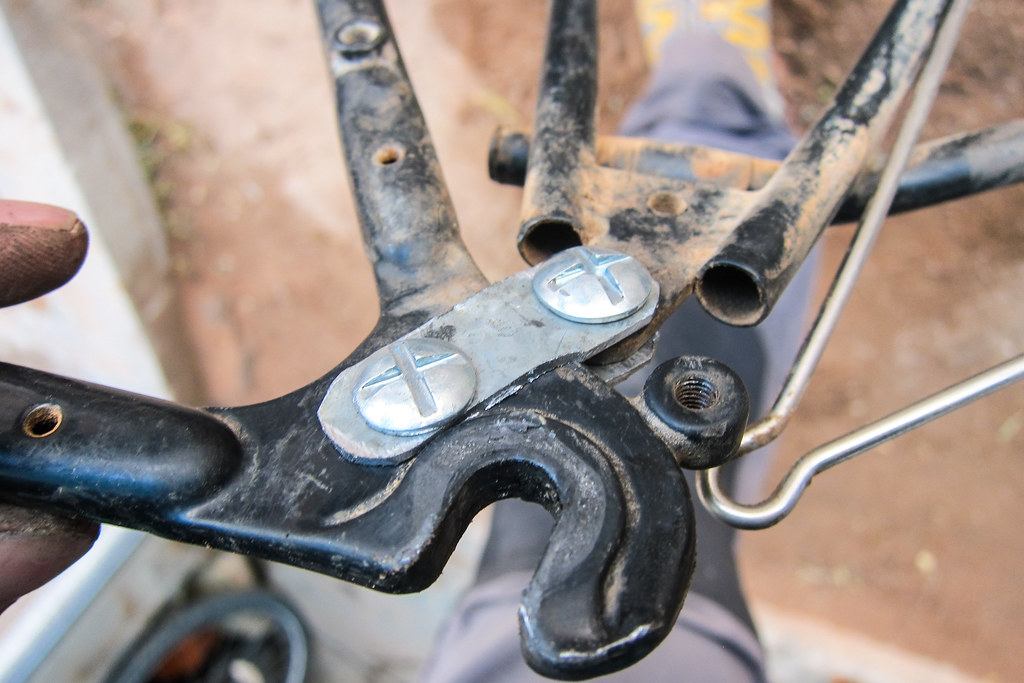
It keeps the rear rack in place at the same height as it should be, but about 5 mm closer to the wheel. Since the Tubus racks are rather flexible, it looks like it can absorb the slight asymmetry. I discover in the process that Americans are messing up even the most remote locations on Earth with their imperial sizes, as fixing a M6 bolt would have me looking at the 10 mm spanner in the toolbox, but here the 3/8 US won’t work. The bolts have pretty flat heads and it fits perfectly on the chain side, with a 1 mm gap to the chainglider. It looks alright and I truly hope this fix holds on until Cape Town. For sure, I will have to refrain myself from taking terrible roads just for fun, and stay on tar if possible.
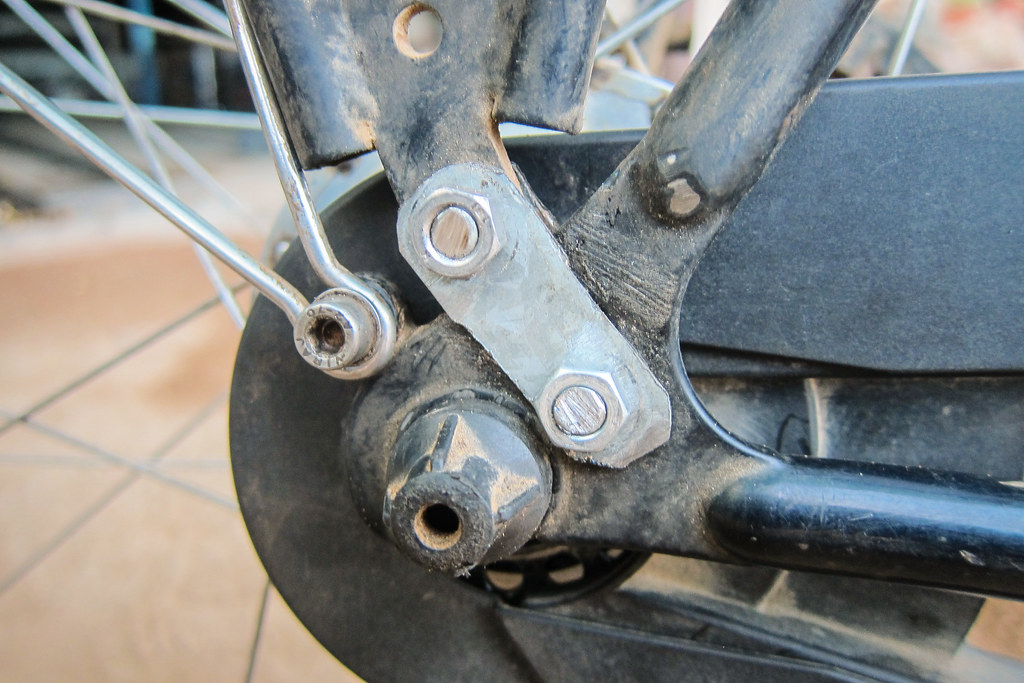
Approfitto dell'occasione per pulire la sabbia dai collegamenti della catena e montare il portapacchi per un mini giro di prova carico intorno alla fattoria. Sembra abbastanza robusto. Mi sento molto meglio adesso. Grazie Wilhem! Proprio come tutte le volte che mi sono lanciato su strade remote e difficili, trovando un posto dove accamparmi/rimanere all'ultimo minuto, le mie giornate sono davvero montagne russe emotive. Non so come farò a evitare la noia se tornerò a uno stile di vita ben organizzato.

Presto sarà tramonto e sono abbastanza contento che questa giornata terribile sia finita. Che fatica per soli 37 KM. Dröewors e la fattoria Excelsior l'hanno salvata. Wilhelm mi offre di passare la notte alla fattoria, nel 'caravan'. Ma prima dice: Lascia che prenda l'auto, devo chiamare mia moglie“.
His son drove his wife to Lüderitz to the nearest doctor, and that’s 200 KM away. There is no phone signal at the farm, so Wilhem must drive to the bottom of the next hill, where his son built a solar repeater to catch the cellphone signal from Aus. At this precise location, 60 km from Aus with an unobstructed view, the repeater increases the signal strength of the Aus antenna, designed for a network radius of 30 km only. The D707, despite being nicknamed the “garden route of NamibiaNon c'è segnale lungo i suoi 200 km, il che rende difficile aiutare i viaggiatori in caso di incidente. A luglio, quando i sudafricani vanno in vacanza e spesso utilizzano questa strada per andare a nord, la superficie peggiora rapidamente e gli incidenti accadranno. A titolo di esempio, i miei ospiti mi hanno detto di aver saputo degli attacchi dell'11 settembre solo due giorni dopo. Niente telefono, niente TV, niente radio.
Dormo nel caravan in riparazione, dove il mio coltellino svizzero digitale indica una temperatura di 7°C all'interno la sera… Sarà una notte fredda!

E mi sveglio con 2°C nella caravan. Solo il termometro e il mio naso percepivano quella temperatura, visto che il resto del corpo era comodamente avvolto nel mio sacco a pelo. La brina copre la fattoria, che confina con il deserto del Namib. Interessante... ma super freddo per stare fuori in sella.
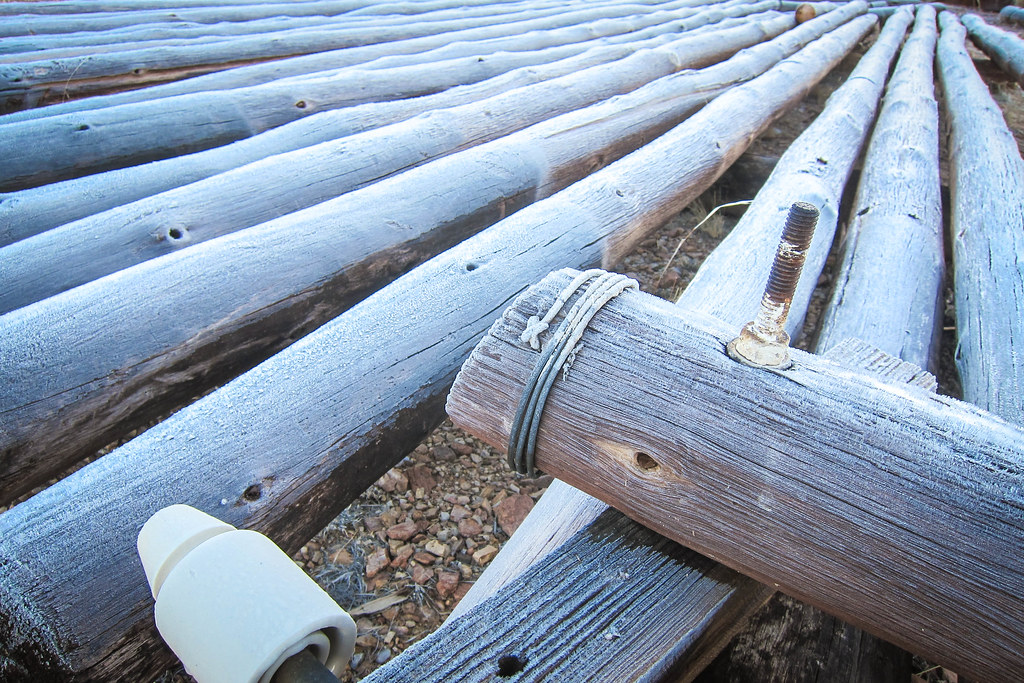
I miei ospiti sono molto gentili, e devo rifiutare la loro offerta di portare carne. Non dubito che abbiano deliziosi bistecche di orice, ma poiché è molto improbabile che possa cucinare carne con il mio tipo di fornello solo per spaghetti, l'unica carne che accetto di trasportare è dröewors e biltong, quella speziata e secca.
Pensavo che Aus fosse a soli 40 o 50 km di distanza, ma in realtà sono 70. Quindi sarà il mio obiettivo per la giornata. Il cielo azzurro è tornato, dimostrando che la pioggia e le nuvole non appartenevano a quella parte del mondo (beh, un giorno di pioggia è ancora abbastanza buono per un inverno).
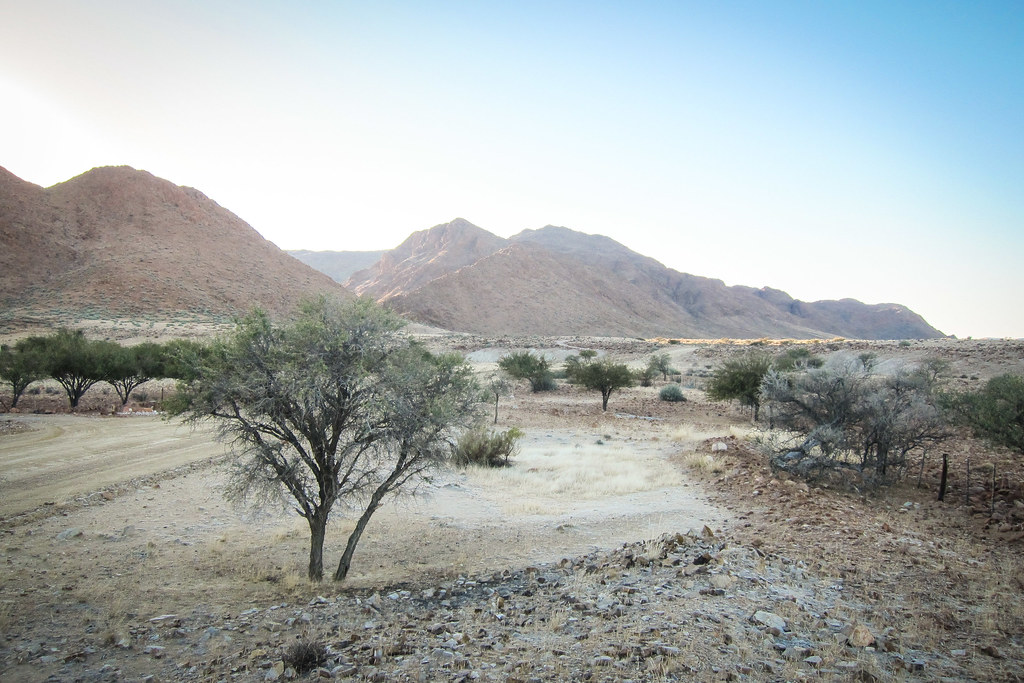
Il gelo sta imbiancando l'erba del bambino, a quanto pare la prima volta dopo anni. Se la pioggia di ieri fosse continuata per tutta la notte, avrebbe nevicato. Ha nevicato nel deserto!
Nonostante le condizioni difficili, i miei ospiti si occupano ancora dei loro circa 300 capi di bestiame sui 22.000 ettari della fattoria, e coltivano anche alcune arance e limoni. Sonia mi offre marmellata di limone acerbo fatta in casa, arance coltivate in casa e un pompelmo per il viaggio. Il vento è forte, ma per fortuna alle mie spalle fino ad Aus.
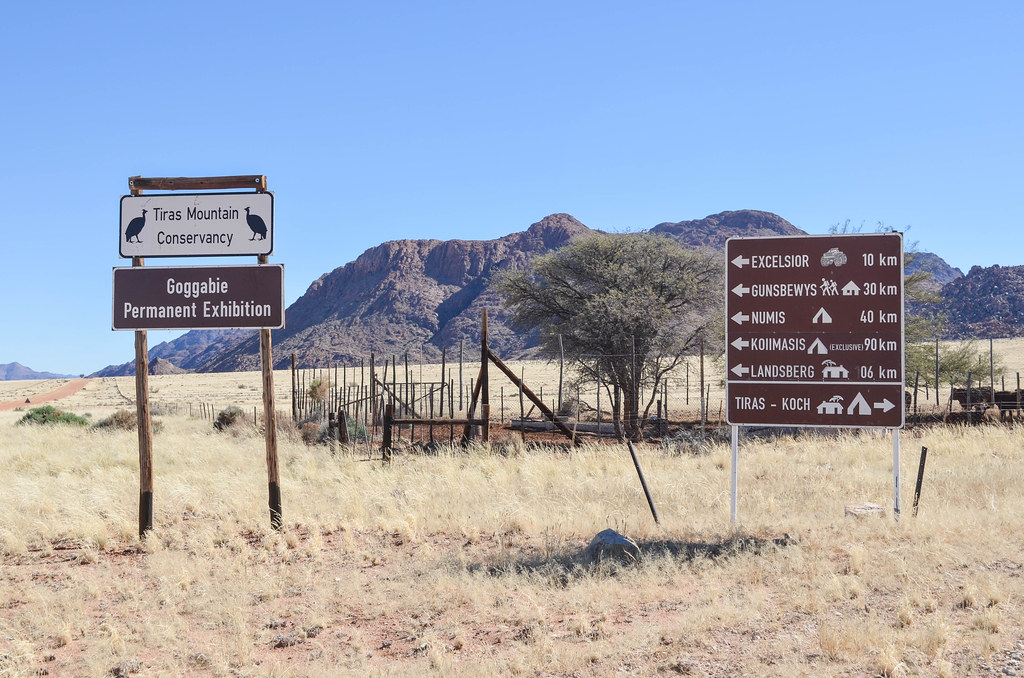
Mi dicono che la strada dovrebbe andare bene fino a Lüderitz, ma lì potrei essere sabbiato, e ci saranno forti venti contrari per il ritorno. Lüderitz si trova alla fine di una strada desertica lunga 120 km che parte da Aus, e a causa dello Sperrgebiet, non ci saranno rifugi lungo il percorso. Avevo abbandonato l'idea di fare questa deviazione, ma se il portapacchi posteriore regge bene, darò un'occhiata a questo posto strano!
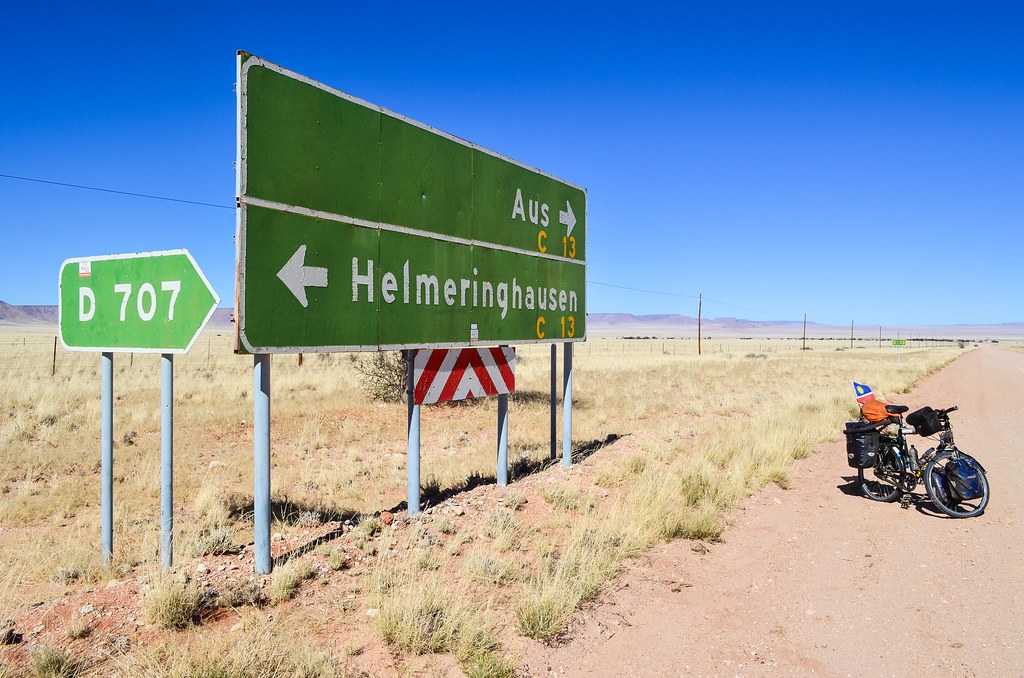
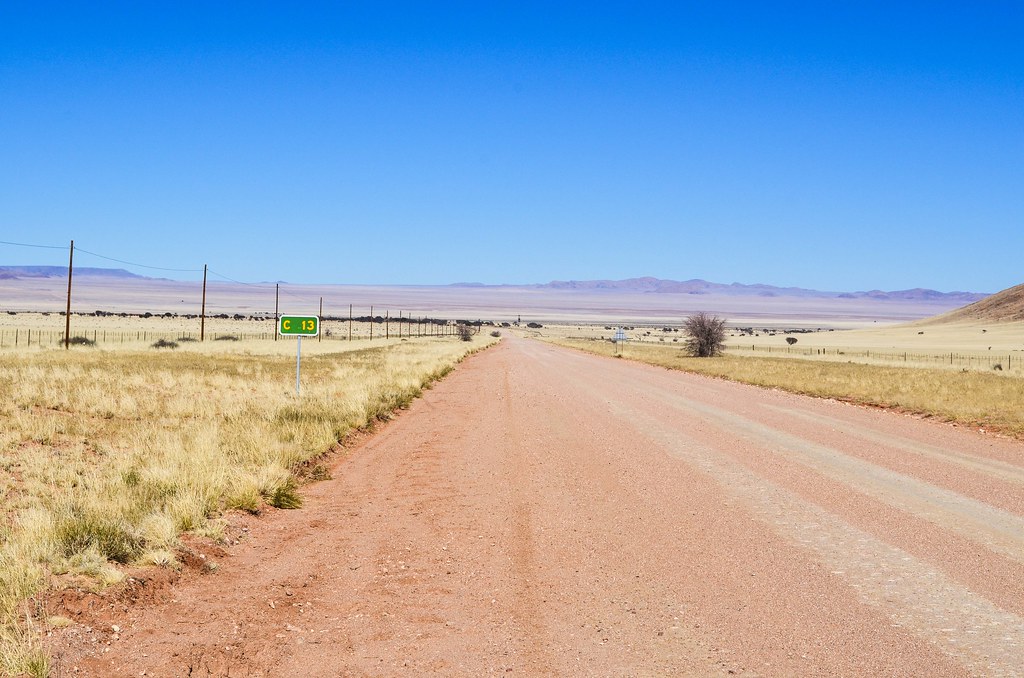
Ho ufficialmente finito con il possente D707 quando mi unisco al C13, ancora con il vento in poppa. Non cambia molto, è la stessa ghiaia ma un po' più larga.
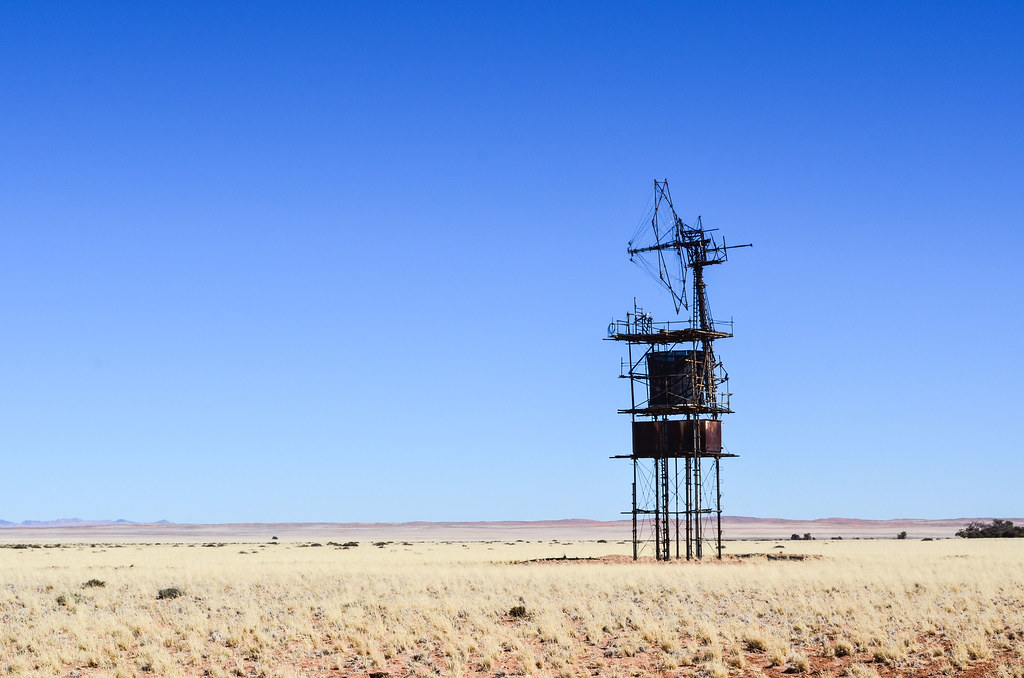
Quando passo vicino a questa interessante struttura in acciaio alta 10 metri, non posso fare a meno di pensare 'Giusto, siamo ancora a 50 km da Aus, fuori dal raggio dell'antenna del cellulare. Che dedizione quella di questi agricoltori nel costruire i propri ripetitori giganti!'. Nonostante il fatto che sia puntata direttamente verso Aus, scoprirò più tardi che non serve nemmeno a captare il segnale, ma è solo un'opera d'arte. Ok…
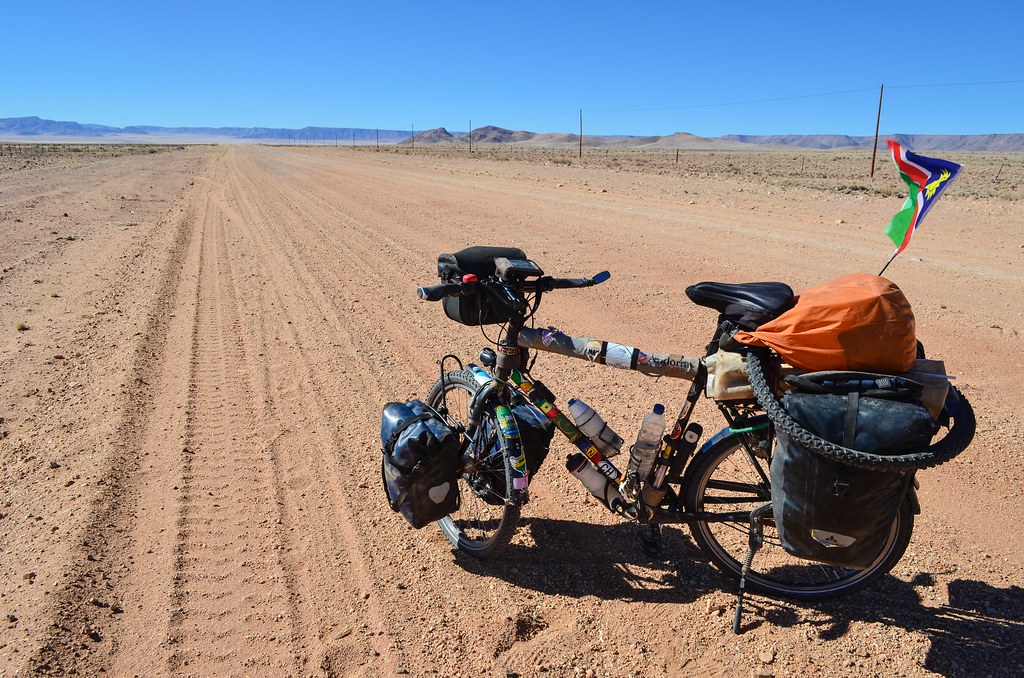

Poiché non vale la pena sperare in un angolo d'ombra, e non vale neanche rischiare le spine della prateria gialla, posso semplicemente pranzare sulla strada ghiaiosa. Dopotutto, siamo in Namibia, quindi è molto improbabile che debba alzarmi dalla strada a causa del traffico.
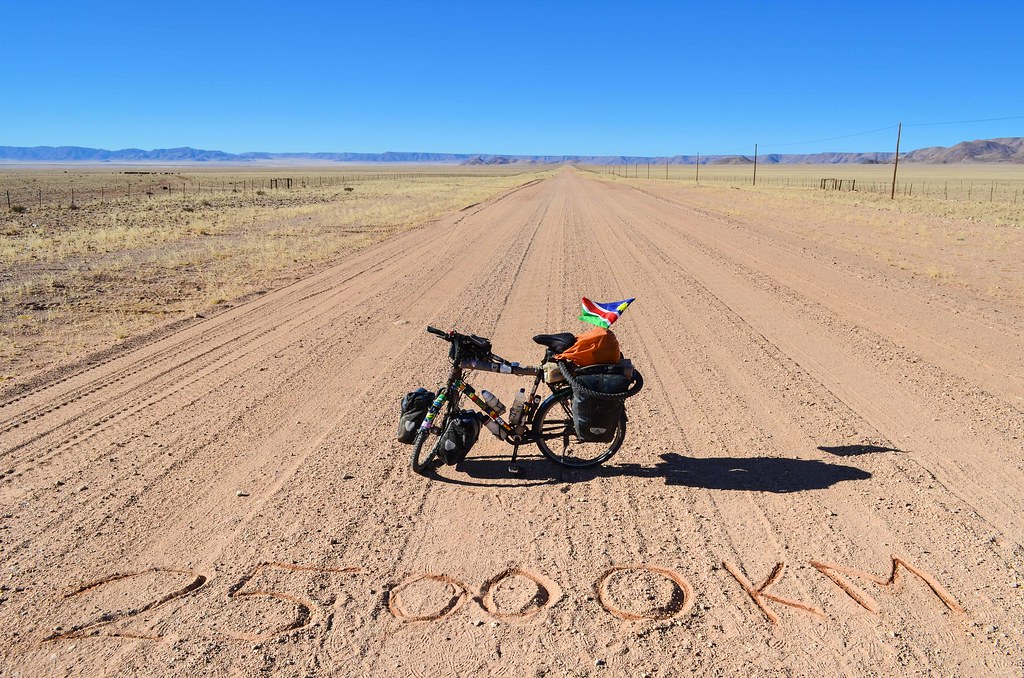
Dopo aver superato il traguardo dei 25.000 KM, una lunga e bella salita mi porta fino ad Aus. La toppa per il mio portapacchi posteriore lo regge bene, e arriverò nella piccola cittadina prima del tramonto. Tutto va bene!
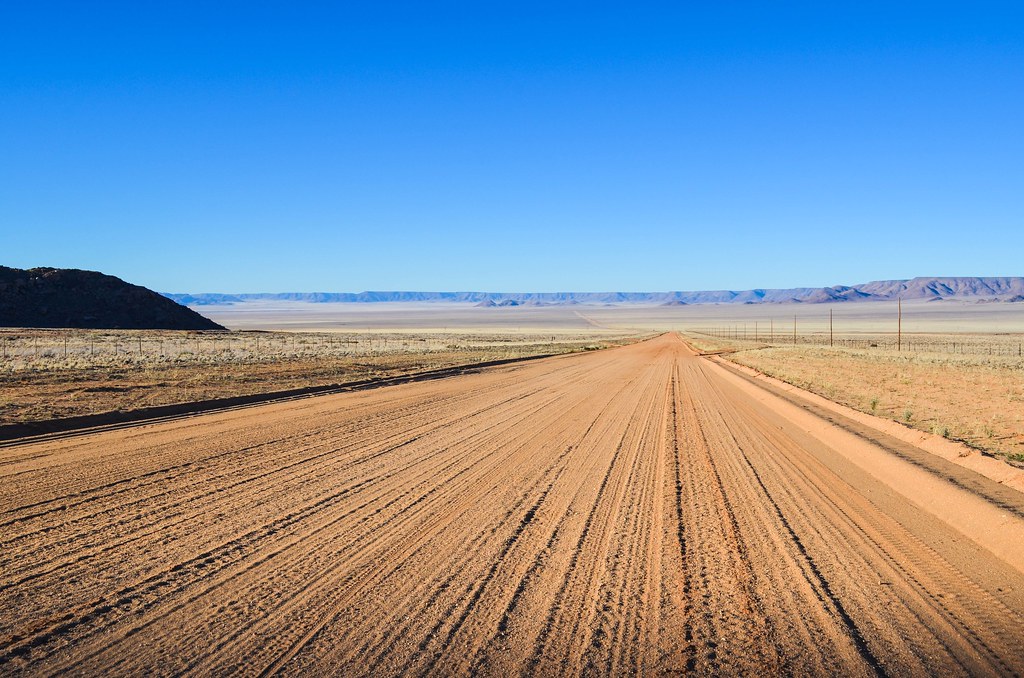
Arrivo ad Aus alle 5. Ci sono i cavi elettrici Nampower ... Ritorno alla civiltà! E' sempre una sensazione speciale per me, vedere una strada asfaltata dopo molto tempo lontano da essa. Questa volta, ho pedalato continuamente sulla ghiaia per 14 giorni e 700+ chilometri! Ancora oggi ricordo molto bene la volta in cui ho ritrovato il catrame nel nord della Thailandia, dopo 2 o 3 giorni più o meno persi su strade sterrate rosse. È stato Questo momento, sei anni fa.
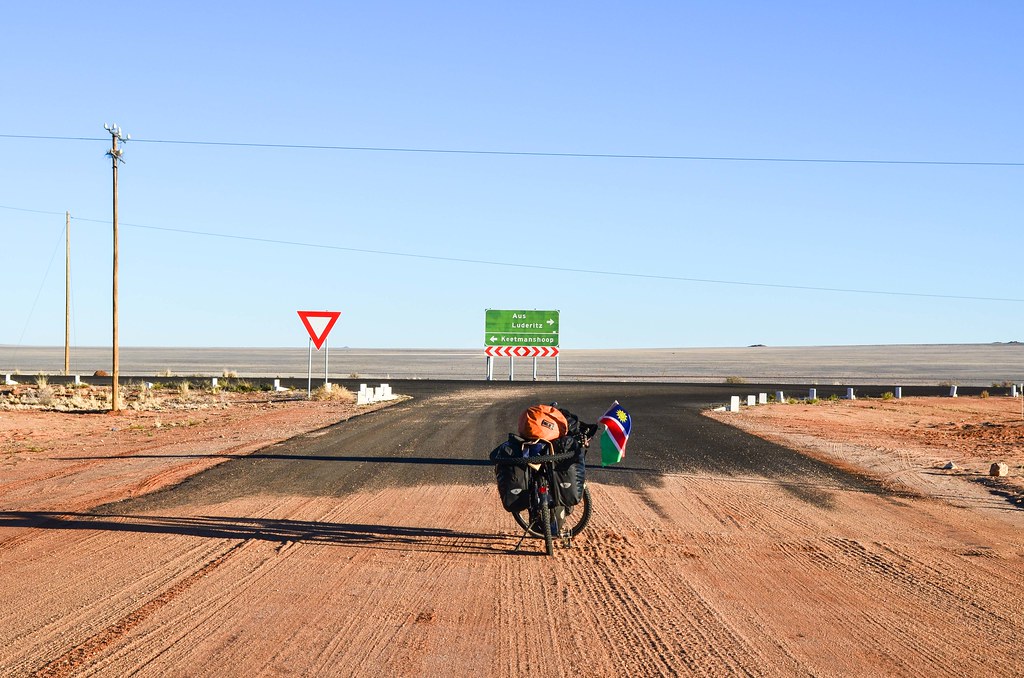
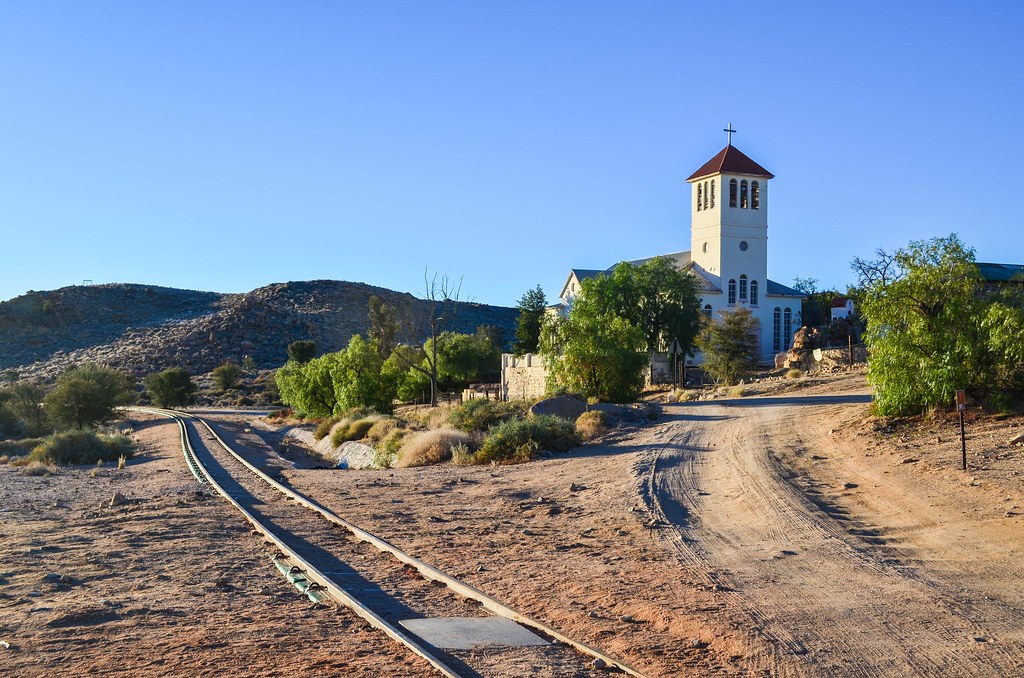
Aus is a tiny hamlet, with one petrol station, one shop, and one campsite, all under the management of the cheerful Steve, who gives me a discount for everything I buy (well, prices in Aus were quite inflated in the first place). Without anyone at the campsite, I can enjoy one of the best hot showers ever, and will even camp in the bathroom, because it’s still too cold outside. I also dress up with all my clothes … and kill time with patching my air mattress and cleaning my stove burner. Honestly, I’m never resting …
I have to patch everything, since I need to make my gear hold on an extra 1500 KM. Most of my items/tools/gear are reaching their end of life. My phone battery, on which I heavily rely for GPS tracking, doesn’t even last a full day now. My camera batteries only last 2 to 3 days. It’s high time to get to Cape Town!
“Back to civilization” also means I get the 2G to check the news on my phone, and catch up with the latest important events: Gaza, Ukraine, airplane crashes, Francois Hollande and ebola in Nigeria are on the menu. The Excelsior farm is not really missing anything.
(Update from Cape Town: Wilhem’s fix worked great!)


I drove D707 earlier this month (proof: http://netllama.linux-sxs.org/pix/trips/2016-11-namibia_safrica/262.html ). Your website was my inspiration for doing it (rather than the more ‘popular’ C13 route). For the most part, it wasn’t bad, although there was a small section that had some tricky deeper sand.
Pretty impressive! As I am a female photographer writing from NYC– what an adventure… amazed at the images of wildlife– isn’t it of concern when camping??? Can women do a trip like that? Oh well– imagelady wishing u well from the village! Any more sites of photographs???
Grazie! Penso che ci sia solo un piccolo pericolo per un essere umano. I predatori pericolosi sono quasi tutti rinchiusi nelle riserve faunistiche.
Le donne ovviamente possono farlo, controlla http://helenstakeon.com/ per ispirazione.
Ho altre foto nell'album: https://www.flickr.com/photos/jbdodane/albums/72157643758912114
La Namibia è un paradiso per la fotografia, spero tu possa visitarla presto!
JB
Ciao, ho appena letto il tuo articolo sulla D707. Ho percorso la strada con un Land Rover l’anno scorso nonostante mi avessero avvertito delle condizioni della strada. In realtà ho trovato la strada in ottime condizioni! Sto progettando di rifarlo a marzo di quest'anno, ma questa volta sulla mia moto – una BMW GS 800cc. Come hai trovato l’esperienza di percorrere la strada in bici?
You say you got a lot of sand / loose gravel? Was it any different / worse than the C13 and C27?
You can email me directly if you so wish.
Christo
I guess it can really be different if you take it a few hours or days before or after a light rain or the grading machine. Remember that I have 2″ tires, you can’t really compare that with a land rover …
The C13 was great for me, I think it doesn’t even have sand. The C27 was a pain south of Sesriem, I passed just after grading and it was all loose gravel.
Hi JB
Fantastic to read this part of the blog again after some time. Well as you know we drive a land rover as well as cycling with heavy laden touring bicycles. I can assure your reader Christo there is a world difference as you duly noted in your explanation and he is welcome to contact me to have an experience cycling fully laden and your only propulsion is your legs and neither a power full designed diesel engine or a superbly designed BMW motorbike. JB what did your bicycle weigh with water added on on those remote roads?
Per quanto riguarda
Augusta&Theo
40 kg + 10 kg for the water.
I took part in the CT cycle tour yesterday, bicycles are significantly lighter 🙂
Hi JB
Spero che tutto vada bene e stai andando in bicicletta o sei tornato alla solita routine.
Per favore, mandami il tuo indirizzo e-mail così posso inviarti alcune foto.
Per quanto riguarda
Theo
Fantastico. Ci saranno presto dei video della Namibia, per favore JB? 🙂
Sì, per la Namibia è molto lavoro, ma arriveranno presto (più o meno)!
Sì, immagino che avrai ore e ore di filmati da guardare! Non vedo l’ora di vedere i video della Namibia quando saranno disponibili 🙂
Hai altri viaggi lunghi programmati da qualche parte nei prossimi due anni, JB?
PS mi piace la musica che suoni nei video, aggiunge molto bene l'atmosfera per i vari luoghi.
<3